The United Arab Emirates (UAE) is making waves on the global solar energy stage—no surprise, given its ambitious renewable energy goals and smart government initiatives shaping the future of energy sourcing in the UAE. If you’re an entrepreneur or part of a business thinking about setting up solar module production here, the UAE is an exciting place to be.
But, like any great venture, success depends on getting a feel for what’s happening on the ground. This is especially true when it comes to finding the right people, understanding wage structures, and navigating the sometimes-tricky world of supply chains.
Consider this a friendly, expert chat to help you steer through these vital parts of planning your factory in the UAE. We’re in your corner and want to share insights that can help you build something great.
Table of Contents
The UAE’s Solar Manufacturing Horizon
 Solar Manufacturing Success in the UAE” class=”wp-image-33634″ srcset=”https://www.pvknowhow.com/wp-content/uploads/2025/06/Operational-Deep-Dive-Mastering-Labor-Supply-Chains-for-Solar-Manufacturing-Success-in-the-UAE-2.webp 1536w, https://www.pvknowhow.com/wp-content/uploads/2025/06/Operational-Deep-Dive-Mastering-Labor-Supply-Chains-for-Solar-Manufacturing-Success-in-the-UAE-2-500×333.webp 500w, https://www.pvknowhow.com/wp-content/uploads/2025/06/Operational-Deep-Dive-Mastering-Labor-Supply-Chains-for-Solar-Manufacturing-Success-in-the-UAE-2-1024×683.webp 1024w, https://www.pvknowhow.com/wp-content/uploads/2025/06/Operational-Deep-Dive-Mastering-Labor-Supply-Chains-for-Solar-Manufacturing-Success-in-the-UAE-2-768×512.webp 768w, https://www.pvknowhow.com/wp-content/uploads/2025/06/Operational-Deep-Dive-Mastering-Labor-Supply-Chains-for-Solar-Manufacturing-Success-in-the-UAE-2-600×400.webp 600w” sizes=”auto, (max-width: 1536px) 100vw, 1536px” />
The UAE’s commitment to a greener tomorrow is crystal clear, especially when you look at its ambitious solar energy targets. Picture this: the nation’s installed solar capacity was already around 7.9 GW in early 2024 and, as our friends at PVKnowHow.com project, it’s set to skyrocket to an incredible 36.06 GW by 2029. That’s a compound annual growth rate (CAGR) of 35.48%!
This kind of rapid growth doesn’t just happen; it’s solidly underpinned by the UAE Energy Strategy 2050, which is focused on adding more clean energy to the national grid, aiming for a hefty 44 GW by 2050.
So, what makes the UAE such a compelling place for solar manufacturing? Several key factors come into play:
- A Clear Government Vision: With initiatives like the UAE Net Zero 2050 strategic initiative and serious investment pouring into renewable energy, it’s plain to see the government is fully behind this push. They’re not just talking the talk.
- Sweeteners for Manufacturers: The UAE rolls out the welcome mat with various incentives. We’re talking potential tax exemptions and special perks in its many free zones, which can genuinely lighten the load of your operational costs. For instance, PVKnowHow.com points out that solar equipment and materials can enjoy tax and duty-free advantages for the first ten years after certification, plus zero-rated VAT. Now, that’s a significant leg up!
- A Thriving Regional Market: It’s not just the UAE buzzing with solar activity; the entire Middle East and North Africa (MENA) region is seeing a boom in solar adoption. This creates a strong local customer base for modules made right here in the UAE – a fantastic starting point.
- The “Tariff Haven” Perk: Industry watchers, including the sharp folks at SolarBuilderMag, are increasingly recognizing the MENA region, the UAE included, as a “tariff haven.” What does this mean for you? It could give you a competitive edge when exporting solar modules, especially to markets like the US, as you might face lower tariffs compared to manufacturers based elsewhere. Definitely something to keep in mind!
Navigating the Labor Landscape in UAE Solar Manufacturing
Want to go solar with confidence and expertise?
Gain instant access to our free e-course, or connect with our specialists to leverage our comprehensive services. Together, we’ll power your solar journey to be nothing short of smooth and highly successful!
Having the right team on board—skilled people who fit your budget—is, let’s face it, absolutely key to any successful manufacturing venture. So, when it comes to the UAE, what should you be thinking about on the labor front?
Finding Skilled Talent
With the UAE’s solar sector growing as fast as it is, there’s a healthy demand for skilled professionals. You’ll likely find yourself looking for:
- Engineers: Professionals skilled in solar, electrical, mechanical, and process engineering are the backbone for everything from design and production oversight to keeping quality sky-high.
- Technicians: You’ll need sharp, adept technicians to operate and maintain the sophisticated machinery involved in solar manufacturing.
- Production Line Operators: A dependable, hardworking team for the day-to-day assembly and manufacturing tasks is an absolute must.
- Quality Control Specialists: These are your experts on the ground, crucial for making sure your modules meet tough international standards.
The workforce you’ll find in the UAE is an interesting blend of local talent and experienced professionals from all over the world. While there’s a strong, commendable drive to nurture local expertise through education and training programs, expatriate labor is currently a big part of the picture.
It’s good to know the government is actively backing workforce development and encouraging more Emiratis to get involved in this exciting industry.
Interestingly, as The National News has reported, automation is becoming increasingly common in UAE manufacturing. This is a smart move to boost efficiency and manage costs, and it’s something that will shape what kind of workforce is needed in the future—likely one that’s comfortable working alongside and managing automated systems.
Understanding Wage Structures and Labor Costs
Getting a firm handle on labor costs is, of course, critical for your financial planning. To give you a bit of a benchmark, data from PVKnowHow.com shows average monthly salaries for a few key solar sector roles in the UAE:
- Solar Engineer: Around $1,771
- Project Manager (Solar Industry): Approximately $3,474
Now, keep in mind these are benchmarks, and wages for production line workers and technicians will naturally vary. Overall, labor expenses can be a significant slice of your total project costs—a LinkedIn article by Saud Rehman estimates this to be somewhere between 15-25% in the Middle East.
And it’s not just the salaries themselves; always remember to factor in other labor-related costs like visa processing, health insurance, and those all-important end-of-service benefits.
Mastering the Supply Chain: Sourcing Raw Materials & Components
A smooth-running, cost-effective supply chain for your raw materials and components isn’t just important; it’s fundamental to the success of your solar panel factory. No shortcuts here!
What Goes Into a Solar Panel?
So, what are the key ingredients you’ll need to source for solar module manufacturing? Here’s a quick rundown:
- Polysilicon: This is the main raw material you’ll use for making crystalline silicon solar cells.
- Ingots and Wafers: These are made from polysilicon and then sliced very thinly into wafers.
- Solar Cells: These are the heart of the panel, converting sunlight into electricity.
- Solar Glass: You’ll need specially designed tempered glass for the front of the panel—it has to be tough!
- EVA (Ethylene Vinyl Acetate) Encapsulant: This material is used to laminate the cells, providing crucial adhesion and protection.
- Backsheets: This is the panel’s rearmost layer, offering electrical insulation and keeping it structurally sound.
- Aluminum Frames: These provide strength and make mounting the panels easier.
- Junction Boxes & Cables: These components manage all the electrical connections and power output.
Sourcing Your Materials: Local or Global?
As it stands, the UAE imports many of its specialized raw materials and components, especially things like polysilicon, wafers, and solar cells. Analyses from sources like JPIA Princeton detail how China is a major player in the global solar supply chain, and that includes supplying manufacturers here in the UAE.
However, there’s a definite and encouraging push towards bringing more of the supply chain closer to home. It’s interesting to see Chinese companies also investing in local solar manufacturing bases within the UAE. JPIA Princeton suggests this is partly to diversify their own supply chains and potentially sidestep geopolitical trade headaches.
Efforts are also picking up steam to develop local sources for components like aluminum frames (which makes a lot of sense, given the UAE’s strong aluminum industry, including green aluminum) and possibly even glass. So, watch this space!
Building a Supply Chain That Lasts
If you’re setting up shop in the UAE, building a supply chain that can weather a few storms (because they will come!) means focusing on a few key strategies:
- Don’t Put All Your Eggs in One Basket (Diversification): It’s age-old advice for a reason. Look into multiple sourcing options to avoid relying too heavily on one supplier or region.
- Smart Partnerships: Work closely with established global suppliers—they have the experience—while also nurturing relationships with up-and-coming local players. It’s about building a network.
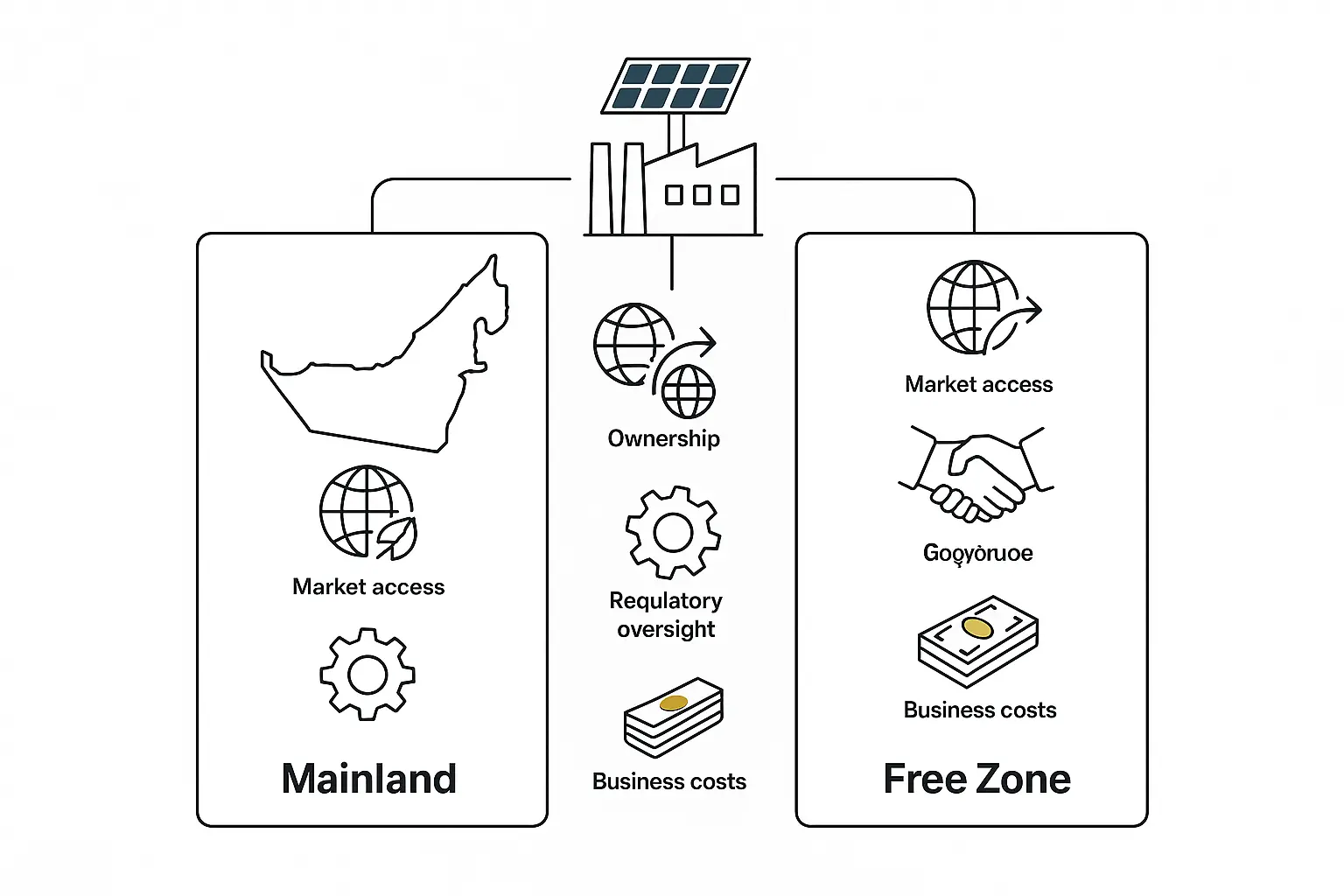
- Make the Most of Free Zones: The UAE’s Special Economic Zones (SEZs) and free zones are a huge plus, offering smoother customs processes and excellent logistical benefits for importing your materials.
- Keep an Eye on Quality: This is non-negotiable. Implement strict quality control measures and make absolutely sure all your sourced materials meet international standards (like IEC) and any local certifications (such as ESMA).
Logistics & Infrastructure: The UAE’s Backbone for Manufacturing
When it comes to logistics and infrastructure, the UAE truly shines, offering a massive advantage for manufacturers. Seriously, this is where the country stands out. Here’s what makes it so good:
- Top-Tier Port Facilities: Ports like Jebel Ali in Dubai aren’t just big; they’re among the most efficient in the world. This means fantastic shipping connections for both bringing in your raw materials and sending out your finished modules. Smooth sailing, quite literally!
- Smooth Transportation Networks: Well-maintained road networks make moving goods inland efficient and virtually hassle-free.
- Plenty of Warehousing: You’ll find abundant modern warehousing options to help you manage your inventory effectively, which is key to keeping things flowing.
- A True Global Trade Hub: The UAE’s prime location, beautifully bridging East and West, combined with its business-friendly atmosphere, makes it a perfect base for reaching markets across the region and beyond.
These logistical strengths work together to reduce crucial lead times and trim supply chain costs, which ultimately boosts the competitiveness of solar manufacturers based in the UAE.
Challenges & Strategic Imperatives for Solar Manufacturers in the UAE

While the UAE is packed with opportunities, it’s wise for any potential manufacturer to be aware of the challenges that might pop up. Forewarned is forearmed, as they say!
Potential Hurdles to Keep in Mind
- Global Supply Chain Volatility: The solar industry, like many, can be sensitive to global events—think geopolitical tensions disrupting trade routes or unexpected price swings in raw materials. You need to be agile.
- The Hunt for Skilled Labor: As the solar sector here continues its impressive growth, finding and keeping highly skilled engineers and technicians might become more competitive. Ongoing investment in training and development will be key.
- Staying Cost-Competitive: Going head-to-head with established, large-scale manufacturers in Asia means you’ll need a sharp focus on efficiency, smart automation, and playing to the UAE’s unique strengths.
- Reliance on Imported Raw Materials: Let’s be honest, depending heavily on imported critical raw materials is a potential vulnerability, even though, as we’ve said, efforts to build up local sources are underway.
Your Opportunities for Growth and Success
Even with these challenges, the path to success is paved with clear opportunities. Here’s where you can really shine and make your mark:
- Solid Government Support: Make the absolute most of the encouraging policies and clear strategic vision coming straight from the UAE government. They want you to succeed.
- Surging Demand: Tap into the strong and growing demand for solar energy both within the UAE and across the wider MENA region. In fact, our friends at SolarBuilderMag suggest the MENA region’s module production capacity is on track to meet its own needs by 2026—that’s a market on your doorstep!
- Export Doors Wide Open: Use the UAE’s fantastic strategic location and its “tariff haven” status to explore export markets in Europe, Africa, and even the US.
- Innovate and Automate: Don’t be shy about embracing innovation in your manufacturing processes and using automation to boost productivity and keep costs in check. It’s the smart way forward.
- Consider Vertical Integration: Trends across the MENA region show that looking into vertical integration can give you much better control over your supply chain and, importantly, improve your profit margins. Something to think about!
Conclusion: Why the UAE is a Compelling Choice for Solar Manufacturing
When you step back and look at the big picture, the UAE offers a vibrant and strategically smart setting for anyone looking to get into solar module production. With its clear goals for renewable energy, a genuinely supportive government, top-notch infrastructure, and a growing regional market, it’s an exciting place for new manufacturing ventures to take root and flourish.
Yes, figuring out the labor market and getting your supply chain just right are major steps on this journey. While there are certainly challenges to navigate—especially around sourcing key raw materials and developing skilled local talent—the potential for growth and tangible success is immense.
By getting to grips with how things work on the ground and playing to the UAE’s many strengths, entrepreneurs and companies like yours can confidently set up and scale thriving solar manufacturing operations.
Here at PVknowhow.com, we’ve spent over two decades deep in the photovoltaic industry, and frankly, we’re passionate about guiding clients like you through every stage of building and running a solar factory. Whether you need turnkey production equipment, help with your business planning, or just solid technical advice, we’re here to help you transform your solar manufacturing dreams into a successful reality. We’d genuinely love to chat about how we can support your venture!
Frequently Asked Questions (FAQs)
Got a few more questions buzzing around about solar manufacturing in the UAE? We’ve gathered some common ones here, and hopefully, these answers will provide a bit more clarity:
If I’m building a solar manufacturing team in the UAE, what key skills should I really be looking for?
Great question! You’ll want a good mix. Think about strong engineering talent (covering solar, electrical, mechanical, and process engineering), people who are technically skilled and comfortable operating and maintaining advanced machinery, reliable and dedicated production line operators, and, of course, sharp quality control experts. As automation becomes more common, team members who are comfortable with these systems will also be a big plus.
Just how much do labor costs typically factor into solar panel manufacturing in the UAE?
Labor costs can definitely be a significant part of your overall budget, possibly making up around 15-25% of total project costs in the Middle East. Of course, specific costs will always depend on the role. For example, to give you an idea, PVKnowHow.com data suggests Solar Engineers might earn around $1,771 per month, while Project Managers in the solar industry could be looking at about $3,474 per month here in the UAE.
What are the main things that go into a solar panel, and where do UAE manufacturers usually get them from?
The big ones you’ll hear about are polysilicon, wafers, solar cells, solar glass, EVA (an encapsulant), backsheets, and aluminum frames. Right now, many of the specialized materials like cells and wafers are often imported, with China being a key global supplier. However, as we mentioned, there’s a growing and exciting push to source more components locally, especially things like aluminum frames.
What makes the UAE so good for logistics when it comes to solar manufacturing? Why is it a plus?
Ah, the UAE really rolls out the red carpet when it comes to logistics! It offers truly top-notch port facilities (like the famous Jebel Ali), great road networks for moving goods inland without a fuss, plenty of modern warehousing, and generally smoother customs processes, particularly if you operate in one of its many free zones. Plus, its central location is just fantastic for reaching markets all over the world. It’s a real logistical hub.
Does the UAE government offer any actual perks or incentives for setting up solar manufacturing here?
Yes, they absolutely do! The UAE government has several helpful incentives in place. These can include potential tax breaks, duty-free import of equipment and materials for certified companies in their early years, zero-rated VAT on solar equipment, and various other benefits that come with setting up in a free zone. Plus, major government strategies like the UAE Energy Strategy 2050 show strong, high-level backing for the whole sector.
I heard the UAE/MENA region mentioned as a “tariff haven.” What exactly does that mean for a manufacturer?
That’s an interesting point that some sharp analysts (like those over at SolarBuilderMag) have raised. Essentially, it means that solar modules exported from the MENA region, including those from the UAE, might face lower import tariffs when entering certain key markets, such as the US, compared to modules from other major manufacturing hubs. This could give UAE-made panels a nice cost advantage in international markets—definitely something worth exploring!
Disclaimer: The salary figures and market statistics cited are based on available data at the time of research from sources like PVKnowHow.com, industry publications, and market analyses. These can change, and businesses should conduct specific due diligence.