1. Introduction – Why Size Comes First in Recycling
When planning a new industrial project, business professionals often focus first on technology, asking which machines are best or which process is most advanced. In the solar module recycling industry, this is frequently the wrong starting point.
The most important decision must come first: the size of the plant.
Plant size, also known as throughput, dictates every other aspect of the project. It influences the required investment, the level of automation, the factory layout, and the business model itself. As a volume-driven business, solar recycling’s success depends on processing a large and consistent stream of end-of-life solar modules to recover valuable materials. The scale of the operation, then, must be defined before any discussion of technology.
2. What “Throughput” Means in Solar Recycling
In solar recycling, “throughput” is the primary measure of a plant’s capacity. It refers to the total weight of solar modules—typically measured in metric tons—that a factory can process in one year. This figure is the central pillar for all planning and design.
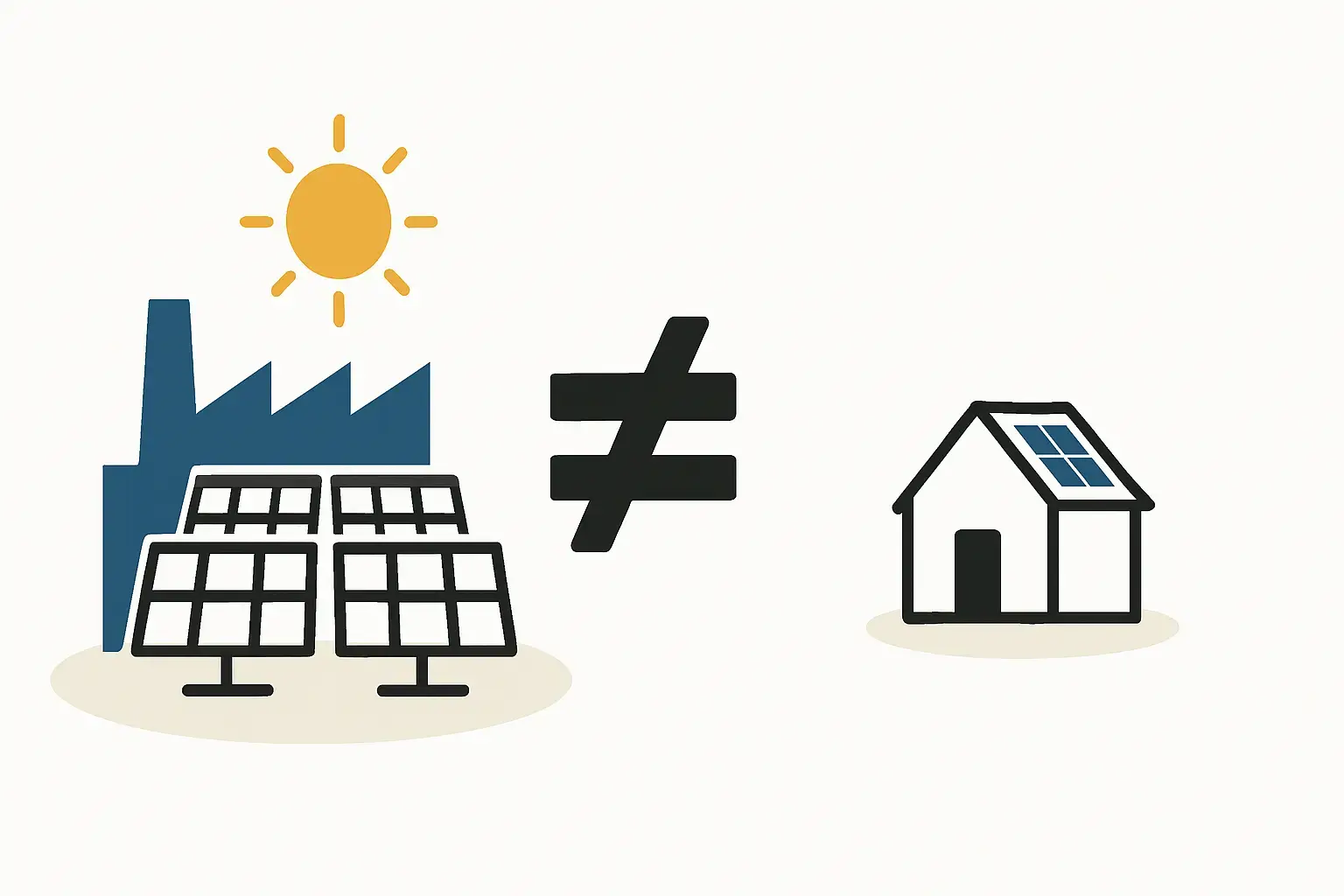
Throughput is not the same as the installed power (megawatts or MW) of the modules; it is a measure of physical mass. For example, a recycling plant designed for a throughput of 20,000 tons per year can receive and process that amount of material annually, regardless of the modules’ original power rating.
The focus remains on weight and logistics because the business involves collecting, transporting, and disassembling physical objects to extract raw materials like glass, aluminum, silicon, silver, and copper.
3. Typical Size Categories of Solar Recycling Plants
Solar recycling plants fall into three general categories based on their annual throughput. Each category serves a different strategic purpose and involves a different level of operational complexity.
3.1 Small Industrial Plants – Entry Level
Small industrial plants are an entry-level scale, typically processing between 2,000 and 10,000 tons per year. These facilities usually serve a specific city or a limited regional area.
Their layout is often simpler, relying more on manual labor for tasks like removing frames and junction boxes. Small plants offer a practical way to enter the market, gain operational experience, and establish local collection networks. Their financial viability, however, hinges on efficient logistics and a stable supply of modules from the immediate vicinity.
3.2 Medium Industrial Plants – Standard Scale
Medium-sized plants are the most common industrial scale for solar recycling. Designed for a higher, more consistent throughput—typically in the range of 15,000 to 40,000 tons per year—these facilities can serve a large region or an entire country.
This scale requires a greater degree of automation to manage the volume of material efficiently. The material flow is more structured, with dedicated lines for different stages of the recycling process. Experience shows this scale often strikes a good balance between investment risk, operational complexity, and the potential for stable, long-term operation.
3.3 Large Industrial Plants – Centralized Scale
Large industrial plants operate at a very high throughput, sometimes exceeding 50,000 tons per year. As centralized facilities, they are designed to process modules from multiple countries or vast geographic areas. They require a significant capital commitment and depend on highly complex logistics to ensure a continuous flow of material.
These large-scale operations are only feasible in markets with a mature, legally regulated collection system that guarantees a high volume of end-of-life modules over many years. While this scale can boost processing efficiency, it also substantially increases financial and logistical risks.
4. Why Bigger Is Not Automatically Better
It’s a common assumption that larger industrial plants are always more efficient and profitable, but in the recycling industry, this isn’t necessarily true. Building a plant that is too large for the available supply of modules is one of the most common and costly mistakes in project planning.
A large plant needs a stable, massive input of material to operate profitably. If collection systems cannot supply this volume, the factory is left with unused capacity—a major financial risk, since the facility’s high fixed costs remain even when it isn’t processing material.
As a plant’s collection area grows, so do the logistics costs for transporting modules from distant locations. A realistic assessment of the available long-term supply of end-of-life modules is more important than building for maximum theoretical capacity.
5. How Plant Size Influences Automation and Layout
The chosen plant size directly dictates the necessary level of automation and the physical layout of the factory. The relationship is simple: higher throughput demands more automation.
- Small plants can function effectively with more manual steps and flexible workstations, allowing the layout to be adapted easily to changing conditions.
- Medium plants require a structured, semi-automated process where the layout is designed around a clear material flow, with machines and manual stations arranged in a logical sequence.
- Large plants depend on continuous, highly automated processing. The entire facility operates like a single, integrated machine, minimizing manual handling to achieve the highest throughput.
The key principle is that automation must follow the throughput requirement, and the layout, in turn, must follow the logic of the material flow. Technology serves as a tool to achieve a specific processing volume—it is not the starting point of the plan.
6. Strategic Takeaway
Making the right decisions at the start of a solar recycling project is critical to long-term success. Any planning process must be grounded in a realistic assessment of the market and operational capabilities.
Key takeaways include:
- Throughput—the tons of modules processed per year—is the single most important variable defining the factory.
- The chosen factory size determines the project’s financial risk, operational complexity, and investment requirements.
- A realistic and sustainable plant size based on confirmed input volume is more important than simply pursuing maximum capacity.
7. Transition to the Next Lesson
With this understanding of typical plant sizes and the importance of throughput, we can now examine the technologies involved. The next lesson will explore the various levels of automation in solar recycling, from manual processes to fully integrated lines.