
Solar Panel Frame and Solar Framing Machine
A solar panel frame is an aluminum structure that seals and secures a panel’s components, including the solar cells and glass. It acts as the primary structural component of PV solar panels and is essential to their assembly.
A solar panel framing machine is used in the manufacturing process to position and secure the solar cells, back sheets, and other parts inside the aluminum frame.
This overview examines the structures and components of these machines, detailing the materials they use, their function, and why they are essential for producing solar panels effectively.
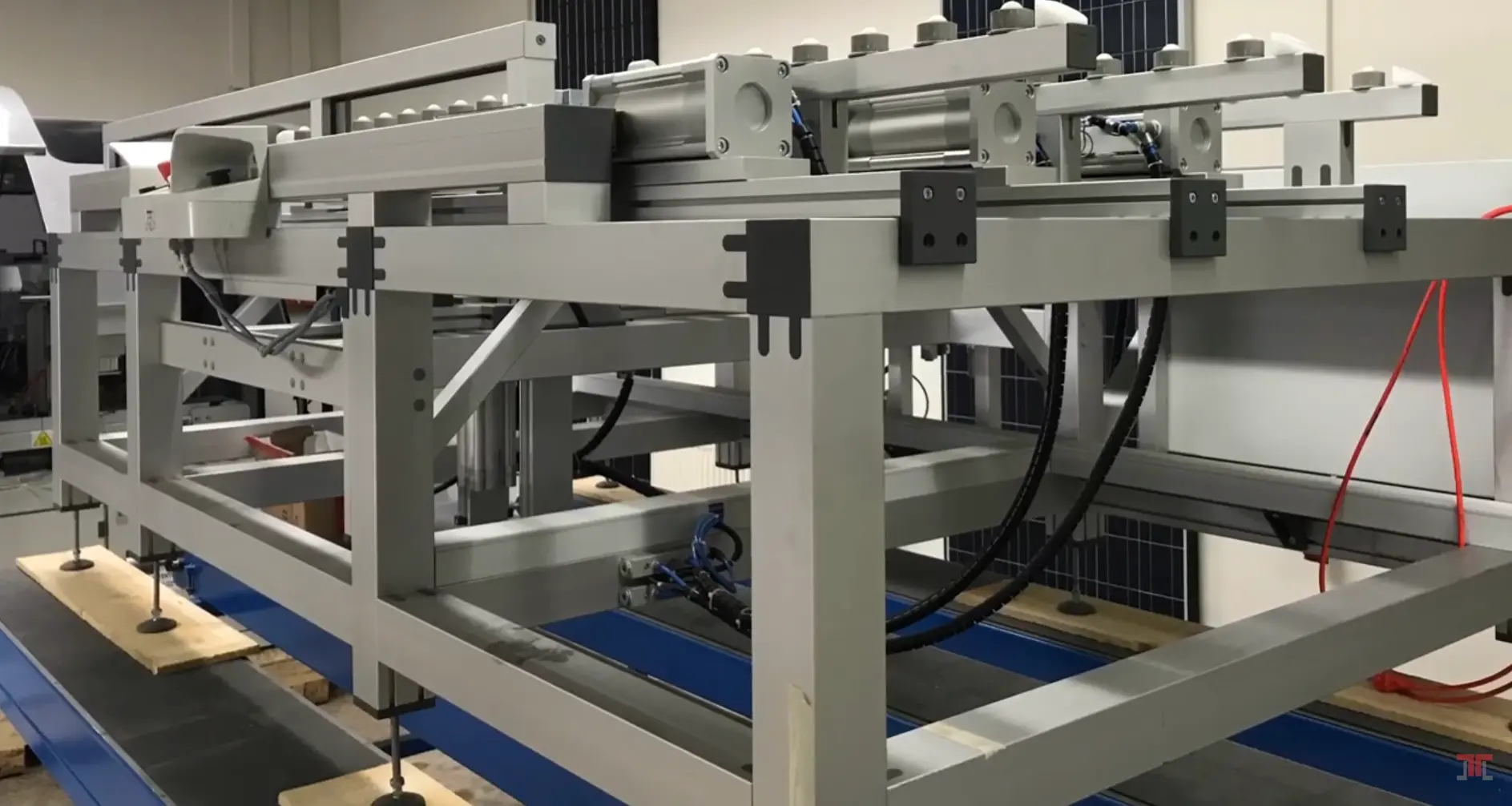
Full Auto Solar Panel Frame Machine
Solar Panel Frame Materials
The most common material for solar panel frames is aluminum, specifically alloys from the 6000 series, like 6063 and 6005. The primary material considerations for solar panel frames are as follows:
- Aluminum alloys: Aluminum alloys 6063 and 6005 are the primary materials used for solar panel frames due to their high strength, firmness, and corrosion resistance.
- Anodized aluminum: High-quality solar panels often feature anodized aluminum frames, which offer improved heat reflection, easy maintenance, and scratch resistance compared to powder-coated alternatives.
- Powder-coated aluminum: Powder-coated aluminum frames are preferred for their aesthetic appeal, as they come in various colors (mostly black) and finishes (gloss, matte, or satin). However, they are more prone to scratches than anodized frames.
- Mechanical properties: Aluminum alloys used in solar panel frames have high tensile strength, yield strength, elasticity, rigidity, and metal fatigue value.
- Chemical composition: The aluminum alloys used contain small amounts of silicon, iron, copper, manganese, magnesium, chromium, zinc, and titanium, with aluminum being the primary component.
- Durability: Aluminum frames have a service life of more than 25 years and can adapt to various environments.
Key Components of Solar Panel Framing Machines
Solar panel framing machines are complex systems composed of specialized parts working together to assemble the frames. Understanding these components helps clarify the precision and importance of these machines in manufacturing. The main parts contributing to their effective operation are outlined below.
Frame Handling and Preparation System
The frame handling and preparation system is responsible for loading, positioning, and securing the solar panel frame in the correct orientation for the assembly process.
- Frame feeding mechanisms: Automated or semi-automated systems that load the empty frames into the machine.
- Frame positioning and clamping: Devices that precisely align and hold the frame in place during the assembly steps.
- Frame cleaning and preparation: Stations that clean, inspect, and prepare the frame for component integration.
Component Positioning and Alignment Systems
Precise positioning and alignment of the solar cells, back sheets, and other components within the frame are critical for optimal performance and durability.
- Vision systems: Camera-based systems that use computer vision algorithms to detect and align the various components.
- Laser guidance: Laser-based alignment mechanisms that precisely position components within the frame.
- Mechanical alignment: Mechanical devices, such as guides, stops, and positioners, that physically align the components.
Securement and Bonding Mechanisms
Once the components are positioned within the frame, the framing machine must securely hold them in place.
- Adhesive application: Automated systems that dispense adhesives, such as silicone sealants or epoxy, to bond the components to the frame.
- Mechanical clamping: Devices that apply mechanical force to hold the components firmly in place within the frame.
- Welding or soldering: Specialized welding or soldering processes that create a permanent, secure bond between the components and the frame.
Quality Inspection and Monitoring Systems
Maintaining high product quality and identifying potential defects is a crucial part of the solar panel manufacturing process.
- Vision-based inspection: Camera systems that capture images of the assembled panel and use computer vision algorithms to detect misalignments, incomplete bonding, or other defects.
- Sensor-based monitoring: Strategically placed sensors that continuously monitor parameters such as component positioning, adhesive application, or weld quality.
- Data logging and analysis: Software systems that record and analyze production data to identify trends, optimize processes, and facilitate continuous improvement.
Automation and Control Systems
Modern solar panel framing machines rely on advanced automation and control systems to ensure seamless operation and efficient production.
- Programmable Logic Controllers (PLCs): Computerized control systems that manage the various processes and sequences within the framing machine.
- Human-Machine Interfaces (HMIs): Interactive displays that allow operators to monitor, control, and troubleshoot the machine’s operations.
- Networking and communication: Connectivity features that enable remote monitoring, data exchange, and integration with broader production management systems.
Material Handling and Integration
Solar panel framing machines must be integrated into the overall production line, seamlessly interfacing with upstream and downstream processes.
- Automated conveyor systems: Belts or rollers that transport the frames and components through the various stages of the framing process.
- Robotic arms: Programmable robotic manipulators that handle and transfer frames and components between stations.
- Integrated process control: Coordination systems that synchronize the framing machine’s activities with the broader production workflow.
Process of Building A Solar Panel Frame
The solar panel framing process, carried out by specialized framing machines, is a vital step that provides structural support, protection, and mounting functionality to solar panels.
The Solar Panel Frame Building Process Typically Involves The Following Steps:
- Prepare and debug the aluminum frame according to the size of the solar panel components.
- Install the aluminum frame on the spreading machine for automatic gluing.
- Place the solar cell strings or glass on the frame, ensuring proper alignment with the glass facing downwards.
- Activate the framing machine. Cylinders on both sides will automatically squeeze and clamp the frame onto the glass.
- The operator checks the alignment of the glass edge with the frame, ensuring the side angle is 90 degrees.
- Use the button, cylinder, head restriction, and other controls to complete the clamping process.
- Remove the framed panel and inspect for proper alignment, fragments, bubbles, and any defects.
- Allow the framed panel to solidify for 10-12 hours.
- Clean the module to remove dust, foreign objects, or spilled sealant.
Key Points About Building A Solar Panel Frame:
- Framing machines automate and optimize the process, ensuring precision, consistency, and efficiency.
- The machines integrate with upstream processes like cell manufacturing and downstream processes like lamination.
- Proper framing is crucial for the panel’s structural integrity, protection from the elements, and mounting capabilities.
- Quality control checks identify any misalignments, incomplete bonding, or defects.
- The framing process directly impacts the panel’s performance, durability, and overall quality.
Importance of Solar Panel Framing
The solar panel framing process is a critical aspect of manufacturing that directly impacts a panel’s performance, durability, and commercial viability. Errors or defects in the frame can lead to reduced power output, lower energy production, and a shorter lifespan, which can negatively affect profitability. Automated framing machines help mitigate these risks by ensuring consistency and precision, resulting in high-quality panels that perform reliably over the long term.
Structural Support
The frame provides a robust and durable structure to support the sensitive solar cells, back sheets, and other components, protecting them from damage and ensuring the panel’s long-term performance.
Mounting and Installation
The frame facilitates the secure mounting of the solar panel on various surfaces, such as rooftops, ground mounts, or tracking systems.
Aesthetics and Appearance
The frame improves the solar panel’s appearance and helps it integrate visually with its surroundings.
Electrical Connectivity
The frame may incorporate features that simplify electrical connections, such as junction boxes or wiring harnesses.
Solar panel framing machine
The Role of Solar Panel Framing Machines in the Production Workflow
Solar panel framing machines are integral to the manufacturing line, serving as a key link between different stages of production.
Effective integration with both upstream and downstream equipment is crucial for a smooth workflow and for preventing production delays. Understanding the role of framing machines in this larger manufacturing context allows companies to optimize production, streamline operations, and ensure a consistent supply of high-quality solar panels.
Factors Influencing the Efficiency and Effectiveness of Solar Panel Framing Machines
Several key factors influence the efficiency of solar panel framing machines and the quality of the final product:
1. Production Capacity and Throughput
The framing machine must match the production goals and volumes of the solar panel factory. Choosing a machine with the right speed, cycle time, and output can help avoid bottlenecks, streamline operations, and meet production targets.
2. Automation and Precision
The level of automation and the positioning accuracy of the framing machine’s components are vital for ensuring product quality and minimizing defects. Advanced technologies like automation, computer vision, and robotics can enhance the precision and consistency of the framing process.
3. Flexibility and Adaptability
As the solar panel industry continues to evolve, the framing machine must be able to adapt to these changes. Flexible and modular machines can accommodate different panel sizes and designs, helping manufacturers stay competitive and meet market demands.
4. Integration and Connectivity
Seamless integration of the framing machine with the broader production line, as well as its connectivity to data management and control systems, can significantly enhance operational efficiency. Features like automated material handling, process synchronization, and remote monitoring can optimize workflow, minimize downtime, and facilitate data-driven decision-making.
5. Maintenance and Serviceability
Ensuring the long-term reliability and availability of the framing machine is crucial for sustained production. Design features that prioritize ease of maintenance, accessibility for servicing, and the availability of spare parts can minimize downtime and enable proactive maintenance strategies.
6. Energy Efficiency and Environmental Impact
As the solar industry strives for environmental sustainability, the energy efficiency and environmental impact of the framing machine are becoming increasingly important. Manufacturers should prioritize machines with energy-efficient designs, reduced waste generation, and the use of eco-friendly materials and processes.
7. Operator Ergonomics and Safety
The health and safety of workers who operate solar panel framing machines are of paramount importance. Ergonomic design features, intuitive user interfaces, and robust safety systems can improve the work environment, boost productivity, and reduce the risk of workplace accidents.
8. Total Cost of Ownership
When selecting solar panel manufacturing equipment, companies must consider the total cost of ownership. This includes the initial capital investment, operational expenses, maintenance requirements, and long-term return on investment. A thorough analysis is key to selecting the most suitable option for their production needs.
Solar panel framing machines are essential to the manufacturing process, responsible for assembling panels and ensuring their structural integrity and performance. Understanding the components, processes, and key operational factors of these frames and machines helps companies make informed decisions when investing in this critical equipment.
Everything looks good and nice