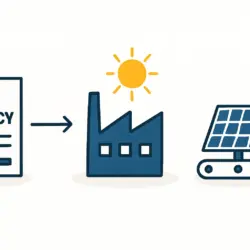
In a landmark move for Greece’s energy sector, the Public Power Corporation (PPC) has issued a €775 million green bond to accelerate its investment in renewable energy projects. This initiative, which saw overwhelming demand from investors, will finance the development and acquisition of clean energy sources and storage systems, marking a pivotal step in the company’s transition away from its historical reliance on lignite.
This issuance directly supports PPC’s ambitious strategy to achieve 9.5 GW of installed renewable capacity by 2026 and 11.5 GW by 2030, placing it at the forefront of Greece’s national energy transition objectives and aligning with broader EU climate goals.
PPC’s Greece green bond Details
Greece’s Public Power Corporation (PPC) has successfully issued a green bond worth €775 million, reflecting powerful investor confidence in the country’s renewable energy future. The bond, which has a maturity of eight years, was priced with a competitive coupon rate of 5.25%.
The issuance was met with exceptionally strong demand, with bids totaling approximately €1.5 billion – nearly double the amount offered. This overwhelming interest not only provides significant financial backing for PPC’s projects but also underscores the growing appetite in the financial community for sustainable investments in Southern Europe. It signals strong confidence in both PPC’s decarbonization strategy and the robust potential of Greece’s renewable energy sector.
Purpose of the Greece green bond
The €775 million raised will be strategically allocated to renewable energy projects managed by its subsidiary, PPC Renewables. The capital is earmarked for the development and acquisition of a diverse portfolio of clean energy sources, including wind farms, large-scale solar parks, and crucial energy storage systems.
These funds will enable the construction of cutting-edge renewable infrastructure, such as the solar projects PPC is developing with partners in regions like Western Macedonia. Building such large facilities involves a complex solar panel manufacturing process to produce the high-efficiency modules required. Furthermore, the investment will support the installation of battery storage infrastructure, which is essential for grid stability. By pairing renewables with storage, PPC can ensure a reliable power supply, reduce its carbon footprint, and actively contribute to Greece’s national energy goals.
PPC’s Renewable Energy Goals for the Greece green bond
PPC’s green bond is a cornerstone of its comprehensive strategy to align with international environmental standards and champion Greece’s energy transition. The company is decisively shifting its focus from fossil fuels to clean energy, with clear targets for expanding its renewable portfolio.
By 2026, PPC aims to operate 9.5 gigawatts (GW) of installed renewable capacity, with a further expansion to 11.5 GW by 2030. These ambitious targets are being realized through a pipeline of significant developments across the country, which are detailed in the comprehensive Greece solar report. A key component of this strategy is the parallel increase in energy storage capacity, which is vital for managing the intermittency of wind and solar power and ensuring a balanced, resilient energy grid.
Impact on Greece’s Energy Transition with the green bond
The issuance of this green bond is a major catalyst for Greece’s energy transition. By channeling significant capital directly into renewable projects, PPC is helping the nation reduce its greenhouse gas emissions and increase the share of clean energy in its overall mix. This move is part of a much larger national trend, as demonstrated by the stunning 2.6 GW of solar capacity Greece added in the first half of 2025 alone.
Greece has set a goal for renewables to account for 35% of its energy consumption by 2030. PPC’s green bond provides the financial muscle needed to develop the necessary infrastructure to meet and potentially exceed this target. This rapid transition in a key European country like Greece also highlights the growing momentum of renewables across the EU, which has implications for the energy landscape and policies affecting homeowners and tenants in Germany. For those interested in following these developments, our Greece Solar News archives offer continuous updates on the sector.
The success of PPC’s green bond demonstrates a powerful synergy between sustainable finance and environmental action. As Greece continues to build out its renewable capacity, it is solidifying its position as a leader in the continent’s transition to a low-carbon economy.
If you are inspired by these large-scale developments and want to understand the fundamentals of solar technology, consider enrolling in our free e-course on solar panel manufacturing.