Guyana’s Green Energy Transition: New Solar Farm Sets the Pace in 2026
As Guyana continues its remarkable economic transformation, a new solar farm is setting the pace for the nation’s ambitious green energy transition. In 2026, amidst the rapid expansion of its world-class oil and gas sector, this key renewable project stands as a powerful symbol of the country’s commitment to a diversified and sustainable energy future.
A Landmark Project for a Greener Guyana with Guyana solar energy
Highlighted as a leading initiative, the new solar farm is a cornerstone of Guyana’s strategy to shift away from its reliance on traditional power sources. As reported by Energy Magazine, this development is a critical step in the nation’s broader “green-power” transition. While details on the farm’s specific capacity and location are emerging, its strategic importance is clear: it serves as a tangible beacon for future renewable investments and a practical move towards decarbonization.
This initiative is not happening in isolation. It aligns with a comprehensive national energy plan that seeks to harness Guyana’s natural resources responsibly, ensuring that the benefits of today’s economic boom translate into long-term energy security and environmental stewardship.
Balancing Renewables with a Gas-to-Energy Future in Guyana solar energy
Guyana’s approach to energy is pragmatic, integrating renewable sources with transitional fuels to create a stable and robust power grid. The government’s strategy is underscored by the Budget 2026 allocation of $10.7 billion for Phase I of the landmark Wales Gas-to-Energy project. This major undertaking aims to utilize natural gas from offshore operations to provide cleaner, more reliable, and more affordable electricity to the nation.
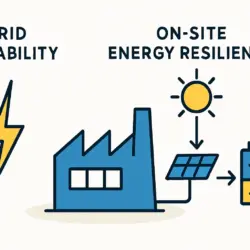
The simultaneous development of both the solar farm and the gas-to-energy project illustrates a dual-pronged strategy. By leveraging natural gas to reduce dependence on heavier fossil fuels and investing in solar, Guyana is building a hybrid energy system designed for both immediate impact and future sustainability.
Energy Ambitions in a Complex Geopolitical Climate for Guyana solar energy
Guyana’s energy journey unfolds against a backdrop of significant offshore development and complex regional geopolitics. The recent arrival of the ONE GUYANA Floating Production, Storage and Offloading (FPSO) vessel signals the continued growth of the oil sector, which is the engine of the nation’s economy.
This progress, however, is intertwined with the long-standing border controversy with Venezuela over the resource-rich Essequibo region. The dispute, which concerns territory containing a significant portion of Guyana’s estimated 11 billion barrels of oil equivalent, remains a critical issue. In a recent reaffirmation of support, the Caribbean Community (CARICOM) has underscored its unwavering backing for Guyana’s sovereignty and territorial integrity, with the matter currently before the International Court of Justice. This regional solidarity provides a stable foundation for Guyana to pursue its ambitious economic and energy development plans.
As Guyana moves forward, the new solar farm represents more than just clean energy infrastructure. It is a declaration of intent—a commitment to building a resilient and sustainable nation that can balance its immense natural resource wealth with a clear vision for a greener tomorrow. This project, setting the pace in 2026, will be a crucial one to watch as Guyana continues to shape its energy destiny.