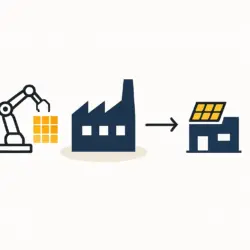
India’s Solar Production Target: 50 GW by 2028
India is stepping onto the global stage not just as a consumer of solar energy, but as a formidable producer. The nation has set a bold and ambitious target: to achieve an annual solar module manufacturing capacity of 50 GW by 2028. This strategic goal is a cornerstone of India’s larger vision for energy self-reliance and its commitment to a sustainable future.
This target goes beyond simply installing solar panels; it’s about building the entire ecosystem, from raw materials to finished products, right here in India. Let’s delve into what this ambitious goal entails, the drivers behind it, and the challenges that lie ahead.
Context and Strategic Significance for India solar target 2028
The 50 GW manufacturing target is a critical component of India’s updated Nationally Determined Contribution (NDC) under the Paris Agreement. It aligns perfectly with the country’s overarching goal to achieve 500 GW of non-fossil fuel-based energy capacity by 2030.
For years, India’s rapidly growing solar installation sector was heavily dependent on imported modules and cells. By building a robust domestic manufacturing base, India aims to:
* Enhance Energy Security: Reduce reliance on international supply chains, which are often subject to geopolitical volatility and price fluctuations.
* Boost the Economy: Create a thriving domestic industry, generate skilled employment, and attract significant investment.
* Support the ‘Make in India’ Initiative: Position India as a global manufacturing hub for renewable energy technology.
Key Drivers Fueling the Manufacturing Boom for India solar target 2028
This ambitious push is not happening in a vacuum. A combination of strategic government policies and favorable market conditions is creating a fertile ground for growth.
- Production Linked Incentive (PLI) Scheme: The centerpiece of India’s strategy is the PLI scheme for High-Efficiency Solar PV Modules. This policy provides financial incentives to domestic manufacturers for sales of high-efficiency modules, encouraging them to scale up production and invest in cutting-edge technology. You can find more details on this transformative scheme on the official Press Information Bureau releases.
- Cost Competitiveness: While solar energy is already cost-effective compared to fossil fuels, local manufacturing can further stabilize costs and protect projects from currency fluctuations and import duties.
- Growing Domestic Demand: With a massive pipeline of utility-scale and rooftop solar projects, there is a guaranteed and growing domestic market for locally made panels.
Current Progress and the Road Ahead for India solar target 2028
India has already made significant strides. In recent years, the domestic solar manufacturing capacity has seen a remarkable increase, with several companies expanding their facilities or setting up new, state-of-the-art gigafactories. According to reports from industry analysts, India is well on its way to achieving self-sufficiency in solar module production.
Challenges on the Horizon for India solar target 2028
Despite the strong momentum, the path to 50 GW is not without its obstacles. The primary challenges include:
- Upstream Supply Chain: India is still dependent on imports for critical upstream components like polysilicon, ingots, and wafers. Building out this part of the supply chain is complex and capital-intensive.
- Technological Advancement: The global solar industry is innovating at a breakneck pace. Indian manufacturers must continuously invest in research and development to keep up with the latest cell and module technologies.
- Grid Integration and Storage: As solar generation capacity grows, so does the need for a modernized grid and large-scale energy storage solutions to ensure stability and reliability.
The Impact of Success of India solar target 2028
Achieving the 50 GW manufacturing target will be a monumental victory for India. It will solidify the country’s position as a global leader in the fight against climate change. The ripple effects will be profound, leading to a significant reduction in carbon emissions, the creation of hundreds of thousands of jobs, and a more secure and resilient energy future for a nation of 1.4 billion people.
India’s journey towards this goal is a clear signal to the world: the future of energy is renewable, and India plans to be at the heart of manufacturing it.