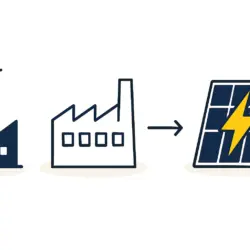
Powering Growth: Understanding Indonesia solar local content Rules in Manufacturing
Indonesia’s solar sector is experiencing unprecedented growth, transforming the nation into a burgeoning hub for renewable energy in Southeast Asia. This expansion isn’t just a market trend; it’s the result of a deliberate government strategy centered on new local content regulations and a significant push to increase solar power capacity. As the country works towards its ambitious goal of having renewable sources make up 23% of the national energy mix by 2025, these policies are creating a powerful and protected market for domestic solar manufacturing.
The Driving Force: Understanding Indonesia solar local content (TKDN)
At the heart of this solar boom is the Indonesian government’s Local Content Requirement, known as TKDN (Tingkat Komponen Dalam Negeri). This regulation mandates that solar power projects, particularly those funded by the state, must use a minimum percentage of locally sourced components and labor, currently set at 40%. For investors and manufacturers, understanding how to navigate these rules is critical, making a guide to TKDN-compliant solar manufacturing in Indonesia an essential resource.
This policy is a game-changer. It effectively shifts the market dynamics from a reliance on imports to a focus on building a robust domestic supply chain. By guaranteeing demand for locally produced goods, the TKDN framework provides the stability and predictability needed for long-term investment in Indonesia solar manufacturing.
Fueling a Domestic Manufacturing Ecosystem with Indonesia solar local content
The government’s mandate is a direct catalyst for boosting local production capabilities. This move encourages companies to establish or expand their manufacturing presence within the country, going far beyond simple assembly. Successfully meeting TKDN thresholds requires a deep integration into the local economy.
This involves mastering the basics of solar panel manufacturing and developing a comprehensive understanding of the entire solar panel manufacturing process. Companies are now incentivized to source solar panel raw materials locally and invest in the sophisticated solar panel manufacturing machines required for production. For those considering market entry, a thorough analysis of the solar panel manufacturing plant cost breakdown is a crucial first step in planning a viable PMA setup.
A Surge in Solar Capacity and Installations with Indonesia solar local content
The push for local content is matched by aggressive targets for energy generation. The state utility, PLN, plans to add 4.7 GW of solar photovoltaic capacity by 2030, creating a substantial and sustained demand pipeline for TKDN-compliant modules. This national strategy is visible in the development of large-scale ventures, such as the impressive Indonesia solar PV project that signals the country’s commitment to utility-scale renewables.
Alongside these major projects, the country is also seeing a surge in rooftop solar installations on residential, commercial, and industrial buildings. This decentralized growth further contributes to the overall expansion of Indonesia’s solar energy infrastructure, creating diverse opportunities for local manufacturers and installers. This combination of top-down policy and grassroots adoption is rapidly accelerating the nation’s transition to clean energy.
For those looking to enter or expand within this dynamic market, a deep understanding of the manufacturing landscape is crucial. To get started, explore our free e-course on solar panel manufacturing.