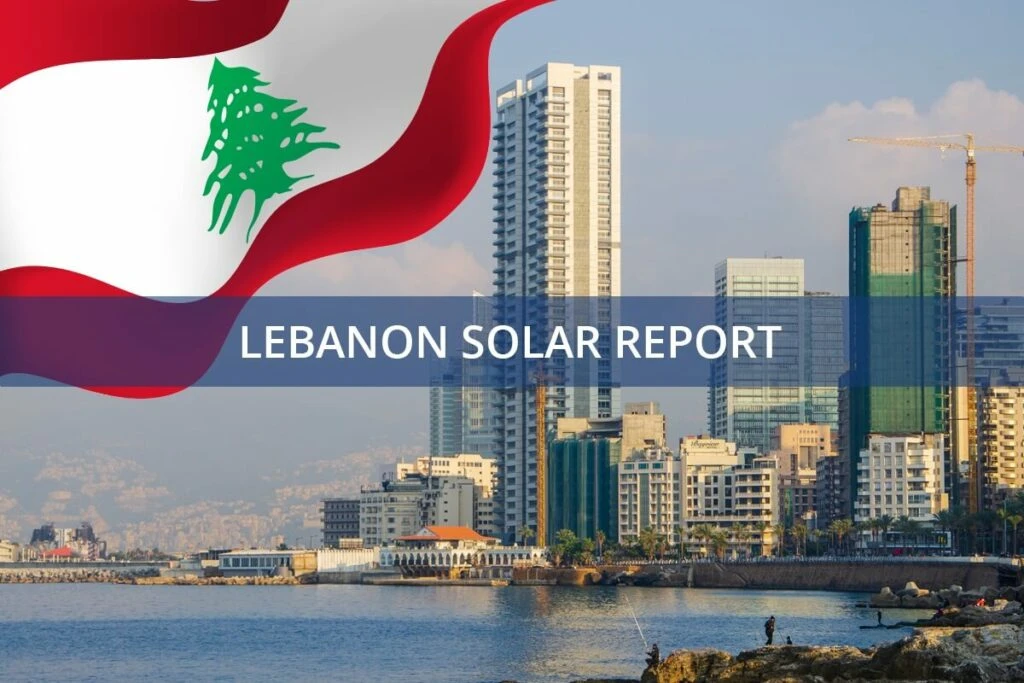
Lebanon Launches a Program for Lebanon Solar Expansion in Bekaa Valley
In a significant move to combat its crippling energy crisis, Lebanon has officially launched an ambitious 100-megawatt (MW) solar power expansion program in the Bekaa Valley. Announced on March 4, 2026, this initiative represents a critical step towards energy independence and sustainability for a nation plagued by chronic power shortages.
The program is a collaborative effort led by Lebanon’s Ministry of Energy and Water and the Lebanese Center for Energy Conservation (LCEC), with substantial support from international partners. It aims to harness the Bekaa Valley’s abundant solar resources to alleviate the country’s reliance on expensive and unreliable imported fuel.
Program Scope and Key Details for Lebanon Solar Expansion
This landmark project is designed to deploy 100MW of grid-connected solar photovoltaic (PV) systems throughout the fertile Bekaa Valley, a region known for its high solar irradiance of approximately 5.5 kWh/m²/day and expansive flat terrain, making it an ideal location for solar energy generation.
The program is structured in two main components:
- 70MW for utility-scale solar farms: These larger installations will be developed on agricultural lands and unused public spaces to generate power for the national grid.
- 30MW for distributed systems: This portion will focus on smaller-scale rooftop and ground-mounted installations for farms, schools, and rural communities, providing direct access to clean energy and reducing dependence on private diesel generators.
The project will be implemented in phases, with the first 20MW scheduled to be operational by the fourth quarter of 2026. The full 100MW capacity is expected to be rolled out by the end of 2028. Funding for this crucial infrastructure development is secured through a $150 million package of grants from key international donors, including the World Bank, the European Union, and USAID.
Technologically, the project will utilize advanced bifacial PV panels combined with single-axis trackers to maximize energy capture, with an estimated annual yield of 1,800-2,000 kWh per installed kilowatt-peak (kWp). To enhance grid stability and ensure a more reliable power supply, the program includes an initial 10MWh of battery storage capacity.
Strategic Importance and National Impact of Lebanon Solar Expansion
The 100MW solar program is more than just an infrastructure project; it’s a lifeline for Lebanon’s economy and its citizens, who endure blackouts averaging 22 hours a day.
Energy and Environmental Impact:
Once fully operational, the solar plants are expected to generate between 180 and 200 GWh of clean electricity annually. This is enough to power approximately 50,000 households and is projected to reduce the reliance on diesel generators in the Bekaa region by 20%. This initiative directly supports Lebanon’s National Energy Efficiency Action Plan (2021-2030), which aims to increase the share of renewable energy in the country’s power mix.
Economic Benefits:
The economic implications are equally significant. The project is set to create over 2,000 jobs during the construction, operation, and maintenance phases. Furthermore, local content requirements mandate that 40% of labor and components must be sourced from within Lebanon, providing a much-needed boost to local small and medium-sized enterprises (SMEs). Feasibility studies from the LCEC project a favorable internal rate of return (IRR) of 12-15%, indicating strong economic viability.
Overcoming Challenges in Lebanon Solar Expansion
The initiative is not without its hurdles. A key challenge is the modernization of the national grid, managed by Électricité du Liban (EDL), to handle the influx of variable renewable energy. Upgrades are planned in conjunction with the solar rollout. Additionally, the project’s implementation in a region with complex political dynamics requires careful navigation, which is being addressed through strategies focused on community engagement and buy-in to ensure long-term success.
This program builds on the lessons learned from previous successful pilot projects, such as the 10MW Zahle solar plant, and marks a pivotal moment in Lebanon’s transition to a more secure and sustainable energy future.
For those interested in following the project’s progress, official updates can be found on the websites of the Ministry of Energy and Water and the LCEC. Further details on the project’s framework can be found in the World Bank’s documentation under Project ID: P178234.