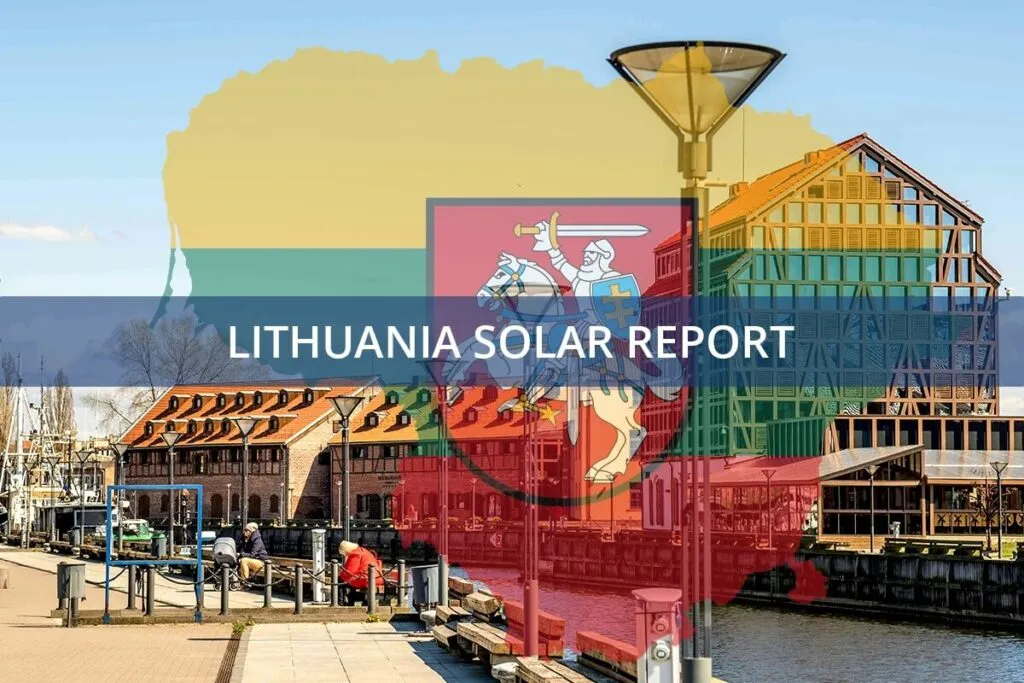
In a significant move to bolster its national security, Lithuania has imposed a ban on foreign citizens and companies from accessing the control systems of its renewable energy infrastructure. This strategic decision is part of a broader set of legislative measures designed to protect the country’s critical energy assets from escalating cyber threats.
New Legislative Measures for Lithuania solar farm security
The Lithuanian parliament has approved crucial amendments to several key laws, effectively preventing foreign ownership and remote access to solar farm control systems and related data storage facilities. The amendments, which update the Law on Electricity, the Renewable Energy Law, and others concerning critical infrastructure, are set to take effect from May 2025.
These changes are designed to fortify the security of Lithuania’s energy grid. The scope of the legislation is comprehensive, covering not only solar farms but also wind farms and large-scale battery storage systems. The government-backed decision aims to proactively mitigate risks associated with foreign influence over strategic national assets.
Preventing Foreign Control Over Strategic Assets and Lithuania solar farm security
The new regulations explicitly prohibit foreign citizens and companies from having remote access to the control systems of these renewable energy plants. This ban also extends to the technological equipment used to manage these systems. The core rationale is to prevent any potential abuse of foreign control that could jeopardize Lithuania’s energy security and grid stability.
Control systems are the digital backbone of modern energy infrastructure, essential for ensuring a stable and reliable power supply. Allowing foreign entities access to these systems poses significant risks, including the potential for cyberattacks, data breaches, and physical sabotage. By restricting access, Lithuania aims to seal these vulnerabilities. Importantly, the law does not require existing systems to be dismantled; instead, operators must implement robust cybersecurity safeguards to comply with the new rules.
Impact on Solar Farm Ownership and Data Storage for Lithuania solar farm security
The amendments also introduce restrictions on the ownership of solar farms and their associated data storage facilities. Foreign citizens and companies are now barred from owning shares in companies that control strategic solar power plants. This restriction applies equally to the ownership of critical technological equipment and data storage facilities.
Solar farms are central to Lithuania’s renewable energy strategy. The entire system, from the intricate solar panel manufacturing process to the final installation, represents a massive investment in the nation’s future. If foreign entities were to gain control over these assets, it could lead to disruptions in energy production and supply. Understanding the basics of solar panel manufacturing helps illustrate the complexity of the supply chain the government is now working to protect. These new regulations aim to prevent such scenarios by ensuring that critical infrastructure remains under secure, domestic oversight.
Background of the Legislative Changes for Lithuania solar farm security
The amendments were first presented to the Lithuanian parliament in April by the Ministry of the Economy and Innovation. They were developed in direct response to growing concerns about the security of Lithuania’s energy infrastructure in a challenging geopolitical landscape. The amendments were approved by the parliament on May 22 and subsequently signed into law by President Gitanas Nausėda in late June.
The Ministry of the Economy and Innovation, led by Minister Aušrinė Armonaitė, emphasized that these measures are vital for protecting Lithuania’s strategic interests. The ministry noted that the restrictions are a necessary step to prevent potential abuses of foreign control that could undermine the country’s energy security and independence.
Preserving National Security through Lithuania solar farm security
The ban on foreign access to renewable energy control systems is part of a broader legislative effort to safeguard Lithuania’s critical infrastructure. By preventing foreign ownership and control of key assets, the government aims to ensure its energy infrastructure remains resilient against external threats. This includes securing the entire value chain, from the sourcing of solar panel raw materials and the manufacturing machines used to produce them, to the software that runs the power plants.
As cyber threats continue to evolve, countries worldwide are taking similar steps to protect their critical infrastructure. Lithuania’s decision reflects a growing global recognition of the importance of energy security. By taking these proactive measures, Lithuania is working to preserve its national security and ensure the long-term resilience of its energy supply.
Understanding these geopolitical and security considerations is crucial for anyone involved in the solar industry. To deepen your knowledge of the foundational elements of this sector, from technology to economics, consider exploring our free e-course on solar panel manufacturing.