Blackout Pushes Businesses to Solar Energy
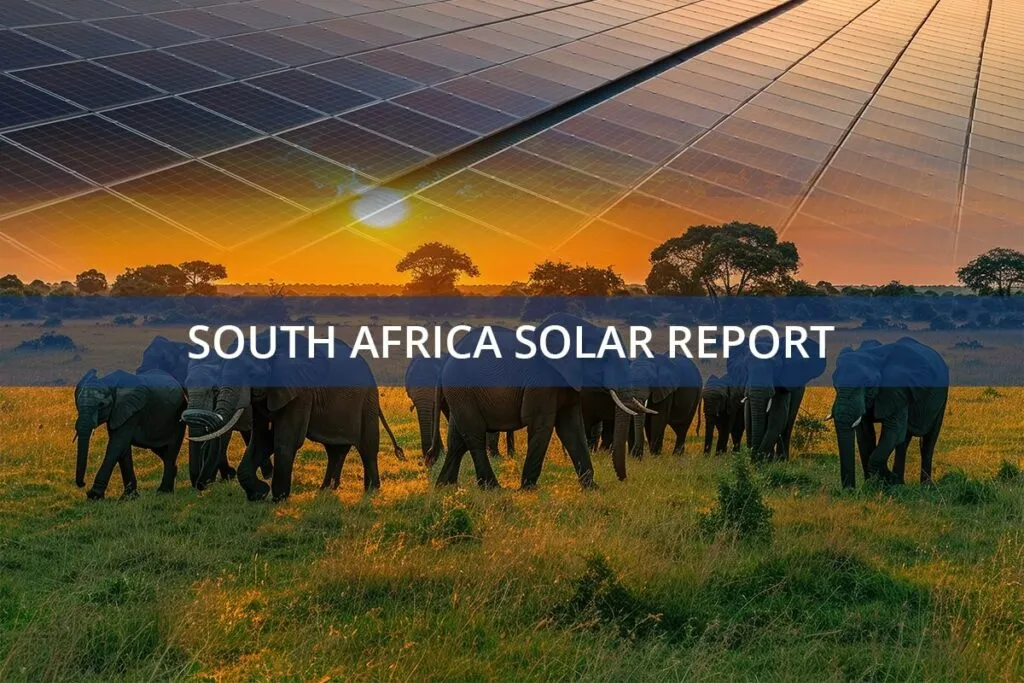
Last year, South Africa was hit by severe power outages. While businesses initially believed the intermittent blackouts were short-term, the duration of these power cuts steadily grew. By January 2023, it became clear the energy crisis would persist, leading to a significant increase in solar panel imports.
Eskom’s estimates show that as of March 2024, approximately 5,440MW of residential and rooftop solar capacity had been installed across the country. A GoSolr “light paper” from April 2024 also shows that rooftop solar expanded by 2,630MW in the previous year, with another 236MW added in the first quarter of this year.

Image: Collected
Teresa Settas of the One Energy group warns businesses of significant future electricity cost increases, projecting annual hikes of 15% once Eskom’s 12% increases are compounded by municipal additions of 2%–3%.
Andre Nepgen from Discovery Green contrasts traditional, usage-based electricity costs with renewable energy costs, which are tied to generated power regardless of immediate consumption. He advises businesses to tailor their renewable energy mix to match their consumption patterns from the very beginning.
The Long-term Implications
Nepgen’s research shows that no industry’s electricity demand profile perfectly matches solar generation, highlighting the need for careful planning. While there is currently a strong preference for solar due to its immediate financial benefits, he notes a tendency to overlook long-term implications in favor of short-term gains.
According to Discovery Green’s research, after adopting 45% solar energy, businesses often face a steep 77% premium when trying to meet the remaining 55% of their energy needs with other renewable sources. This challenge arises because sourcing renewables exclusively for nighttime consumption is costly for suppliers.
As a result, businesses often settle for limited renewable energy coverage after adopting solar. This approach leaves them with ongoing costs and vulnerability to future utility price hikes expected to surpass inflation. These long-term expenses are typically overlooked during the sales process, and decision-makers may not yet fully grasp the complexities.
Accessing Renewable Energy
Andre Nepgen points out that businesses frequently overlook the potential impact of extreme events on energy generation or consumption, often relying on historical averages for their decision-making. His analysis demonstrates significant variability in energy output: solar facilities can vary by more than 14% between consecutive months, and wind plants by up to 33% under normal conditions.
Businesses can access renewable energy through several methods. They can install on-site setups like rooftop solar panels or nearby solar plants, but these generate power only during daylight hours, which can result in unused energy outside of regular operations.
Alternatively, businesses can pursue renewable energy wheeling contracts with independent power producers (IPPs) for solar photovoltaic (PV) systems, allowing them to buy privately generated electricity connected to the national grid. These deals are often structured as take-or-pay arrangements. Another option involves wheeling contracts with renewable energy traders, who purchase from IPPs and sell to businesses at a profit margin.
Finally, businesses can participate in renewable energy product platforms that aggregate IPP-generated renewable energy, offering procurement contracts to both IPPs and business consumers.
Partnering for Maximum Benefit
Nepgen suggests that combining renewable energy from various sources creates a diversified energy portfolio that enhances resilience against generation fluctuations. This strategy smooths out variability in sources like solar and wind power, ensuring a more stable energy supply.
This approach is also less risky for businesses. Research indicates that a consortium of five businesses across different sectors can achieve up to 78% renewable energy coverage and reduce wastage compared to individual businesses, which might only reach a 49% coverage limit.
Importantly, Nepgen adds, businesses can use this model to replace up to 90% of their energy consumption with renewables in a single transaction, reducing the risks associated with strategies focused solely on solar energy.
The growing adoption of solar energy underscores some of the key advantages of solar energy in South Africa for combating rising electricity costs and power outages. However, achieving true energy resilience requires long-term planning and diversified renewable strategies to overcome solar’s inherent limitations.