Huatapampa, a Bolivian community once plagued by water scarcity and out-migration, has reversed these trends by embracing solar energy. With support from Practical Action and Green Empowerment, a solar-powered irrigation system has boosted agricultural production and created economic opportunities, revitalizing the community and encouraging its young people to return.
Revitalizing Huatapampa with Solar Energy
Recognizing this critical issue, the community took action with support from Practical Action, Green Empowerment, and Christadelphian Meal a Day. The switch to solar energy reduced expenses, freeing up funds for other essential needs. As a result, new agricultural opportunities are emerging in Huatapampa, reversing trends of crop loss, soil degradation, low incomes, and high migration.
”The lack of livelihoods and food forced our people, especially the young, to move to the city. Huatapampa used to have around 120 families, but now only 30 families remain,” said Liduvina Pucho Ulo, president of Sumaj Qamaña, a farming cooperative in the Tito Yupanqui municipality.
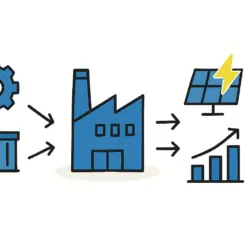
By harnessing renewable energy, food security has increased, production has diversified, and incomes have improved—encouraging people to return to Huatapampa for new opportunities. The community now operates a solar-powered irrigation system that extends the productive cycle from June to December, boosting crop yields during this period.
Initially launched with the Sumaj Qamaña association of 12 families, the system is now expanding. Today, it serves 80% of Huatapampa’s population, improving local food security while also benefiting nearby communities and local markets.
Tackling Water Scarcity in Huarina
Huarina, a scenic municipality and popular tourist destination, faces similar water issues despite its proximity to a large lake. The town has long depended on rainwater harvesting and small springs from nearby hills, but climate change and drought have severely affected these sources. This has led to migration, reduced food security, and increased hardship for vulnerable populations, exacerbating inequality and poverty.
“Our ancestors once described these springs as large and essential for the population. However, due to climate change and pollution, this vital resource is diminishing,” explains Wilson Mamani, Mayor of the Huarina municipality.
Working closely with the Autonomous Municipal Government of Huarina, Practical Action is implementing a plan to ensure food security and improve local livelihoods. A new solar-powered irrigation system is being installed to enhance the community’s quality of life.
Scaling Up Solar-Powered Irrigation Systems
Encouraged by the successes in Huatapampa and Huarina, and bolstered by advocacy efforts, other municipalities in the Katari Basin—such as Tito Yupanqui, Calamarca, San Andrés de Machaca, and Pucarani—are adopting similar solar-powered irrigation systems. These initiatives aim to support 280 households, providing access to safe water and promoting strategies for climate change adaptation and mitigation.
Connecting these municipalities is the Solar Empowerment for Smallholder Farmers in Bolivia project. Funded by the EKOenergy ecolabel and Kilburn + Strode and implemented by Practical Action, the project aims to enhance solar-powered irrigation systems, boost farmers’ skills in sustainable agriculture, and conserve natural resources for future generations.
Empowering Bolivian Farmers with Climate Solutions
Practical Action is equipping Bolivian farmers with climate-resilient water solutions by partnering with local authorities to promote innovative, sustainable strategies. This collaboration enhances food security, advances sustainable development, and raises awareness of the climate crisis, showing how local communities can adapt and contribute to mitigation efforts. These initiatives are designed to create significant, lasting improvements for small farmers in Bolivia.
The transition to solar energy demonstrates the transformative power of sustainable solutions for Bolivian agriculture. By implementing solar-powered irrigation systems, communities like Huatapampa and Huarina are not only improving food security and reversing migration but also boosting their local economies. These ongoing efforts provide a scalable and impactful approach to climate resilience, empowering smallholder farmers and ensuring a sustainable future for generations to come.