Solar panels are transforming schools across Solapur district, addressing crucial energy challenges and improving educational outcomes. In just a few months, this initiative—driven by local educators and supported by Corporate Social Responsibility (CSR) efforts—has equipped 19 schools with solar power, providing uninterrupted electricity and reducing costs for nearly 9,000 students.
Solar Panels for Schools Initiative Transforming Education in Solapur
In the village of Gorewasti, the Zilla Parishad (ZP) School was once plagued by power cuts that disrupted classes and hindered the use of modern teaching tools. Now, thanks to a 1 kW solar panel on its rooftop, the school enjoys continuous access to educational content on smart TVs and other electronic devices. For its 26 students, this has created a vastly improved learning environment.
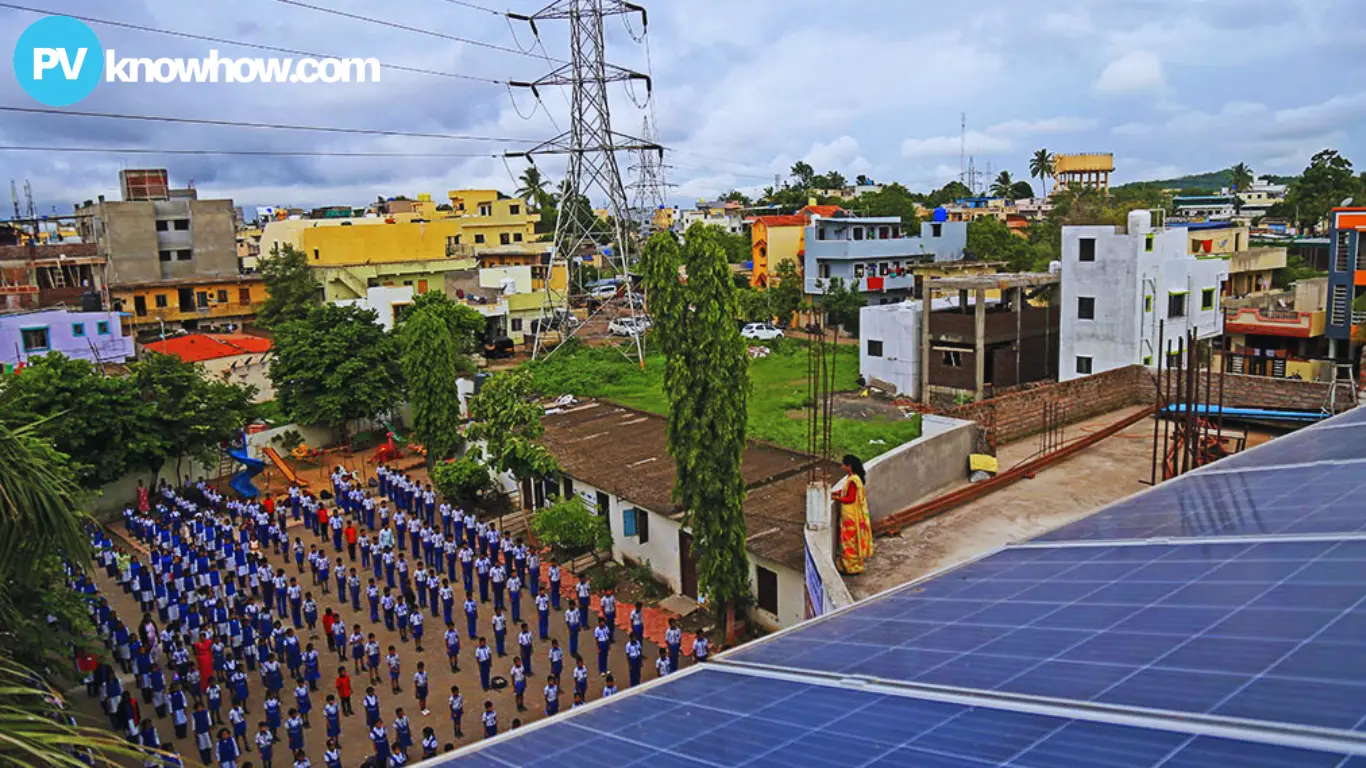
Image: Collected
Gorewasti ZP is just one of many schools reaping the benefits of solar power. Across the district, in villages such as Warawade, Paritewadi, Aahergaon, Venegaon, Akumbhe, and Akole Budruk, 17 Zilla Parishad schools and two government-aided schools—with a combined enrollment of nearly 9,000 students—have either become energy-neutral or are generating more solar energy than they consume.
Jawed Mujawar, the teacher and in-charge principal at Gorewasti ZP School, highlighted the school’s prime location on farmland with ample sunshine, making it ideal for generating solar energy. The school now plans to purchase computers for students and teachers, further enhancing the educational experience. This effort is led by Ranjitsinh Disale—a teacher at another ZP school who won the Global Teacher Award in 2020—with funding from the Exim Bank’s CSR initiatives.
For schools in remote areas where electricity has always been scarce and commercial rates prohibitively high, solar panels have been a game-changer. For instance, the Mahatma Phule Vidyalay in Warawade village, with 712 students, used to spend over Rs. 10,000 a month on electricity. Now, its smart classrooms are largely powered by solar energy, significantly reducing operating costs.
The Growing Role of Solar Energy in Education
The adoption of solar technology is poised to expand, providing schools and communities with more sustainable, cost-effective energy solutions. As this technology evolves, it will offer even more affordable and accessible options, ensuring future generations can enjoy enhanced educational opportunities powered by clean energy.
Government programs and incentives are crucial in promoting the adoption of solar energy. These include financial assistance such as subsidies, tax rebates for businesses and homeowners, and grants to encourage the installation of solar panels. Schools stand to gain significantly from these initiatives, making solar energy an increasingly viable option for educational institutions.
Implementing a functional solar panel system in a school requires a systematic approach. Institutions must estimate their current energy consumption to determine the necessary solar capacity, assess available rooftop space or open land for installation, and conduct a technical and economic feasibility study to evaluate the potential benefits and costs.
Steps to Implement Solar Energy in Schools
Strategic alliances with renewable energy companies, non-profits, and government bodies can provide vital technical and financial support. Collaborating with solar energy experts is essential for designing a system tailored to a school’s specific energy needs and site conditions.
It’s also critical for schools to work with reputable vendors who offer high-quality solar panels, inverters, and other warranted equipment.
For successful operation and maintenance, training staff and students on their solar energy systems is key. By monitoring the system’s performance and energy output, schools can maximize the benefits of their solar installations.
Additionally, incorporating energy-saving practices into the school’s daily routine can further improve the learning environment and contribute to a more sustainable future.
The solar panel initiative in Solapur district serves as a powerful model for how sustainable energy can transform education. By providing reliable and cost-effective power, these projects improve the learning environment while also promoting environmental stewardship and community empowerment.
As solar technology continues to advance, schools across India and beyond can look to Solapur as an example of how to harness the power of the sun to create a brighter, more sustainable future for education.