Taiwan is facing significant challenges in meeting its renewable energy targets for 2025, with progress in wind and solar power development falling short of expectations. The government had set an ambitious goal to increase the share of renewable energy to 20% of total power generation by 2025, but recent reports indicate this target is likely out of reach. For deeper insights on Taiwan’s solar energy landscape, explore the Taiwan Solar Panel Manufacturing Report.
Taiwan Renewable Energy Challenges in Wind Power Expansion
Offshore wind power is a key component of Taiwan’s renewable energy strategy. The government initially planned for 5.7 gigawatts (GW) of installed capacity by 2025; however, only 2.8 GW had been installed by the end of 2024. This shortfall stems largely from construction delays and difficulties in securing the necessary permits.
According to the Bureau of Energy, only 1.6 GW of offshore wind capacity was operational at the end of 2024, with another 1.2 GW under construction. This total falls significantly short of the original target, making it unlikely the remaining capacity will be completed by the end of 2025.
Onshore wind power development has also faced setbacks. The government had set a target of 1.2 GW of installed capacity by 2025, but only 0.7 GW had been achieved by the end of 2024, partly due to land acquisition challenges and opposition from local communities.
Taiwan Renewable Energy Challenges in Solar Power Development
Taiwan’s solar power development has encountered similar hurdles. The government’s target of 20 GW of installed solar capacity by 2025 appears increasingly unlikely, with only 12.5 GW installed by the end of 2024. This shortfall is attributed to a lack of available land for large-scale solar farms, difficulties securing financing, and challenges in connecting new installations to the grid.
The government’s push for rooftop solar has also met with obstacles. Although rooftop installations were expected to contribute significantly to the overall capacity, adoption rates have been slower than anticipated. Many building owners remain reluctant to install solar panels, citing concerns over cost and the potential structural impact on their properties.
Policy Adjustments to Address Taiwan Renewable Energy Challenges
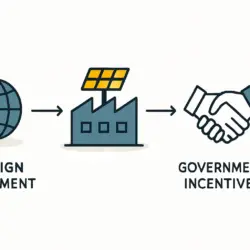
To address these challenges, the Taiwanese government has announced several policy adjustments aimed at accelerating renewable energy development. These measures include increasing financial incentives for projects and streamlining the permitting process for new installations.
Despite these efforts, it remains uncertain whether Taiwan can meet its 2025 renewable energy targets. Delays in wind and solar development are compounded by rising electricity demand, which has grown by an average of 3% annually over the past decade.
Looking beyond 2025, Taiwan’s government has set an even more ambitious target of achieving 40% renewable energy by 2030. Reaching this goal will require a dramatic acceleration of renewable energy infrastructure development, alongside continued investments in grid modernization and energy storage.
While Taiwan has made progress in expanding its renewable energy capacity, the country still faces significant challenges in meeting its 2025 targets. The government’s ambitious goals for wind and solar power have been hampered by delays and other obstacles, making the 20% renewable energy share by 2025 seem increasingly out of reach.
For detailed projections and insights into Taiwan’s renewable energy strategy, review the Taiwan Solar Panel Manufacturing Report.