Thai Energy Minister Supports Rooftop Solar with Net Billing System
Thailand’s push towards a greener energy future has received a significant boost, with Energy Minister Pirapan Salirathavibhaga publicly endorsing the widespread adoption of rooftop solar panels through a new net billing system. This strategic move is a cornerstone of the country’s Power Development Plan (PDP) 2024-2037, which aims to have renewable sources account for 30% of the total energy mix by 2037.
The announcement signals a clear policy direction designed to empower homeowners and businesses, accelerate solar adoption, and firmly position Thailand as a renewable energy leader in Southeast Asia.
Understanding Thai Rooftop Solar and Net Billing
At the heart of this new policy is the shift to a “net billing” model. But what does this mean for the average consumer?
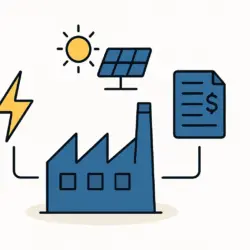
Unlike net metering, where surplus solar energy sent to the grid is credited at the full retail electricity rate, net billing works differently. Under this system, homeowners are compensated for their excess solar power at a wholesale or production-cost rate, which is currently around 1.68-3.05 THB per kilowatt-hour (~$0.05-0.09 USD). When they need to draw power from the grid (for instance, at night), they pay the standard retail rate.
This structure is designed to encourage “self-consumption”—using the solar power you generate in real-time. It incentivizes households to align their energy usage with peak solar production hours, thereby reducing their reliance on the grid and lowering their electricity bills, while ensuring fair compensation for the power they contribute.
A Vision for a Solar-Powered Thailand
In a recent statement on March 31, 2026, Minister Pirapan outlined an ambitious vision to expand rooftop solar capacity from approximately 1 GW today to over 10 GW by 2030. This policy builds upon 2024 reforms that removed the previous 5 kW capacity cap for households, opening the door for more significant installations.
Addressing concerns from the Electricity Generating Authority of Thailand (EGAT) about potential grid overloads, the Minister advocated for the integration of smart inverters and demand-response technology. These tools will help manage the flow of energy, ensuring grid stability as more solar producers come online.
The government’s commitment is backed by a clear and supportive policy framework:
| Policy Aspect | Details |
| :— | :— |
| Capacity Target | 7.5 GW of rooftop solar by 2026; unlimited capacity for households post-2026 under the net billing scheme. |
| Financial Incentives | Tax deductions of up to 100,000 THB and access to low-interest loans through partner banks like Krungthai. |
| Proven Success | Net billing pilot programs running since 2022 have already added 200 MW of capacity, with demonstrated payback periods of just 4-6 years for typical 5-10 kW systems. |
| Addressing Challenges | The government is promoting battery storage through subsidies to reduce dependency on exporting power to the grid and has placed caps on large-scale commercial installations to manage grid impact. |
The Economic and Environmental Case for Thai Rooftop Solar
The move towards rooftop solar is not just an environmental win; it’s economically sound. With current installed solar costs at approximately 15 THB per watt, an analysis by the Thailand Solar Energy Association projects an impressive 8-12% Internal Rate of Return (IRR) for users under the net billing system.
On a national scale, the benefits are even more substantial. Estimates from the Asian Development Bank (ADB) suggest that this widespread solar adoption could cut Thailand’s fossil fuel import costs by around 50 billion THB annually by 2030. This is supported by EGAT data, which showed a 50% year-on-year growth in rooftop solar in 2025 alone. Furthermore, by adopting net billing, Thailand proactively avoids the “duck curve” issue—a major grid management challenge seen in markets with high levels of net-metered solar, as highlighted in studies by the International Energy Agency (IEA).
This forward-thinking policy, confirmed in a recent Ministry of Energy press release, solidifies Thailand’s commitment to a sustainable and economically resilient energy sector. For homeowners and businesses interested in participating, the next step is to check the official EGAT portal for registration details and guidelines.