Understanding Thailand solar rooftop law: 5 Essential Changes for Simplified Installations
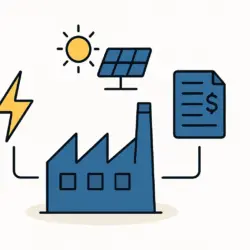
Thailand is poised for a significant acceleration in its renewable energy transition, driven by a landmark regulatory update designed to remove long-standing barriers for solar rooftop installations. Under Ministerial Regulation No. 72 (B.E. 2568), which takes effect on November 19, 2025, the government has fundamentally simplified the process for homeowners and businesses seeking to harness solar power, marking a critical step toward the nation’s clean energy goals.
This initiative, issued under the Building Control Act by the Ministry of Interior, supersedes earlier proposals and directly addresses key bureaucratic hurdles that previously slowed adoption. The changes are expected to lower costs, reduce administrative burdens, and encourage wider participation in the distributed energy market. Here are the five essential changes transforming Thailand’s solar landscape.
1. Exemption from Building Modification Permits
The most impactful change is the exemption of solar rooftop installations from the requirement to obtain a building modification permit, known as the Aor. 1. Previously, this permit was a mandatory and often time-consuming step. The new regulation eliminates this requirement for most projects, streamlining the entire installation timeline from start to finish.
2. A Clear Technical Standard for Exemption
To qualify for the permit exemption, installations must meet a specific technical criterion: the weight of the solar panels cannot exceed 20 kilograms per square meter (kg/m²). This clear, measurable standard provides certainty for installers and property owners, ensuring that exempted systems maintain structural integrity without needing a lengthy engineering review process for the permit.
Ready to make big Profits?
The solar Industry is Booming
WE HELP NEWCOMERS to the solar industry start their own solar module production line. Customers can make BIG PROFITS by selling modules and finding investors, without wasting money and time on things they don't need!
3. Expanded Access for Commercial and Industrial Sectors
While previous discussions often centered on residential installations, the new rules are not limited to homes. The permit exemption applies broadly, opening the door for more commercial and industrial (C&I) properties to adopt solar energy with far less red tape. This expansion is crucial for scaling up the country’s total solar capacity.
4. Introduction of Significant Tax Incentives
Complementing the regulatory simplification, the Thai Cabinet has approved powerful financial incentives. Under Royal Decree No. 805, individuals can now claim a personal income tax deduction of up to THB 200,000 for the installation of a qualifying grid-connected solar rooftop system. This tax break directly reduces the upfront investment cost, making solar energy a more financially attractive option for a wider audience. You can review the broader impacts of the new solar regulations.
5. A Unified Push Towards National Energy Goals
These coordinated changes signal a clear government commitment to its long-term energy strategy. By making solar rooftops more accessible and affordable, Thailand is better positioned to achieve its ambitious goal of adding 3,000 MW to 4,000 MW of new solar capacity by 2037. The simplified process for connecting to the grid and selling surplus electricity further supports this vision, creating a more dynamic and decentralized energy system that aligns with Thailand’s broader renewable energy strategy. The move is anticipated to lower electricity bills for consumers, stimulate economic activity, and create new jobs in the clean energy sector.
Sources
- Thailand Exempts Solar Rooftop Panels as Building …
- Thailand Tax Break for Rooftop Solar Installations
- Thailand’s Cabinet approves tax breaks for investment in …
- C&I Solar Rooftop Installations are now Exempted from …
- Thailand Eases Rules For Solar Rooftop Installations
- Energy Ministry proposes new law to simplify solar rooftop …
- New Tax Measures to Promote Solar Rooftop Installations …
- Thailand Eases Rules for Solar Rooftop Installations