
In a significant step towards campus decarbonization, the City University of Hong Kong (CityUHK) has forged a strategic partnership with CLP Power Hong Kong Limited (CLPe). Announced on June 2, 2024, the collaboration will see the deployment of a large-scale, cutting-edge solar power system across the university grounds, marking a major milestone in the institution’s commitment to sustainability.
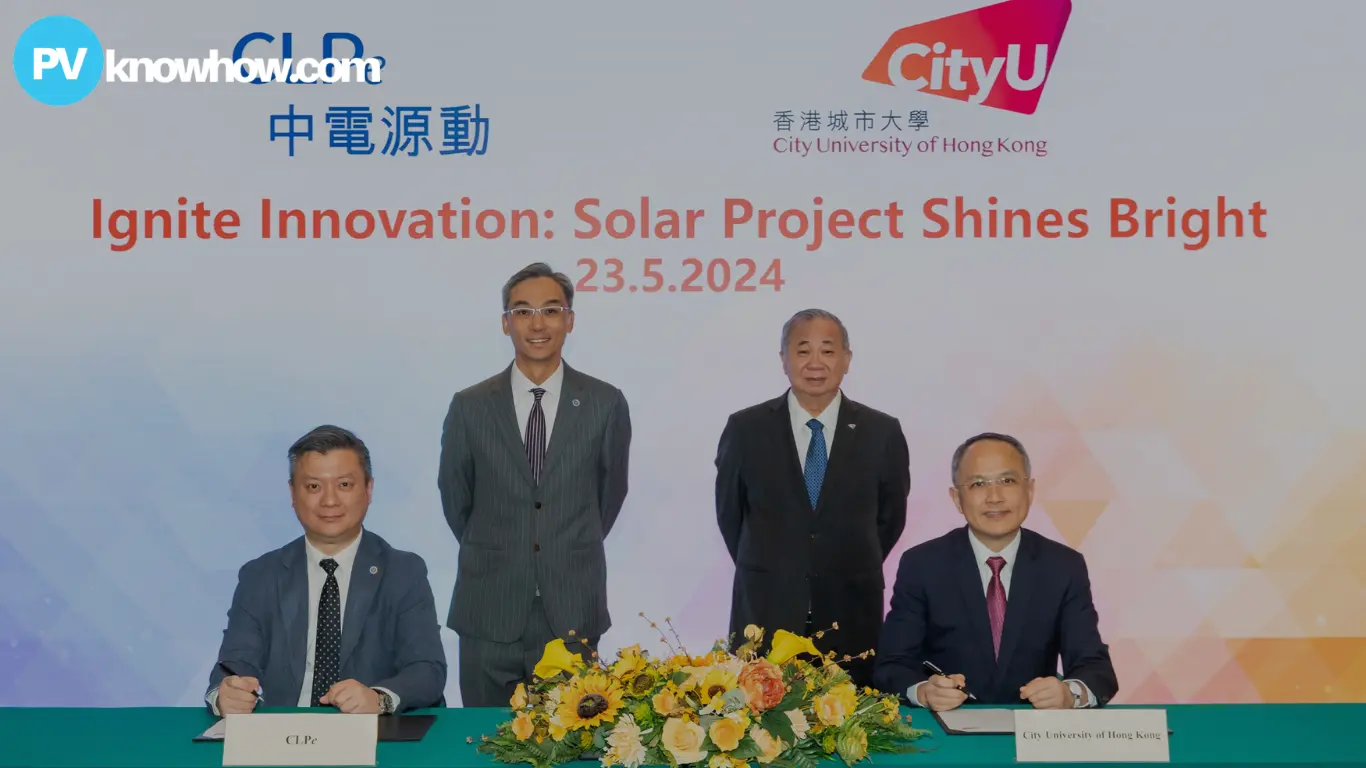
Image: Collected
Advanced Solar Technology at Scale: City University of Hong Kong’s New Solar Power System
Under a comprehensive ‘solar power system-as-a-service’ model, CLPe will install nearly 2,000 high-efficiency bifacial solar panels. These advanced modules capture sunlight on both sides, generating approximately 10% more electricity than conventional single-sided panels. The installation will span an impressive 4,500 square meters across the rooftops of more than 30 campus buildings.
The system is engineered for significant environmental impact, with a projected annual output of 1.15 GWh of clean electricity. This is enough energy to power roughly 280 local households for a year and is expected to reduce carbon dioxide emissions by an estimated 450 tonnes annually. To ensure optimal performance, CLPe will also implement a real-time monitoring system for remote management and performance tracking.
A Living Laboratory for Innovation: City University of Hong Kong’s New Solar Power System
This initiative extends beyond clean energy generation, positioning the campus as a hub for scientific research and development. The solar array will serve as a valuable platform for innovation led by researchers at CityUHK. The project also incorporates a trial of a passive radiative cooling paint developed by i2Cool, a university-affiliated start-up. This innovative coating reflects sunlight to lower building temperatures, potentially boosting the solar panels’ efficiency.
“Our university is committed to sustainable development and addressing 21st-century challenges through innovation,” stated CityUHK President Professor Freddy Boey. “This collaboration with CLPe exemplifies our efforts to tackle urgent environmental issues.”
Phased Implementation and Future Goals for City University of Hong Kong’s New Solar Power System
Work on this initial phase is scheduled to commence in the third quarter of 2024, with a targeted completion by early 2025. This project lays the groundwork for a broader, long-term partnership between the two organizations. Future collaborations are expected to explore further decarbonization solutions, including advanced energy management, smart sensing technologies, and Cooling-as-a-Service initiatives, reinforcing the shared commitment to building a sustainable future for Hong Kong.
Sources
- Innovative Solar Technology Powers CityUHK – OpenGov Asia
- Protecting solar cells for better performance – Croucher Foundation
- Advancing Energy Sustainability Through Solar-to-Fuel Technologies
- Streamlining solar cell structure and fabrication for more affordable …
- CLPe Teams Up with CityUHK to Install Solar Power System Across …
- Streamlining solar cell structure and fabrication for more affordable …
- Scalable Production of Next-Generation High-Performance Printable …
- [PDF] CLPe Teams Up with CityUHK to Install Solar Power System Across …
- Streamlining solar cell structure and fabrication for more affordable …

