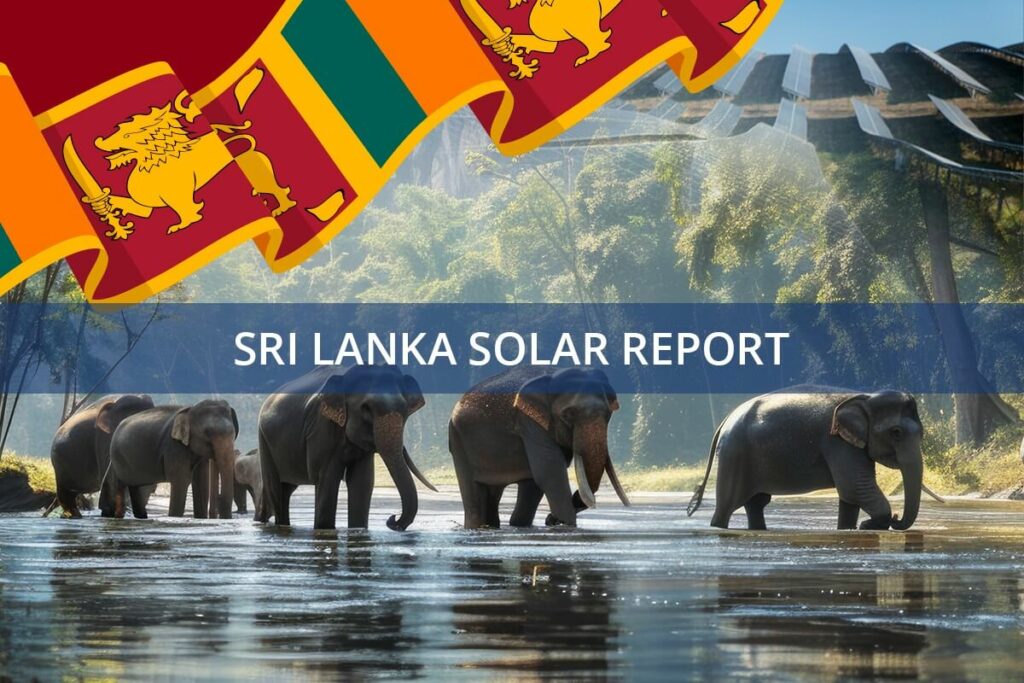
Sri Lanka has officially surpassed 1 gigawatt (GW) of total installed solar energy capacity in 2024, a landmark achievement commemorated at a recent event in Colombo. Hosted by Huawei Sri Lanka, the gathering brought together government officials and industry leaders to celebrate the nation’s progress in renewable power generation.
Public-Private Synergy Fuels Solar Growth as Huawei Celebrates Sri Lanka’s 1 GW Solar Energy Mark
This milestone is a direct result of strong collaboration between the public and private sectors. Huawei has been a key technology partner, contributing to 40 percent of the nation’s total solar capacity. This effort significantly supports the government’s “Soorya Bala Sangramaya” (Battle for Solar Energy) program. Launched in 2016 by the Ministry of Power, this initiative, with backing from the Sri Lanka Sustainable Energy Authority (SLSEA), Ceylon Electricity Board (CEB), and Lanka Electricity Company (LECO), has been instrumental in promoting small-scale rooftop solar installations, reducing fossil fuel dependency, and empowering citizens to become energy producers.
Government Reinforces Commitment to a Green Future as Huawei Celebrates Sri Lanka’s 1 GW Solar Energy Mark
Dr. Sulakshana Jayawardane, Secretary to the Ministry of Power and Energy, attended as the Chief Guest and stressed the importance of a unified approach. “The target of adding 1,000 MW of solar electricity to the national grid by 2025 is not just a government goal but a collective mission involving the public, the private sector, and service providers,” he stated. Dr. Jayawardane expressed gratitude towards Huawei and the SLSEA for their contributions and noted that a new legal framework is being developed to address existing hurdles and foster a more favorable environment for future solar projects. “Together, I am confident that new initiatives and collaborations will strengthen the process,” he added.
Huawei’s Technological Drive and Future Vision for When Huawei Celebrates Sri Lanka’s 1 GW Solar Energy Mark
Underscoring the company’s long-term commitment, Zhang Jinze (Zeh), CEO of Huawei Sri Lanka, highlighted the 40 percent contribution as a testament to Huawei’s dedication to the country’s renewable energy goals. He elaborated on the company’s continuous innovation in the sector. “Our journey in solar PV has been promising, and we’re eager to share our developments in energy storage systems, smart PV controllers, EV chargers, and large-scale energy storage solutions,” said Zhang. He affirmed Huawei’s focus on advancing grid-behind battery technologies to enhance the reliability and efficiency of Sri Lanka’s power systems.
Global Insights on Grid Stability and Storage as Huawei Celebrates Sri Lanka’s 1 GW Solar Energy Mark
The event also featured a global perspective from Ussama Rai, Director of Smart PV & BESS Service Solutions at Huawei UK. Rai discussed international trends and the technical challenges of integrating large volumes of solar power into national grids. He emphasized the growing importance of grid-forming technologies and virtual inertia to maintain stability. Crucially, Rai pointed out that as more solar plants come online, advanced energy storage systems become non-negotiable for balancing supply and demand, ensuring a consistent and reliable electricity supply for the nation.
The Path to Energy Independence After Huawei Celebrates Sri Lanka’s 1 GW Solar Energy Mark
Achieving the 1 GW mark is more than a celebration; it’s a launchpad for Sri Lanka’s ambitious plan to generate 100 percent of its electricity from renewable sources by 2050. The continued partnership between government bodies and technology leaders like Huawei will be vital in navigating future challenges. By leveraging its abundant solar resources and investing in cutting-edge technologies, Sri Lanka is steadily moving toward energy independence and setting a powerful example for sustainable development worldwide.
Sources for When Huawei Celebrates Sri Lanka’s 1 GW Solar Energy Mark
- IEA-PVPS: Trends in Photovoltaic Applications 2024
- Pathfinder Foundation: Sri Lanka’s Transformation to Clean Energy
- Meinergy Signs Agreement with Huawei on a 1 GW and 500 MWh Project
- Huawei celebrates Sri Lanka’s 1 gigawatt solar energy milestone