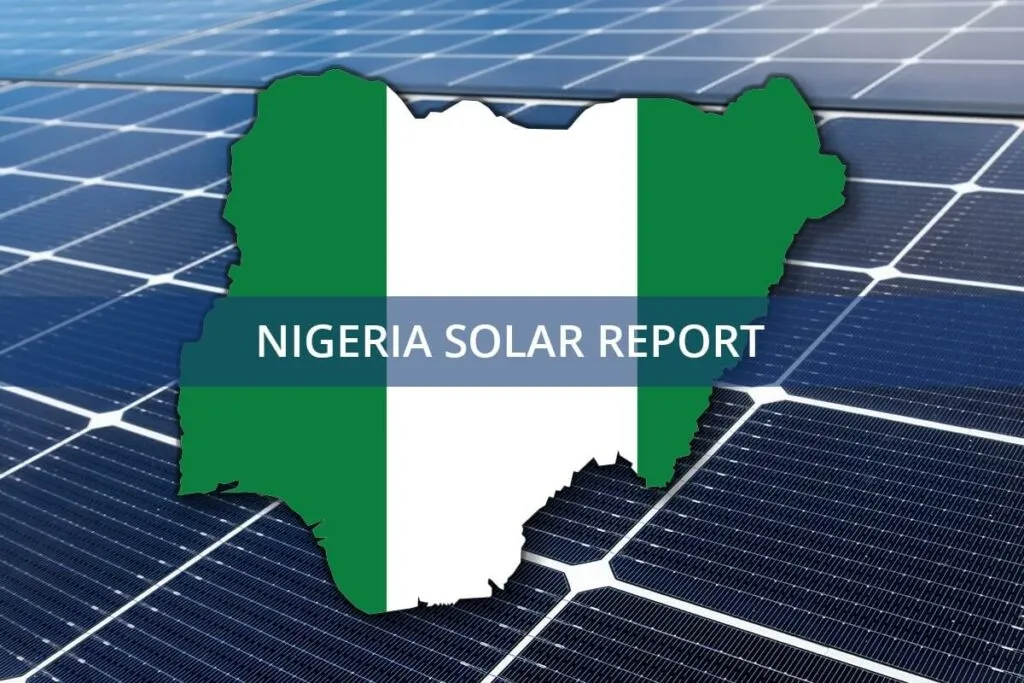
The Nigeria Customs Service has clarified that solar panels remain exempt from import duty and VAT. This announcement addresses recent confusion over tariff classifications, confirming the correct HS Codes that grant them duty-free status.
Nigeria Customs Clarifies Free Import Duty on Solar Panels
The Nigeria Customs Service (NCS) has reaffirmed the duty-free status of solar panels, addressing widespread confusion over their tariff classification. This clarification came in a circular titled “Clarification on the Classification of Solar Panels,” signed by Deputy Comptroller CK Niagwan. The document aims to prevent further misunderstanding, noting that some customs units had been mistakenly classifying solar panels under Heading 85.01 instead of 85.41.

This official clarification from the Nigeria Customs Service reaffirms that solar panels are exempt from import duty and settles their classification under the correct tariff headings to prevent future misunderstandings.
The customs service noted that this misclassification might have stemmed from the Explanatory Notes of the 7th Edition. These notes state that Heading 85.41 covers solar cells whether or not they are assembled in modules or panels. However, customs clarified a key distinction: solar panels or modules containing elements like diodes or motors require specific classification. The correct hs code for solar panels is officially 8541.42.00.00 and 8541.43.00.00. Under the ECOWAS Common External Tariff (CET) for 2022-2027, these codes are subject to 0% duty and are VAT-free.
The Impact of Misclassification on Solar Businesses
The misclassification of solar panels created significant issues for solar companies in Nigeria. One of the most affected was Femi Adeyemo, co-founder of Arnergy Solar Limited, who voiced his disappointment after facing an unexpected 5% duty and 5% VAT on imported solar panels. Businesses like his, which rely heavily on solar imports to power their operations, were blindsided by customs’ sudden change in classification. Many solar operators were already facing difficulties due to high costs and public distrust of solar technology, and the unexpected duty placed an even heavier burden on their businesses. With Nigeria pursuing its ambitious United Nations Sustainable Development Goals on energy, the issue came at a critical time.
Solar Industry Struggles in Nigeria
The solar industry in Nigeria faces multiple hurdles beyond tariff confusion. High costs are a major barrier; solar infrastructure is expensive, and essential components like batteries incur a 20% duty. Public perception also presents a challenge, as failed government-backed solar street lighting projects have led to widespread mistrust of the technology.
Despite these obstacles, solar remains a crucial solution for a country where over 85 million people still lack access to electricity. The initial investment for projects like a 200kW solar-diesel hybrid mini-grid can exceed $2 million, with annual operational costs reaching over $100,000. This highlights why clear and supportive customs policies are essential for making progress in Nigeria’s renewable energy sector.
Customs’ Role in Promoting Solar Energy
Customs plays a vital role in developing solar energy by regulating the import of essential equipment. The NCS’s recent clarification is a positive step, ensuring solar projects can proceed without unexpected financial burdens. By committing to the correct duty-free and VAT-free classification, the agency aligns its policies with Nigeria’s broader energy goals.
The official confirmation of HS Codes 8541.42.00.00 and 8541.43.00.00 provides the certainty that investors and operators need to plan their business models effectively. This clarification will likely restore confidence among stakeholders and encourage further investment in the solar sector, supporting Nigeria’s mission for a brighter, greener future.