JAPEX has announced plans to construct a 13 MW solar power plant on company-owned land in the Takaoka area of Tomakomai City, Hokkaido, with commercial operation scheduled to begin in April 2027. This project aligns with Japan’s broader push towards renewable energy, as seen in initiatives like the $1.5 billion investment in perovskite solar technology detailed in this article.
JAPEX Expands Its Solar Footprint in Hokkaido
While JAPEX has developed solar projects before, this 13 MW plant marks a significant expansion of its footprint in Hokkaido. The generated electricity will be sold through Power Purchase Agreements (PPAs) with local businesses and also fed into the utility grid under Japan’s feed-in tariff (FIT) scheme. This model supports local businesses while contributing to the stability of the regional power grid.
The project also highlights JAPEX’s commitment to repurposing land, as the plant will be built on a 17-hectare site formerly used for storing construction materials. Approximately 20,000 solar panels will be installed across the property.
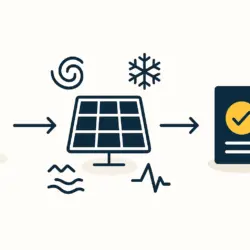
First Solar Japan is set to supply its Series 7 thin-film PV modules for the project. These modules are known for their robust performance in varied conditions, including hot and humid climates and low-light environments, which maximizes energy generation throughout the day. This technology is particularly well-suited to Japan’s climate and could influence future solar projects in the region, as highlighted in this article about Japan’s solar panel investments.
JAPEX’s Broader Commitment to Renewable Energy
JAPEX is actively diversifying its energy portfolio with investments in various renewable energy projects, including solar, wind, and geothermal initiatives. The company has been operating a 12 MW solar power plant in Soma, Fukushima Prefecture, since 2021. This ongoing project provides valuable experience and insights for the development of the new Tomakomai plant.
JAPEX’s commitment to renewable energy dates back to a 2011 solar project, also in Tomakomai City. Since then, the company has expanded its renewable portfolio with projects in Akita Prefecture, Soma City, and Niigata Prefecture. Beyond solar, JAPEX is also pursuing wind power, including the Northern Akita Offshore Wind Farm Project, and plans to develop a 10 MW onshore wind plant in the Takaoka area of Tomakomai City.
By 2030, JAPEX aims to achieve a renewable energy capacity of 560 MW, with a strong emphasis on wind power. This ambitious target reflects the company’s dedication to Japan’s clean energy transition.
Deep Roots in Geothermal Energy
JAPEX has a long history in geothermal energy, with its involvement in power plant projects dating back to 1968. The company is currently pursuing multiple geothermal development projects and research studies, collaborating with regional governments and companies across Japan, particularly in Akita, Iwate, and Yamagata prefectures. These projects have an estimated total capacity of 160 MW, solidifying JAPEX’s commitment to a diverse renewable energy future.
The Tomakomai City solar project is a key component of JAPEX’s broader strategy to expand its renewable energy portfolio. The company is also exploring additional projects, including a geothermal power plant in Yuzawa, Akita Prefecture, and further solar development in Soma, Fukushima Prefecture. This multifaceted approach underscores JAPEX’s commitment to a sustainable energy future for Japan.