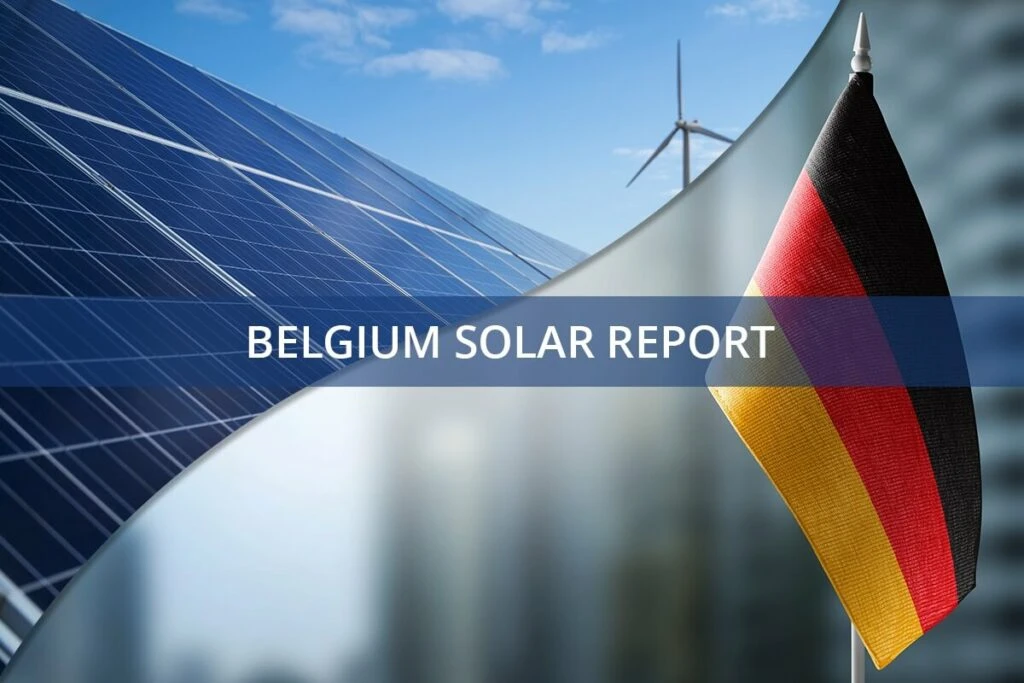
Belgium’s renewable energy sector marked a historic milestone in 2025, with total production climbing to a record 22.4 terawatt-hours (TWh). This represents a 7% increase from the previous year and elevates clean energy to a remarkable 34% share of the nation’s total electricity mix, effectively matching the output from nuclear power for the first time.
The primary driver behind this impressive growth was a phenomenal surge in solar photovoltaic (PV) generation. Solar output soared by 21% to reach a new high of 10.1 TWh, contributing between 13-15% of the country’s electricity. This boom was fueled by a combination of a 10% expansion in installed capacity and exceptionally sunny weather conditions, which led to an absolute monthly production record of 1,370 gigawatt-hours in June. This expansion highlights the country’s growing capabilities in solar technology and deployment.
This renewable energy expansion occurs amidst a significant shift in Belgium’s broader energy landscape. As renewables rose, nuclear power’s contribution fell by 24% to 22.5 TWh, a direct result of the closures of the Doel 1, Tihange 1, and Doel 2 reactors. In contrast, wind power saw a slight 2% dip to 12.3 TWh, a downturn attributed to unfavorable weather despite capacity gains. Overall, low-carbon sources, including renewables and nuclear, generated over 60% of Belgium’s electricity, while natural gas accounted for approximately 16% and net imports covered 12% of the stable 80.1 TWh national consumption.
The 2025 performance underscores the rapid acceleration of Belgium’s green transition, especially when compared to just 9.42% of consumption being met by renewables in 2018. Looking ahead, regional targets aim for around 14 TWh of solar production by 2030. According to preliminary data from grid operator Elia, renewables covered half of the country’s electricity needs more than 16.2% of the time in 2025, signaling a new era for Belgium’s power grid.
Sources for Belgium renewable energy: Impressive Surge in 2025
- World Bank: Renewable electricity output – Belgium
- Eurostat: Shedding light on energy in Europe – 2025 edition
- Ember: Global Electricity Mid-Year Insights 2025
- IEA-PVPS: Member Country – Belgium
- Low Carbon Power: Belgium Electricity Generation Mix 2025
- The Brussels Times: Renewable energy reached record levels in Belgium in 2025
- Statista: Renewable energy in Belgium – statistics & facts