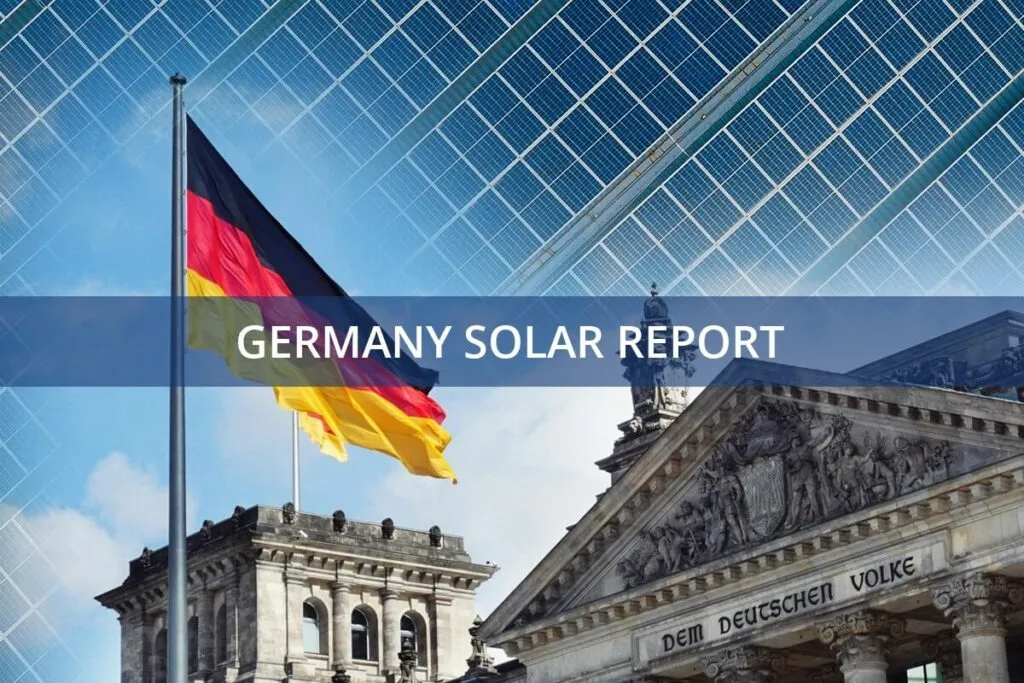
In the latest Germany solar news, the German government is reviewing its renewable energy subsidies after new figures revealed that financial support for wind and solar has surged by 63% to 42 billion euros. The increase is driven in part by Germany’s decision to phase out fossil fuels and nuclear energy.
Surge in Germany’s Renewable Subsidies
A new report from the Institute of the German Economy (IW) highlights the strain these escalating subsidies are putting on the economy and consumers. The report’s authors argue the current subsidy system is unsustainable, especially as the share of renewables in Germany’s energy mix continues to grow.
“The energy transition is hitting the economy and private consumers with full force,” the researchers said. “Costs are rising, and the current system is not sustainable in the long term.”
Germany’s government aims to increase renewables’ share of electricity consumption to 80% by 2030, but experts question whether this target is achievable without causing further financial strain on households and businesses.
The IW report suggests the government reform its subsidy system to make it more cost-effective. Proposed measures include reducing feed-in tariffs for new projects and introducing more competitive bidding processes for renewable energy contracts.
Debate Over Feed-in Tariffs and Subsidy Reform
The debate over feed-in tariffs is particularly heated. These tariffs, which guarantee renewable energy producers a fixed price for their electricity, have been a key driver of Germany’s renewable energy boom. However, critics argue that the tariffs are now too high and should be reduced to reflect the declining costs of renewable energy technology.
“The feed-in tariffs have helped to kick-start the renewable energy industry in Germany, but they are now too high,” said IW energy expert, Andreas Fischer. “The government needs to reduce them to ensure that the costs of the energy transition are kept under control.”
The German government is also considering other measures to make renewable energy more affordable, such as increasing financial support for energy storage technologies and expanding the country’s electricity grid to better accommodate more renewables.
This IW report will likely fuel the ongoing debate over Germany’s energy transition, a key issue in the country’s political landscape as it moves to phase out coal by 2038 after shutting down its last nuclear power plants in 2022.
Impact of Renewable Subsidies on Consumers
The rising cost of renewable energy subsidies is already impacting consumers directly. According to the IW report, the average German household paid an additional 270 euros for electricity in 2022 as a result of these costs.
“The costs of the energy transition are being passed on to consumers, and this is becoming increasingly difficult for many households to bear,” said Fischer. “The government needs to find ways to reduce these costs and make the energy transition more affordable for everyone.”
The IW report warns that the rising costs of renewable energy subsidies could also harm Germany’s economy. If energy prices continue to climb, it could make German businesses less competitive and potentially lead to job losses.
“The energy transition is essential for Germany’s future, but it must be done in a way that is sustainable and affordable,” the report concludes. “The government needs to take action now to reform the subsidy system and ensure that the costs of the energy transition are kept under control.”
Germany’s Energy Goals and the Challenge of Subsidy Reform
Germany’s renewable energy sector has seen remarkable growth, with the share of renewables in electricity production increasing from 6% in 2000 to 46% in 2022. However, the IW report warns that the current subsidy system is unsustainable, particularly as Germany pushes for 80% renewable energy by 2030.
The report stresses the need for reforms, such as reducing feed-in tariffs and introducing competitive bidding, to make the transition more affordable for consumers and sustainable for the economy. Without these changes, rising costs could undermine public support for the energy transition and harm Germany’s economic competitiveness.
As Germany grapples with its renewable energy policy, other countries are also making strides in solar energy. For instance, Denmark is emerging as a promising solar market, with capacity projected to increase significantly by 2028, according to the Denmark Solar Panel Manufacturing Report available at PVKnowHow. In a similar vein, the Kazakhstan Solar Panel Manufacturing Report at PVKnowHow highlights the projected demand and levelized cost of electricity for solar photovoltaic systems in Kazakhstan.