Greece’s renewable energy sector has seen significant growth, with an impressive 74% of electricity generated from renewable sources in the first quarter of 2025. This marks a notable increase from 63% in the same period last year. Despite facing challenges such as delays in grid connections and a decline in new wind capacity installations, the country is on track to meet its ambitious renewable energy targets. This progress is fueled by its abundant solar and wind resources, a favorable policy environment, and strong investor interest in a sector that is simultaneously thriving and facing growing pains.
Significant Growth in Solar and Energy Storage for Greece Renewable Energy
The rapid expansion of Greece’s renewable energy sector is evident in the substantial growth of solar energy and energy storage projects. According to PV Magazine, solar power accounted for 27% of the country’s electricity generation in the first quarter of 2025, a significant increase from 20% in the same period last year. This boom is exemplified by major investments, such as the new 560MWp solar project being built by Lightsource as part of the “Greece 2.0” national recovery plan. With a projected solar PV pipeline expected to reach an incredible 44.8 GW by 2028, the momentum is undeniable.
Energy storage also played a crucial role, contributing 2% to the energy mix. This growth is partly attributed to the government’s strategic focus on expanding energy storage capacity, which is essential for balancing the grid and integrating more intermittent renewable sources. The government has set a target of 5 GW of energy storage capacity by 2030 and recently finalized an auction for 1 GW of new projects. The auction attracted 45 bids totaling 3.83 GW, highlighting strong developer interest. Projects that secured contracts are expected to be operational by 2027, bolstering the stability of Greece’s energy system as it leans more heavily on renewables.
Challenges in Grid Integration and Capacity Development for Greece Renewable Energy
Despite the impressive growth, Greece faces significant challenges in integrating these resources. A primary concern is the alarming bottleneck in the solar grid, where the rapid expansion of generation capacity is out-pacing the grid’s ability to handle it. This issue is particularly acute when considering the unique challenges of maintaining grid stability and managing energy costs between the mainland and the numerous islands.
These infrastructure limitations are also affecting the wind sector. In the first quarter of 2025, only 0.57 GW of new wind capacity was installed, compared to 0.82 GW in the same period last year. These delays have led to a temporary decline in wind energy’s contribution to the electricity mix, which now stands at 28%, down from 33% last year. However, investment continues, with the European Investment Bank (EIB) recently providing €25.9 million for a new wind farm.
The Greek government is actively working to address these connection challenges. Energy Minister Theodoros Skylakakis announced plans to double the country’s interconnection capacity to 5 GW by 2027. This includes ambitious international projects like the GREGY interconnector, a €3.6 billion initiative to transmit 3 GW of renewable electricity from Egypt to Europe via Greece. Such projects will enable Greece to export surplus renewable energy and further integrate its national grid into the wider European network.
Future Prospects and Market Dynamics of Greece Renewable Energy
Greece’s renewable energy sector is poised for continued growth, driven by strong investor interest, government support, and abundant natural resources. The successful auctions for solar and energy storage underscore the robust demand for renewable investments. The government’s commitment to expanding storage and improving grid infrastructure will be key to sustaining this momentum.
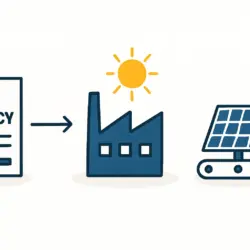
Looking ahead, Greece aims to diversify its energy mix and leverage the green transition for broader economic benefits. There is a compelling case for developing solar manufacturing in Greece, which could create a resilient local supply chain and cater to specialized markets. Establishing a domestic production base requires a deep understanding of the solar panel manufacturing process and a reliable source of solar panel raw materials. Furthermore, this ambition must be supported by developing a skilled technical workforce capable of powering this new industry.
As Greece continues to attract investment and build out its infrastructure, it is well-positioned to become a regional leader in the transition to a low-carbon economy, enhancing both its energy security and economic resilience.
To gain a deeper understanding of what it takes to enter the solar production market, from initial investment to full-scale operation, explore our comprehensive free e-course on solar panel manufacturing.