The Business Case for On-Site Solar Power for Manufacturers
An entrepreneur planning a new solar module factory in a place like Tuvalu faces a fundamental challenge long before any discussion of machinery or market strategy can begin: securing a reliable, cost-effective power supply. In many island nations and emerging markets, the national grid is often unreliable, while the cost of power—typically generated from imported diesel—can be prohibitively high. This poses a significant risk to any manufacturing operation that depends on stable, continuous energy.
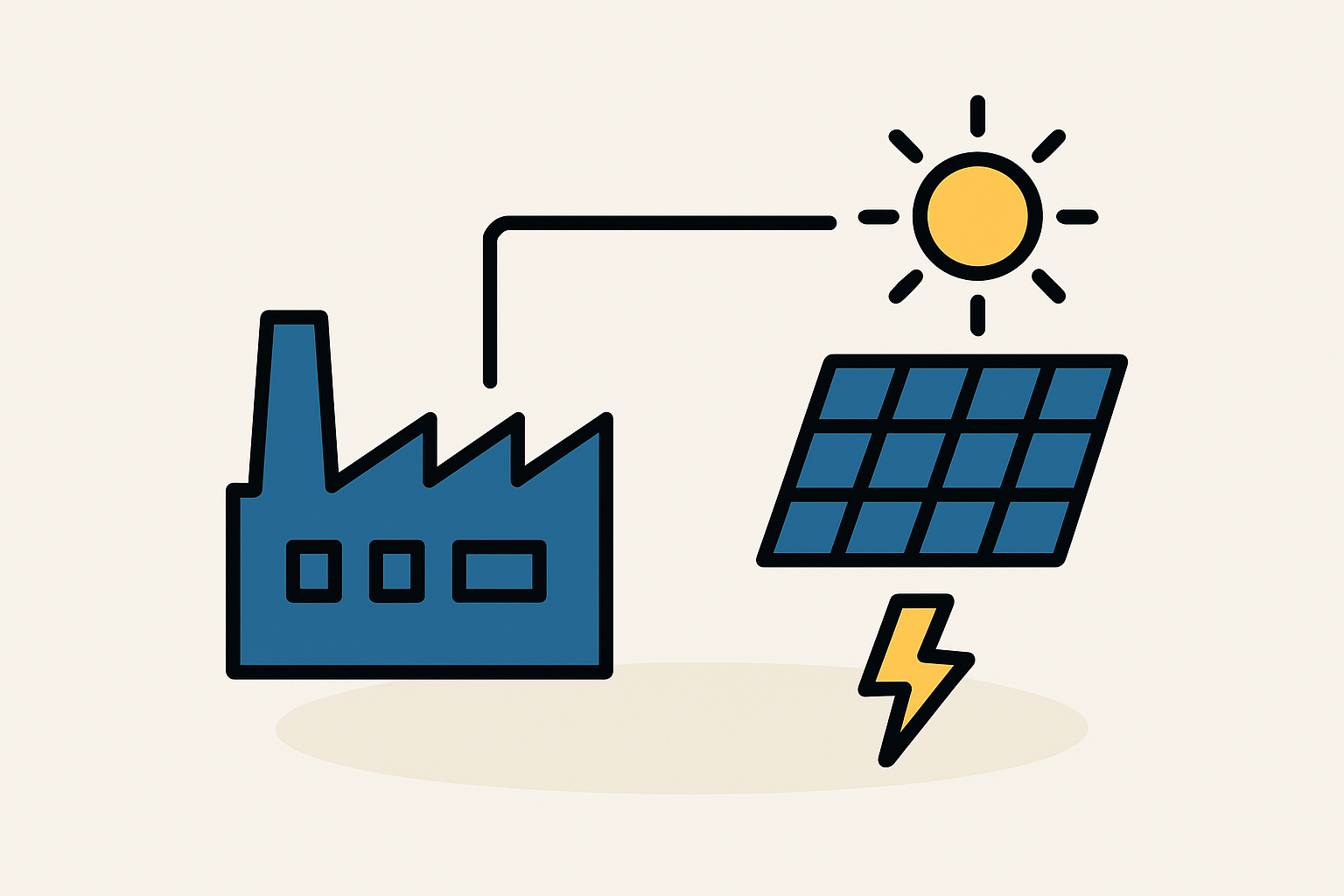
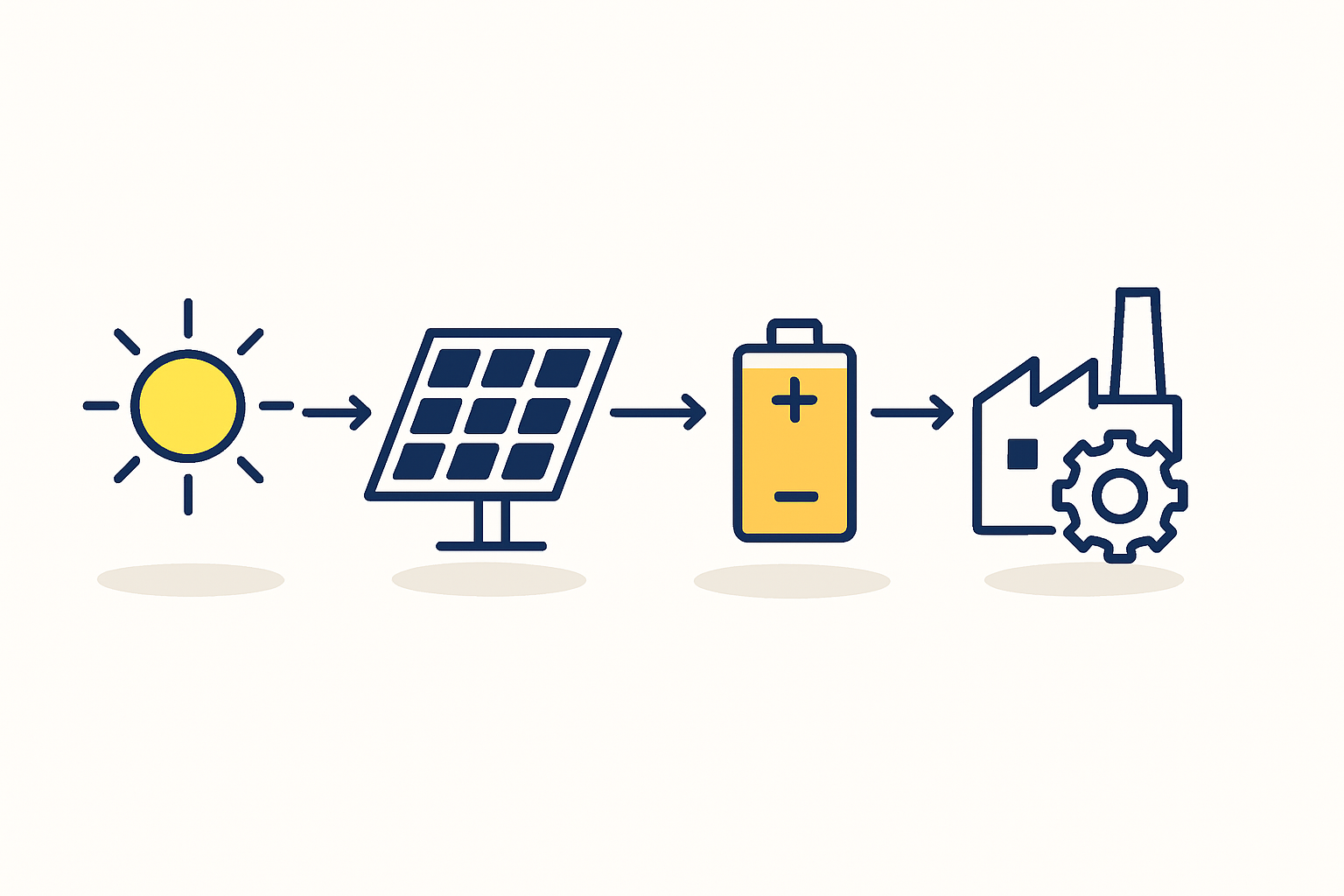
This challenge, however, presents a strategic opportunity. By integrating an on-site—or ‘captive’—solar power system with battery storage, a factory can achieve energy self-sufficiency. This strategy transforms a major operational vulnerability into a competitive advantage, ensuring production continuity while locking in predictable energy costs for decades.
An aerial view of a solar panel factory with a large ground-mounted solar array and battery storage units visible nearby. A self-sufficient solar module factory combines production facilities with a dedicated solar-plus-storage power plant.
The Core Challenge: Energy Reliability in Developing Economies
For a nation like Tuvalu, dependence on imported fossil fuels creates significant economic and logistical hurdles. With electricity prices reaching as high as USD 0.39 per kilowatt-hour, energy becomes one of the largest operational expenditures for any industrial facility. This cost is not only high but also volatile, subject to global oil price fluctuations and supply chain disruptions.
Furthermore, the grid infrastructure in these locations is often fragile, leading to frequent power outages. For a solar module factory, an unexpected shutdown can result in:
-
Production Losses: Every hour of downtime translates directly to lost revenue.
-
Material Waste: A sudden interruption during a critical process like lamination can ruin entire batches of modules.
-
Equipment Damage: Abrupt power fluctuations can harm sensitive manufacturing equipment.
Relying on diesel generators as a backup is a partial solution at best. While they provide emergency power, they come with their own high fuel costs, constant maintenance requirements, price volatility, and logistical challenges for fuel delivery and storage.
A Strategic Solution: The Captive Solar-Plus-Storage System
A captive power system is an electricity generation facility dedicated to providing a stable power supply to a single user, such as a factory. For a solar module manufacturer, developing an on-site solar photovoltaic (PV) system with an integrated Battery Energy Storage System (BESS) offers a comprehensive solution to this energy challenge.
Ready to make big Profits?
The solar Industry is Booming
WE HELP NEWCOMERS to the solar industry start their own solar module production line. Customers can make BIG PROFITS by selling modules and finding investors, without wasting money and time on things they don't need!
This approach is not merely an environmental consideration; it is a fundamental business strategy to de-risk the entire manufacturing investment. It shifts energy from an unpredictable external dependency to a controlled, internal asset.
Analyzing the Financial Case for Energy Self-Sufficiency
The initial capital investment for a solar-plus-storage system is significant, but the long-term financial benefits are compelling. The primary metric for comparison is the Levelized Cost of Energy (LCOE), which represents the average cost per unit of electricity generated over the system’s lifetime.
-
Diesel Generation: The LCOE for diesel is high and perpetually tied to fluctuating fuel prices, transportation costs, and generator maintenance.
-
Solar-Plus-Storage: While the upfront cost is higher, the ‘fuel’—sunlight—is free. The LCOE is fixed and predictable for the system’s 25+ year lifespan, consisting almost entirely of the initial capital expenditure and minimal maintenance.
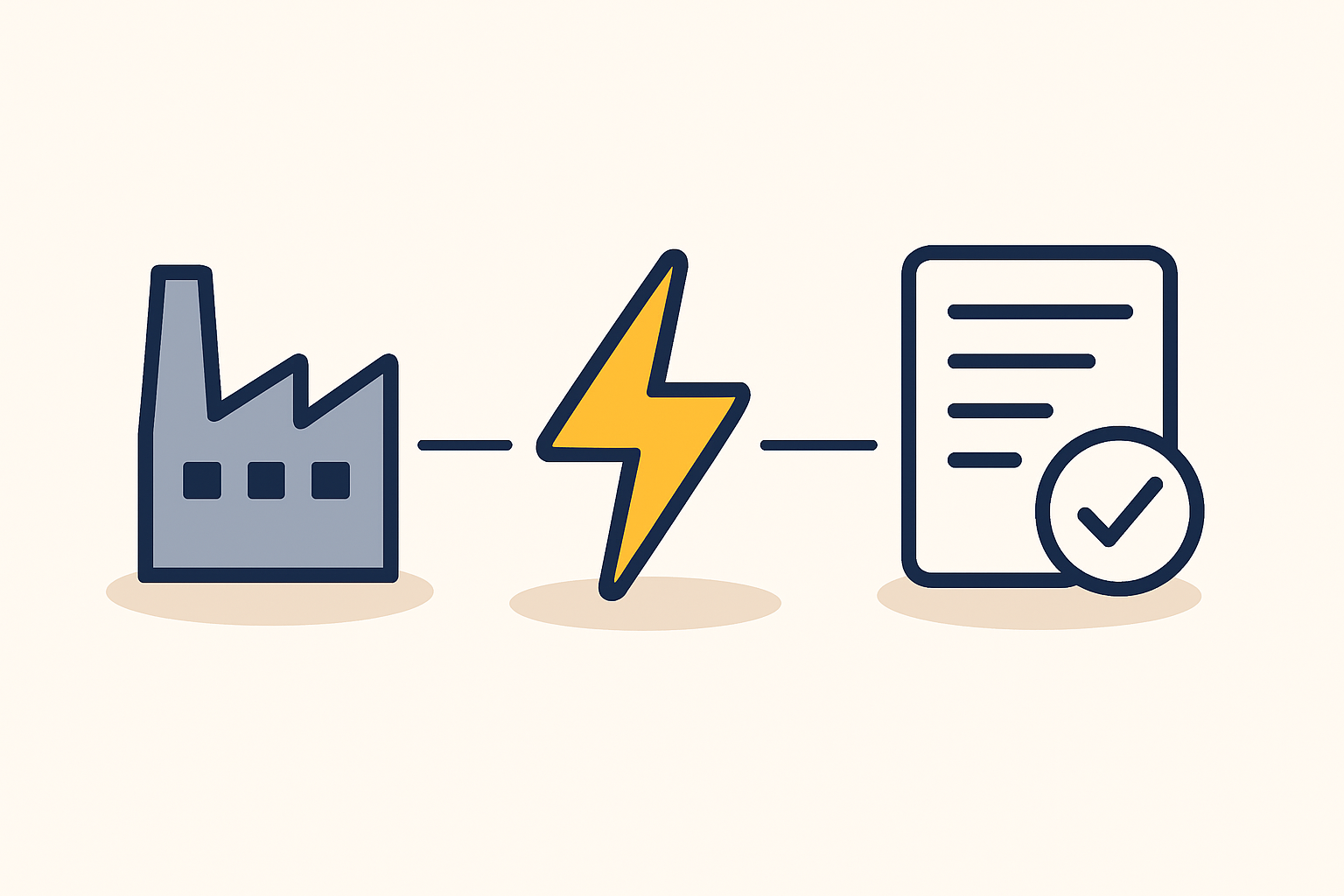
Over time, the solar system provides a powerful hedge against the inflation and volatility inherent in fossil fuel markets, leading to a clear payback period and substantial long-term savings. This financial predictability is a critical component of a robust solar module manufacturing business plan.
A comparative chart showing the volatile cost of diesel-generated electricity vs. the stable, declining LCOE of a solar-plus-storage system over 25 years. The long-term financial case for solar power is compelling, offering predictable energy costs against the volatility of imported fuels.
Technical Framework for an Independent Power Supply
A captive power system for a solar factory is an engineered ecosystem where each component plays a critical role in delivering reliable electricity.
-
The Solar PV Array serves as the power generation engine. This array of solar panels is sized to meet the factory’s full daytime energy demand while simultaneously charging the battery system. Locations with high solar irradiation like Tuvalu are ideal for maximizing output.
-
The Battery Energy Storage System (BESS) is the heart of the system’s reliability. It stores excess solar energy generated during the day and discharges it to power the factory overnight, on cloudy days, or during a grid outage, ensuring a seamless, uninterrupted 24/7 power supply.
-
Inverters and the Power Management System act as the brain. Inverters convert direct current (DC) from the panels and batteries into the alternating current (AC) required by factory machinery. Meanwhile, the management system optimizes energy flow—deciding when to power the factory directly, charge the batteries, or draw from storage.
The power consumption profile of the specific solar panel manufacturing machines is a key factor in designing the size and capacity of this integrated system.
A diagram illustrating how a captive solar system works: PV panels generate DC power, an inverter converts it to AC for the factory, and a battery system stores excess energy for later use. A captive power system integrates generation, conversion, and storage to provide a reliable, independent electricity supply.
A Practical Example: Sizing a System for a 20 MW Factory
To make this concept concrete, let’s consider a hypothetical factory with a 20 MW annual capacity. The engineering process for its power supply would follow these steps:
-
Load Analysis: The first step is to map the energy consumption of the entire solar production line. This involves calculating the power draw of all equipment—from stringers and laminators to testers and conveyors—and determining the factory’s 24-hour load profile.
-
PV System Sizing: Based on the total daily energy requirement and local solar irradiation data, engineers calculate the required size of the solar PV array. For a typical factory, this could range from 1 to 3 megawatts (MW) of installed solar capacity.
-
BESS Capacity Calculation: The battery system is sized to cover the factory’s energy needs during non-solar hours (i.e., overnight) and to provide a buffer for several days of inclement weather. The goal is to ensure the factory can operate continuously without external power.
-
Integration with Backup: For ultimate reliability, the system can be designed as a hybrid, integrating a smaller backup diesel generator that runs only in emergencies, drastically reducing overall fuel consumption and costs.
Based on experience from J.v.G. turnkey projects, this level of detailed energy planning is crucial for the success of any manufacturing venture in an energy-constrained region.
Beyond Tuvalu: A Replicable Model for Emerging Markets
The principles outlined for Tuvalu apply directly to entrepreneurs across Africa, the Middle East, Southeast Asia, and other regions where grid instability and high energy costs are common business hurdles.
Whether the local issue is an unreliable national grid, the absence of a grid connection in a rural area, or simply the high cost of electricity, the business case for a captive solar-plus-storage system remains strong. It provides operational certainty, financial predictability, and a sustainable foundation for a modern manufacturing business.
Frequently Asked Questions (FAQ)
What is a ‘captive’ power system?
A captive power system is an electricity generation facility built and operated for the sole purpose of providing power to a specific entity, like a factory, rather than selling power to the grid.
Is a battery system always necessary?
For a factory that requires 24/7 operation in a location with an unreliable grid, a battery system is essential. It’s the component that guarantees continuous power when the sun isn’t shining or the grid is down. Without it, the factory could reliably operate only during daylight hours.
How much land is needed for such a solar installation?
The land requirement depends on the size of the PV system. A rough estimate for a ground-mounted system is approximately one hectare (2.5 acres) per megawatt of installed solar capacity. The exact area can vary based on panel efficiency and layout design.
Can the system still connect to the national grid?
Yes. The system can be designed to operate in parallel with the grid. This allows the factory to draw power from the grid as a final backup or, if regulations permit, sell excess solar power back to the grid, creating an additional revenue stream.
What is the typical lifespan of a solar-plus-storage system?
Modern solar panels typically come with a 25-year performance warranty and can last longer. High-quality battery systems designed for industrial use generally have a lifespan of 10 to 15 years or more, depending on the technology and usage patterns.
Conclusion and Next Steps
For entrepreneurs venturing into solar manufacturing in developing markets, achieving energy independence is not an ancillary benefit—it is a core pillar of a successful business strategy. An on-site solar-plus-storage system directly addresses the critical risks of high energy costs and unreliable supply, creating a resilient and profitable operation.
This approach transforms a potential liability into a predictable, long-term asset that powers the factory’s growth and stability. By taking control of their energy infrastructure, entrepreneurs can build a truly successful and resilient manufacturing enterprise.