An entrepreneur’s vision often begins with the arrival of advanced machinery—the tangible start of a new industrial venture. Imagine a container holding a state-of-the-art solar module laminator being offloaded at Funafuti’s port. While this moment marks a significant milestone for a project in Tuvalu, it is not the end of the journey. It is the beginning of its most complex phase: navigating the unique logistical landscape of a low-lying atoll nation.
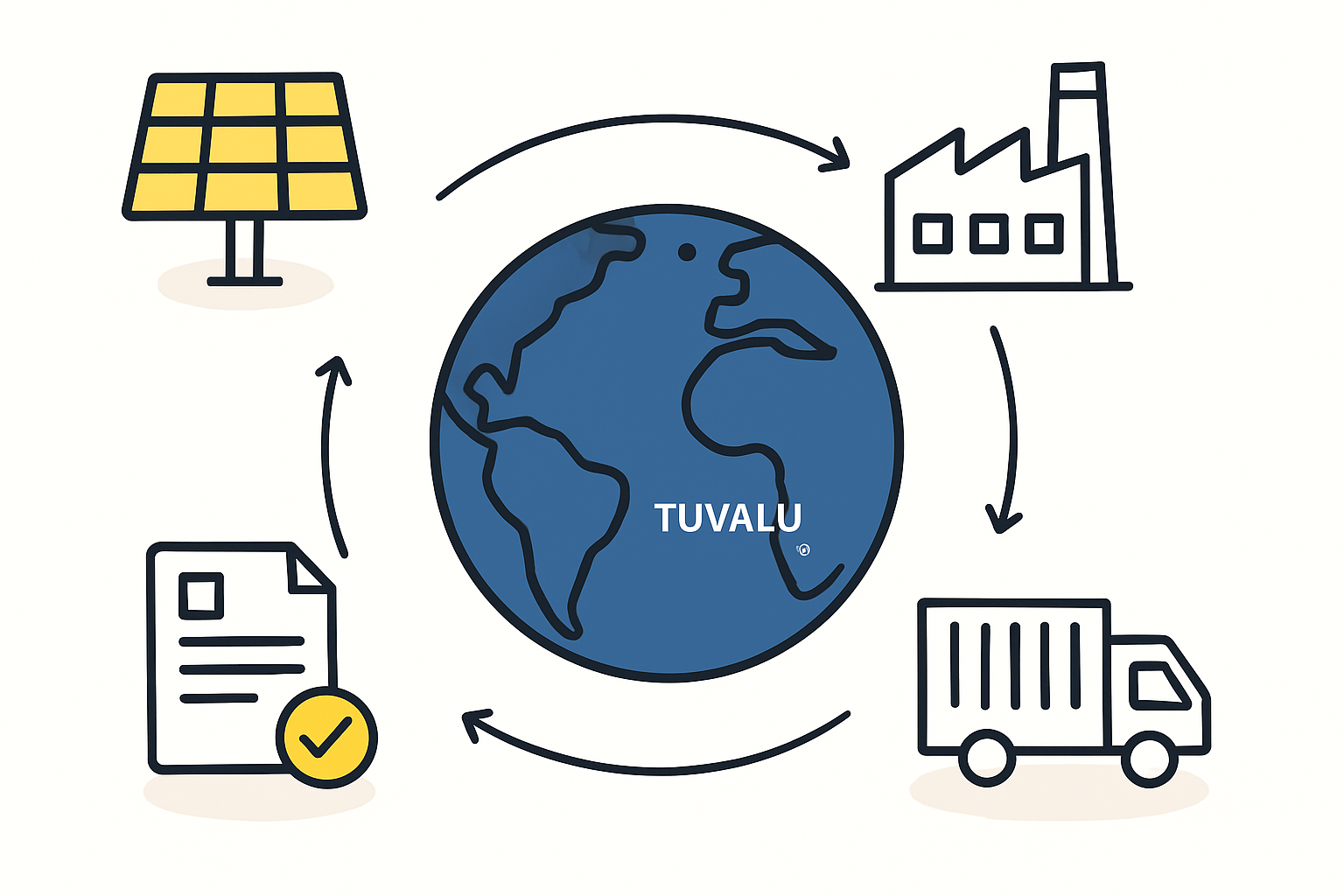
The success of a solar manufacturing plant in a Small Island Developing State (SIDS) like Tuvalu hinges less on the sophistication of the imported equipment and more on the meticulous planning of its journey from the global factory to the local facility floor. This article outlines the critical logistical considerations—from international shipping to last-mile transportation—that every investor must address.
Understanding the Tuvaluan Context: More Than Just a Point on the Map
Before a single crate is shipped, appreciating the distinct geographical and infrastructural realities of Tuvalu is essential. Unlike mainland projects, where logistics are often a standardized process, Tuvalu presents a unique set of challenges rooted in its physical environment.
Assessments by development partners highlight several key factors:
Atoll Geography
Tuvalu is composed of nine low-lying coral atolls. The main island, Funafuti, where the international port is located, has limited land area and a single primary paved road. This constrains the movement and storage of large-scale industrial equipment.
Port Limitations
The Funafuti port can only accommodate vessels with a shallow draft. This restricts the types of cargo ships that can service the island and may require transshipment from larger vessels in regional hubs like Fiji, adding time, cost, and complexity to the shipping process.
Infrastructure Gaps
While the port exists, its capacity for handling oversized and heavy cargo is limited. The availability of heavy-lift cranes, low-bed trailers, and specialized transport vehicles is not guaranteed. Equipment that is standard in larger industrial ports may need to be specifically chartered or even imported for the project itself.
Climate Vulnerability
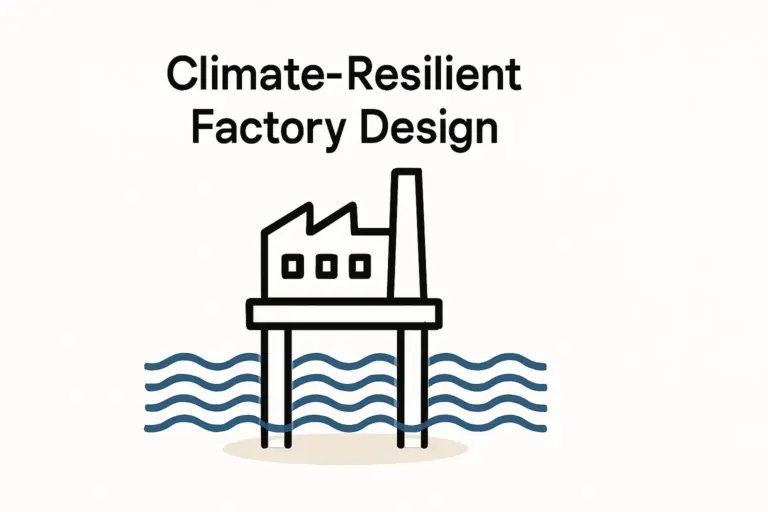
As one of the world’s most climate-vulnerable nations, Tuvalu faces risks from king tides and storms, which can disrupt port operations and transportation. Logistical timelines must account for potential weather-related delays.
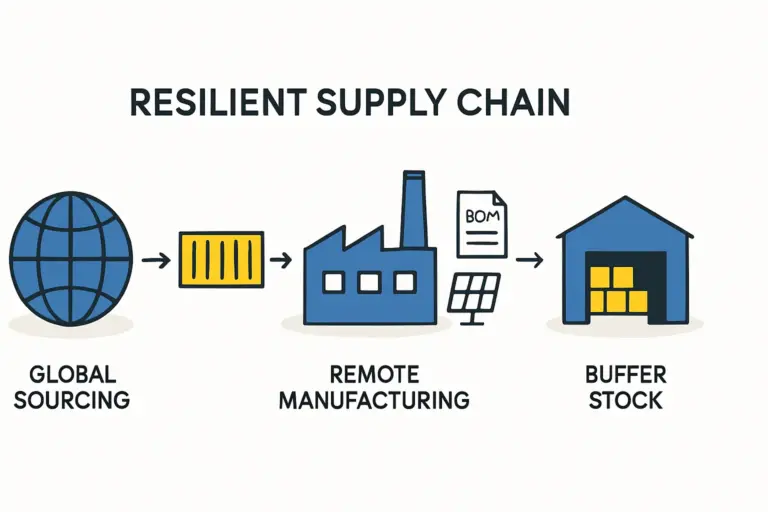
Understanding these foundational constraints is the first step in developing a realistic and resilient supply chain strategy.
Ready to make big Profits?
The solar Industry is Booming
WE HELP NEWCOMERS to the solar industry start their own solar module production line. Customers can make BIG PROFITS by selling modules and finding investors, without wasting money and time on things they don't need!
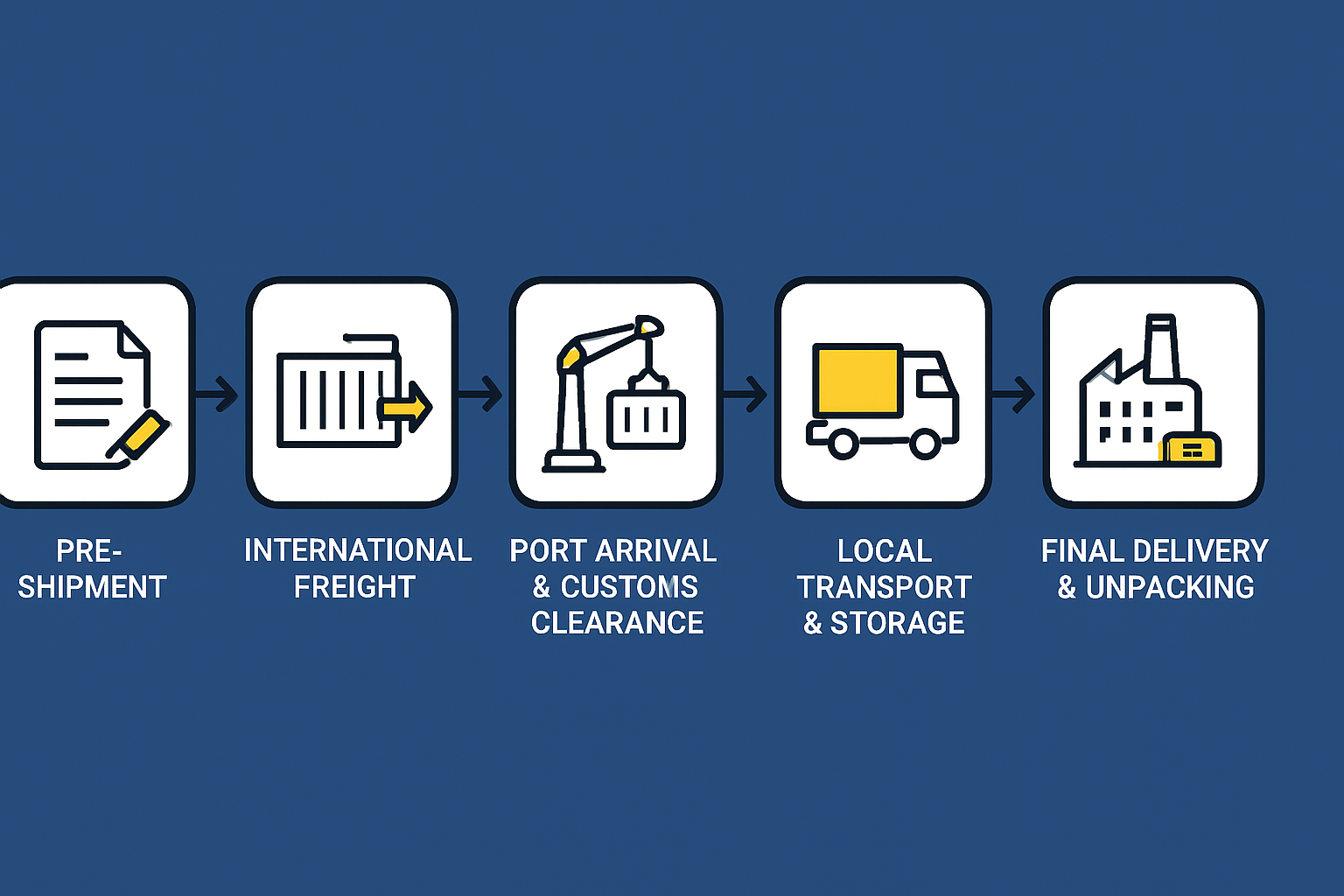
Phase 1: International Shipping and Freight Forwarding
The journey begins with selecting the right partners for international sea freight. This is more than simply finding the lowest-cost carrier; it requires a strategic approach.
Choosing the Right Freight Forwarder
A freight forwarder acts as the project’s logistics coordinator. For a destination like Tuvalu, engaging a firm with proven experience in the Oceania region, and specifically with SIDS, is crucial. Such a partner understands the nuances of transshipment, local customs, and the limited shipping schedules into Funafuti. Their expertise is vital for:
-
Optimizing Containerization: Deciding between 20-foot and 40-foot containers based not only on the equipment size but also on what local port infrastructure can handle.
-
Consolidating Shipments: Coordinating with various equipment suppliers to consolidate machinery into fewer shipments, simplifying the customs process and reducing port handling fees.
-
Securing Comprehensive Insurance: Ensuring cargo is insured not just for the sea voyage but for the entire door-to-door journey, including potential damages during offloading and inland transport.
Phase 2: Customs Clearance and Port Operations
Once the vessel arrives at Funafuti, the next critical phase begins. A smooth customs process depends entirely on meticulous preparation, as incomplete or inaccurate paperwork is a common cause of significant delays and unforeseen costs.
The Role of a Local Customs Broker
Engaging a competent local customs broker is non-negotiable. This partner will liaise with Tuvalu’s customs authorities, ensuring all documentation is compliant with national regulations. This includes:
-
Harmonized System (HS) Codes: Correctly classifying every piece of equipment to determine applicable tariffs and duties, which must be anticipated in the project’s financial projections.
-
Import Permits and Licenses: Proactively securing any required permits for importing industrial machinery.
-
Bills of Lading and Commercial Invoices: Ensuring all shipping documents are accurate and correspond perfectly with the physical cargo.
For this reason, a comprehensive solar manufacturing business plan should include a detailed section on logistics, with budgeted line items for freight, insurance, duties, and brokerage fees. This level of foresight prevents financial surprises and demonstrates project readiness to stakeholders.
Phase 3: The Critical ‘Last-Mile’ Delivery
This is often the most underestimated part of the logistical chain. Moving heavy and sensitive solar panel manufacturing machines from the Funafuti port to the designated factory site is a major engineering challenge in itself.
The process requires a detailed site and route survey well in advance of the equipment’s arrival. Key questions to address include:
-
Vehicle Availability: Is a low-bed trailer capable of carrying a 15-ton machine available on the island? If not, what is the plan to bring one in?
-
Route Feasibility: Can the transport vehicle navigate the local roads? Are there any low-hanging power lines, tight corners, or weak bridges?
-
Site Access: Can the transport vehicle access the factory site? Is the ground stable enough to support the vehicle and a mobile crane for offloading?
In many projects J.v.G. Technology GmbH has managed in similar environments, the planning for this ‘last mile’ is as detailed as the factory layout itself. It often involves temporary road reinforcements or the use of specialized lifting equipment.
Mitigating Risks: A Strategic Approach to Logistics
A reactive approach to logistics in Tuvalu is a recipe for budget overruns and project delays. A proactive, strategic approach is essential.
-
Early-Stage Planning: Logistical analysis should be a core component of the initial feasibility study, not an afterthought.
-
Local Partnerships: Building strong relationships with a local customs broker and a transport provider is critical. Their on-the-ground knowledge is invaluable.
-
Contingency Budgeting: Prudent financial planning means allocating a contingency fund specifically for logistics—typically 15–25% of the shipping and equipment cost—to cover unexpected delays, fees, or the need for specialized equipment.
-
Integrated Solutions: For those new to the industry, considering a turnkey solar production line provider can be advantageous. An experienced partner manages the entire process, from sourcing and shipping the machines to overseeing their final installation, integrating complex logistical planning into the project scope from day one.
Frequently Asked Questions (FAQ)
What is the biggest logistical mistake an entrepreneur can make in Tuvalu?
The most common error is assuming that getting the equipment to the port is the main challenge. In reality, the final few kilometers from the port to the factory site—the ‘last mile’—are often the most complex and costly part of the journey. Underestimating this phase can halt a project completely.
How long does it typically take to ship and clear equipment in Funafuti?
Timelines can vary significantly. The sea journey from a major manufacturing hub in Asia or Europe can take several weeks. Once at the port, customs clearance can take anywhere from a few days to several weeks if documentation isn’t perfectly in order. Buffering the project timeline with at least four to six weeks for potential logistical delays is a wise precaution.
Are there import duties on solar manufacturing equipment in Tuvalu?
Import duties and tax policies can change. Consulting with a local customs broker or the relevant Tuvaluan government ministry is essential to get the most current information. Some nations offer incentives or exemptions for equipment related to renewable energy, but this must be formally verified during the planning stage.
Is it better to use 20-foot or 40-foot containers?
While a 40-foot container may seem more cost-effective for large equipment, the handling capabilities at the destination port are the deciding factor. The port’s cranes must be able to lift it, and local trucks must be able to transport it. In many SIDS, two 20-foot containers are often a more practical and lower-risk option than one 40-foot container.
Beyond the Bill of Lading: Planning for Success
Importing solar manufacturing equipment to a unique location like Tuvalu requires a paradigm shift. The investor must think less like a buyer and more like a project manager who treats logistics as a central pillar of the venture.
The journey of the equipment mirrors the journey of the business itself: it requires foresight, expert guidance, and a deep understanding of the local environment. By addressing these logistical challenges with meticulous planning and strategic partnerships, an entrepreneur can successfully lay the foundation for a resilient and impactful solar manufacturing operation.