Imagine a newly commissioned solar module factory in Tuvalu, a remote island nation in the Pacific. The production line is ready, staff are trained, and the first major order is due. But the container ship carrying essential solar cells and EVA film is delayed by six weeks due to a port disruption thousands of miles away, and production grinds to a halt.
This scenario, while hypothetical, highlights a critical vulnerability for any entrepreneur entering the solar manufacturing space, especially in locations far from major industrial hubs. A sophisticated production line is only valuable when it’s running, and the lifeblood of any solar factory is a steady flow of raw materials. This article outlines the strategic thinking needed to establish a resilient supply chain for your factory’s bill of materials (BOM), ensuring that distance and global disruptions do not undermine your investment.
The Core Challenge: Managing the Solar Bill of Materials from Afar
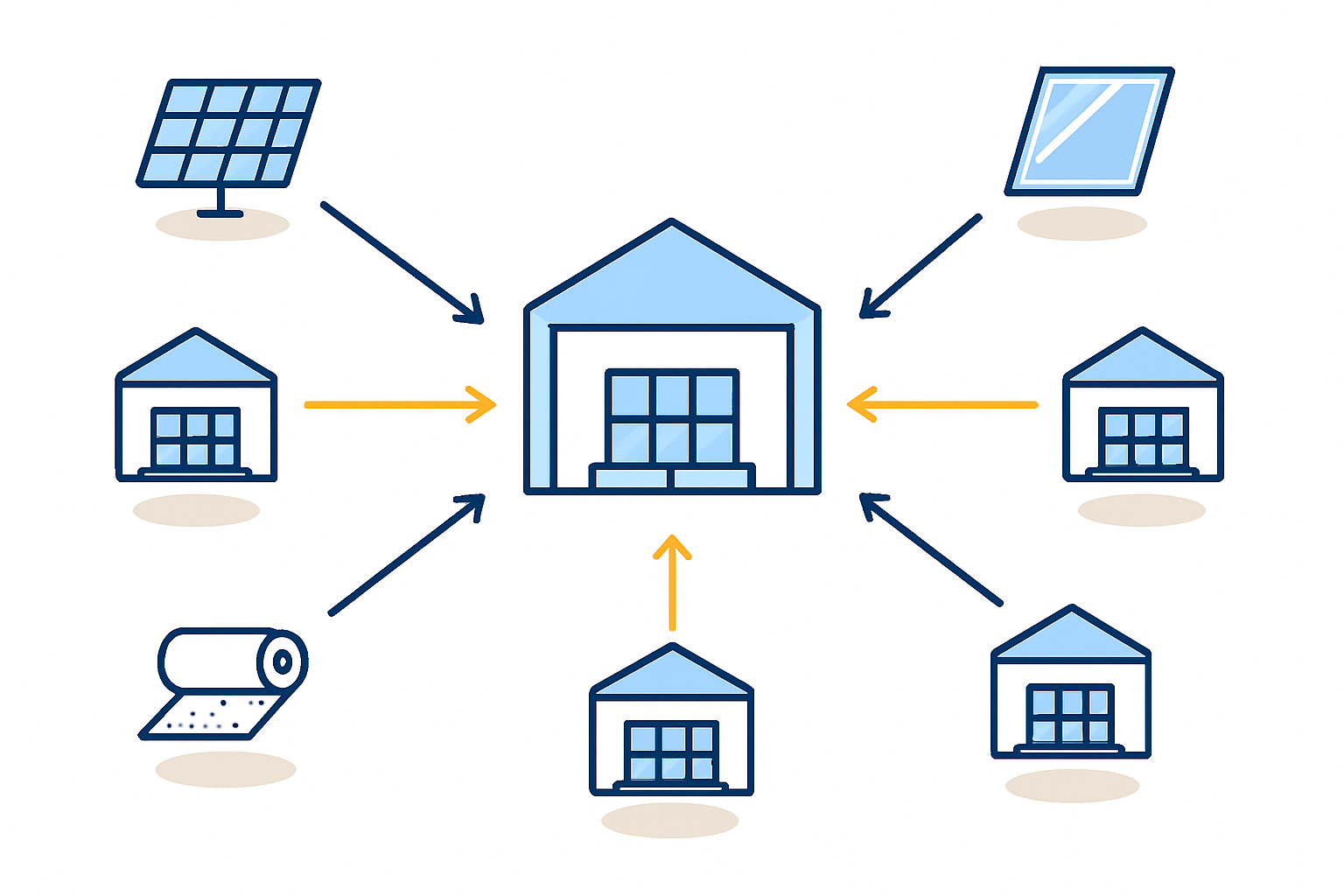
At its heart, a solar module factory is an assembly operation. It transforms a specific set of components, detailed in the bill of materials (BOM), into a finished product. Key components typically include:
- Solar cells
- Tempered glass
- EVA (Ethylene Vinyl Acetate) encapsulant film
- Backsheet or rear glass
- Aluminum frames
- Junction boxes
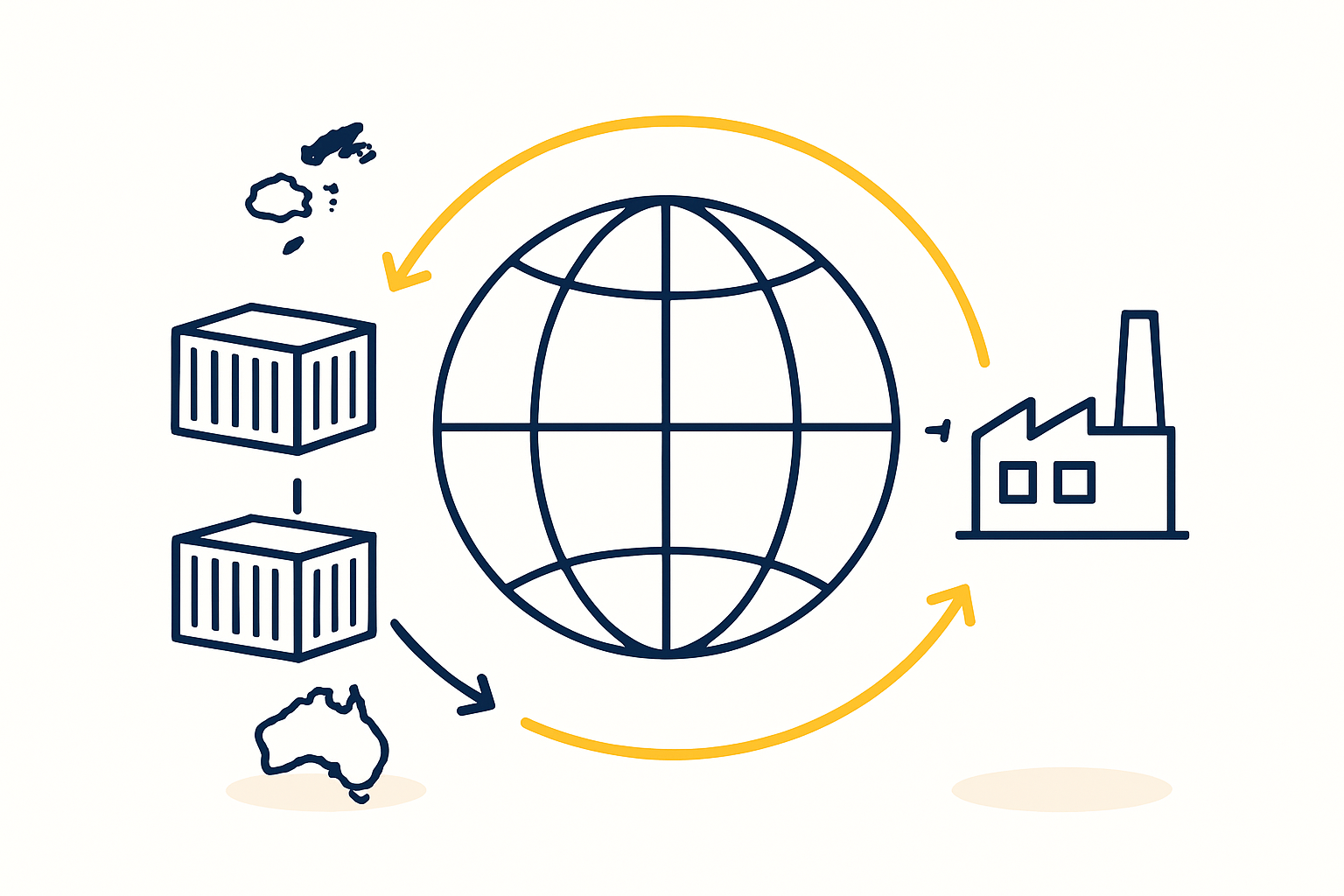
For a business owner, managing the supply of these items involves a fundamental tension: balancing cost efficiency with operational resilience. While sourcing materials ‘just-in-time’ can minimize inventory costs, it exposes the operation to significant risks—a lesson many industries learned during the global supply chain crisis of 2020-2022. For a factory in a remote location, this risk is amplified exponentially.
Global Headwinds and Local Realities: Why Supply Chains Fail
Recent global events have fundamentally reshaped supply chain strategy. An entrepreneur planning a new solar factory today must account for a landscape of heightened risk and volatility.
The ‘Just-in-Case’ Imperative Post-COVID-19
The pandemic exposed the fragility of lean, globalized supply chains. At its peak, international shipping costs tripled, and a system that was once predictable became unreliable. This has forced a strategic shift from ‘just-in-time’ to ‘just-in-case’ logistics.
For a remote factory, this means anticipating delays is no longer a contingency plan; it is a core business assumption. Research shows that standard ocean freight lead times of 6-8 weeks can easily extend to 16 weeks or more during periods of disruption.
Navigating Geopolitical and Market Volatility
The solar industry is not immune to global politics. Trade disputes, such as those between the US and China, or policy shifts, like India’s push for domestic manufacturing, can redraw supply lines overnight. Furthermore, the market for raw materials can be extremely volatile. Between 2020 and 2022, the price of polysilicon—the base material for most solar cells—quadrupled, directly impacting production costs.
Ready to make big Profits?
The solar Industry is Booming
WE HELP NEWCOMERS to the solar industry start their own solar module production line. Customers can make BIG PROFITS by selling modules and finding investors, without wasting money and time on things they don't need!
This volatility is compounded by extreme supplier concentration. With over 80% of the global solar supply chain, from polysilicon to finished modules, centered in China, relying on a single geographic region for critical components creates a significant single point of failure.
Strategic Pillars for a Resilient BOM Supply Chain
Mitigating these risks requires a proactive and strategic approach. For entrepreneurs in locations like Tuvalu—or in many parts of Africa, the Middle East, and Latin America—the following pillars are essential.
1. Strategic Sourcing and Supplier Diversification
Relying on a single supplier for a critical component like solar cells is a high-risk strategy. A robust sourcing plan involves:
- Identifying Primary and Secondary Suppliers: Establish relationships with at least two qualified suppliers for each critical material, preferably in different geographic regions.
- Evaluating Regional Options: While often more expensive, sourcing some materials from a regional supplier (e.g., in Southeast Asia or Europe) can provide a crucial buffer if a primary supply line is disrupted.
- Using a Mix of Contracts: Secure long-term contracts for a baseline volume of materials to lock in pricing, while using the spot market for additional needs. This balances cost stability with flexibility.
2. Intelligent Inventory Management
For a remote factory, inventory is not a cost center; it is an insurance policy against shutdowns. The goal is to hold enough safety stock to weather significant delays.
- Establish a Buffer Stock: A common starting point, based on J.v.G. Technology’s experience with turnkey projects, is to maintain a 3- to 4-month supply of critical BOM components on-site.
- Balance Capital and Risk: Holding inventory ties up capital investment. However, the cost of this inventory is almost always lower than the revenue lost during a multi-week production halt, while fixed costs like labor and facility overheads keep accruing.
- Implement a Management System: Use a clear system (First-In, First-Out) to manage stock, ensuring materials are used efficiently and do not degrade over time.
3. Optimized Logistics and Freight Forwarding
The physical movement of goods is as important as their sourcing.
- Partner with a Reliable Freight Forwarder: A competent logistics partner is critical. They manage customs clearance, documentation, and can provide creative solutions during shipping crises.
- Optimize Container Loads: Plan purchases to ship Full Container Loads (FCL) whenever possible. This is more cost-effective and secure than Less than Container Load (LCL) shipping.
- Understand Local Infrastructure: Thoroughly assess the capabilities of the local port, customs processes, and inland transport infrastructure. In many emerging markets, these can be bottlenecks.
The Financial Case for a Strong Supply Chain
A resilient supply chain directly contributes to financial performance. The additional cost of holding buffer stock or using a secondary supplier is minimal compared to the catastrophic cost of a factory idling for a month. A stalled factory not only ceases to generate revenue but also damages its reputation with customers who rely on timely delivery.
Every step in the solar panel manufacturing process depends on the timely arrival of quality materials. By building resilience into the supply chain from day one, an entrepreneur protects their investment and establishes a foundation for long-term operational success.
Frequently Asked Questions (FAQ)
What is a typical lead time for solar cells from a major manufacturer?
Under normal conditions, the lead time from order placement to arrival at a port in a major region can be 6 to 8 weeks. For remote locations, however, and factoring in potential global disruptions, it is wise to plan for 12 to 16 weeks.
How much buffer stock should a new factory hold?
A prudent starting point is a 3- to 4-month supply of your most critical and longest-lead-time components, such as solar cells and glass. This can be adjusted based on real-world experience and the reliability of your chosen shipping lanes.
Is it better to buy all BOM components from one supplier to get a better price?
While bundling purchases can sometimes yield discounts, it creates extreme dependency. The risk of your entire operation halting because of a problem with that single supplier is too great. Diversification is the more professional and resilient strategy.
How does the BOM affect the final solar module quality?
The quality of your raw materials directly determines the performance, reliability, and bankability of your finished modules. Sourcing from reputable, Tier-1 suppliers for critical components like cells is essential for passing certifications and building a trustworthy brand.
Planning Your Path Forward
Establishing a solar module factory is a significant undertaking where operational details determine success. A state-of-the-art solar production line is only as effective as the supply chain that feeds it. For entrepreneurs in locations distant from traditional manufacturing centers, building a resilient, multi-faceted, and well-managed BOM supply chain is not an optional extra—it is a prerequisite for success.
A structured planning process, such as the one detailed in the pvknowhow.com educational materials, helps entrepreneurs anticipate these logistical and supply challenges from the initial business plan stage, transforming a potential weakness into a source of competitive strength.