Japan Pilots Stick-On Perovskite Solar Cells for Decentralized Power
The quest for sustainable energy is pushing innovation into fascinating new territories. While large-scale solar farms have become a common sight, they require vast tracts of land. Japan is now pioneering a different, more integrated approach by testing flexible, stick-on perovskite solar cells directly on existing urban infrastructure, signaling a potential shift toward decentralized power generation.
Tapping into Untapped Surfaces with Perovskite solar cells
In a groundbreaking pilot program, Japan is exploring the real-world application of perovskite solar cells by applying them to surfaces that were previously unusable for energy generation. Imagine lampposts, traffic signs, and the facades of city buildings all contributing to the power grid. This is the future Japan is testing.
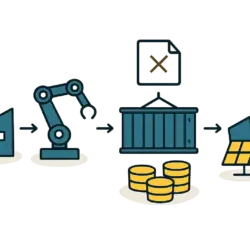
These are not your traditional rigid, heavy solar panels. Perovskite solar cells are known for being incredibly lightweight, highly efficient, and flexible. This unique combination of traits allows them to be manufactured as thin, adhesive films that can be easily “stuck on” to vertical, curved, or irregular surfaces. By leveraging the built environment, this initiative aims to generate electricity without dedicating new land, a critical advantage for densely populated countries like Japan.
The Promise of Decentralized Power
The core objective of these pilot projects is to test the feasibility of creating decentralized power networks. Instead of generating electricity at a single, large facility and transmitting it over long distances, this model produces power exactly where it’s needed—within our cities and communities.
The potential benefits are significant:
* Reduced Grid Strain: Local power generation can alleviate pressure on the central electrical grid, especially during peak demand.
* Increased Resilience: Decentralized networks are inherently more resilient. An issue in one area is less likely to cause a widespread outage.
* Efficient Land Use: It transforms passive urban surfaces into active energy-producing assets, a concept often referred to as “agrivoltaics” for the urban space.
Initial tests from the pilot projects have already shown strong potential, hinting at a future where cities can power themselves through a distributed network of countless small-scale generators integrated seamlessly into their own architecture.
Japan’s Vision for Solar Innovation
This initiative is part of a broader national strategy to push the boundaries of solar technology. Japan’s commitment to exploring novel energy solutions is well-documented, with ambitious projects that even include long-term plans to potentially beam solar power to Earth from space.
While the stick-on solar cell project is still in its pilot phase, it represents a practical and scalable step toward a more sustainable and self-sufficient urban future. By rethinking what a solar panel can be and where it can be placed, Japan is paving the way for a world where clean energy is all around us, hiding in plain sight.