
A new solar module factory represents a substantial capital investment. The lamination machine, the automated stringer, and the testing equipment are all engineered for high-volume, continuous output. But these assets only generate a return on investment when they’re operational. A factory running a single eight-hour shift leaves its most expensive equipment idle for 16 hours a day—a significant opportunity cost in a competitive market.
Transitioning to a multi-shift operation is essential for maximizing asset utilization and achieving the plant’s nameplate capacity. Yet, this transition is about more than just hiring people; it requires a robust operational framework. This article outlines the key considerations for structuring a two- or three-shift system, covering staffing, process control, and compensation to ensure your facility runs efficiently around the clock.
The Business Case for Continuous Production
In solar manufacturing, the primary objective is to lower the cost per watt. A key driver of this cost is the depreciation of capital equipment. By operating 24 hours a day, a factory can spread its fixed costs over a much larger volume of modules, significantly improving its financial performance.
The solar module manufacturing machines that form a production line are designed specifically for this purpose; their value is unlocked only through consistent, uninterrupted operation.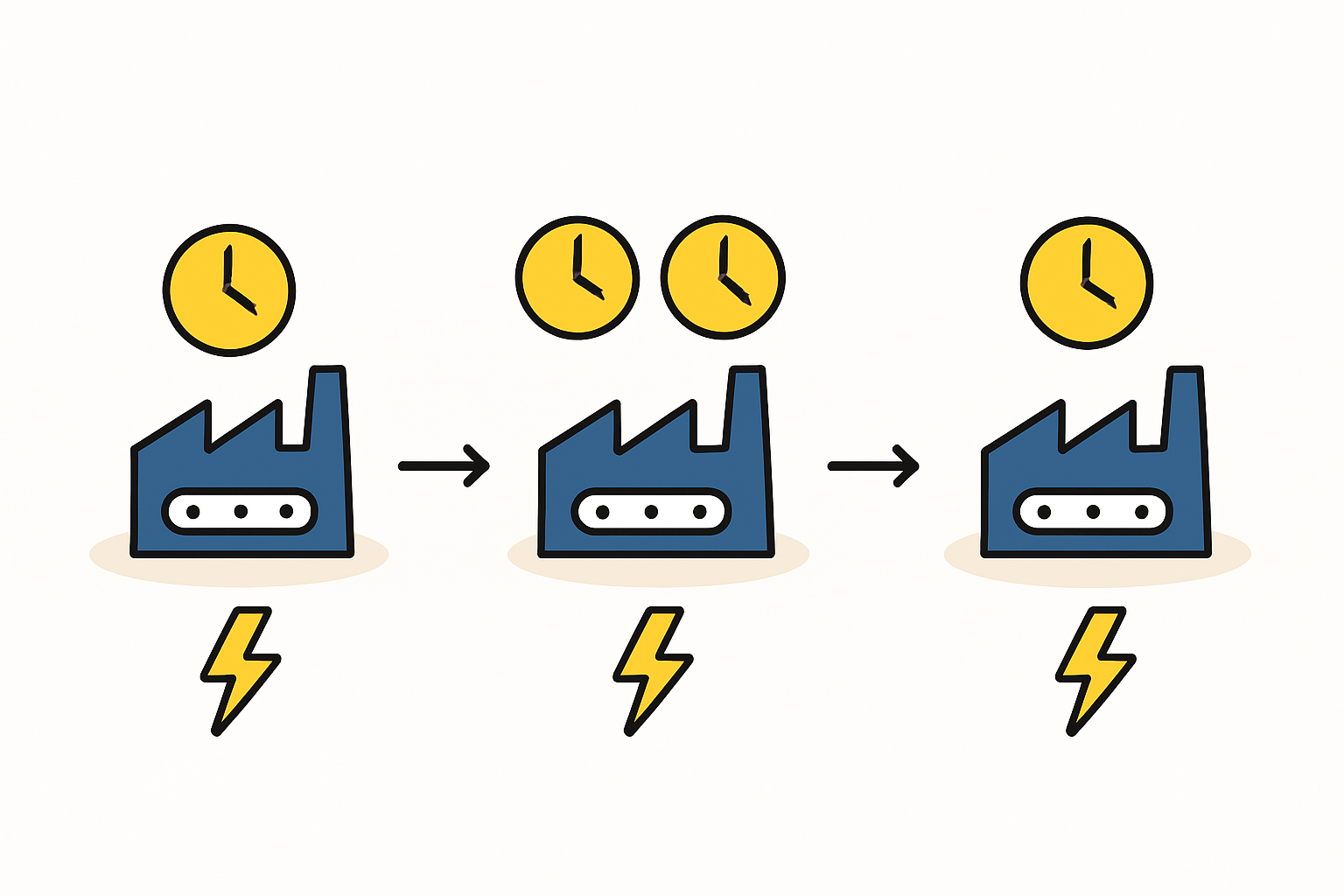
However, achieving this level of performance depends on more than machinery. Operational experience from setting up over 15 factories in diverse markets—from North Africa to South Asia—reveals a recurring challenge: underestimating the complexity of 24/7 operations. While the machinery is designed for continuous production, the human systems often lag. This can lead to a 15–20% drop in Overall Equipment Effectiveness (OEE) during night shifts if not managed correctly. The following sections address how to build these essential human systems.
Staffing Models: Structuring Your 24/7 Workforce
A multi-shift system can be organized in several ways, most commonly as a two-shift (e.g., 16 hours a day, 5 days a week) or a three-shift (24/5 or 24/7) model. The three-shift model is the standard for maximizing output.
The Ideal Supervisor-to-Operator Ratio
Effective supervision is critical for maintaining quality and productivity, especially during night and weekend shifts when senior management is typically not present. For a typical 50 MW line, a three-shift model requires approximately 21 operators and 3 supervisors per 24-hour cycle.
The ideal supervisor-to-operator ratio is 1:7. This allows the supervisor to provide adequate support, monitor quality control checkpoints, and resolve minor issues before they escalate. Many new factory owners attempt a 1:10 or higher ratio to reduce payroll costs, but this often proves counterproductive, leading to more production defects, lower team morale, and supervisor burnout.
The Strategic Role of the ‘Floating’ Technician
One advanced staffing strategy is to add a dedicated ‘floating’ technician. This individual is not assigned to a specific shift but is an expert in complex machine diagnostics and maintenance. Based on client feedback from a turnkey project in the MENA region, introducing this role reduced critical machine downtime by over 10%. The floating technician acts as a knowledge bridge, ensuring complex problems are solved consistently and best practices are shared across all three shifts.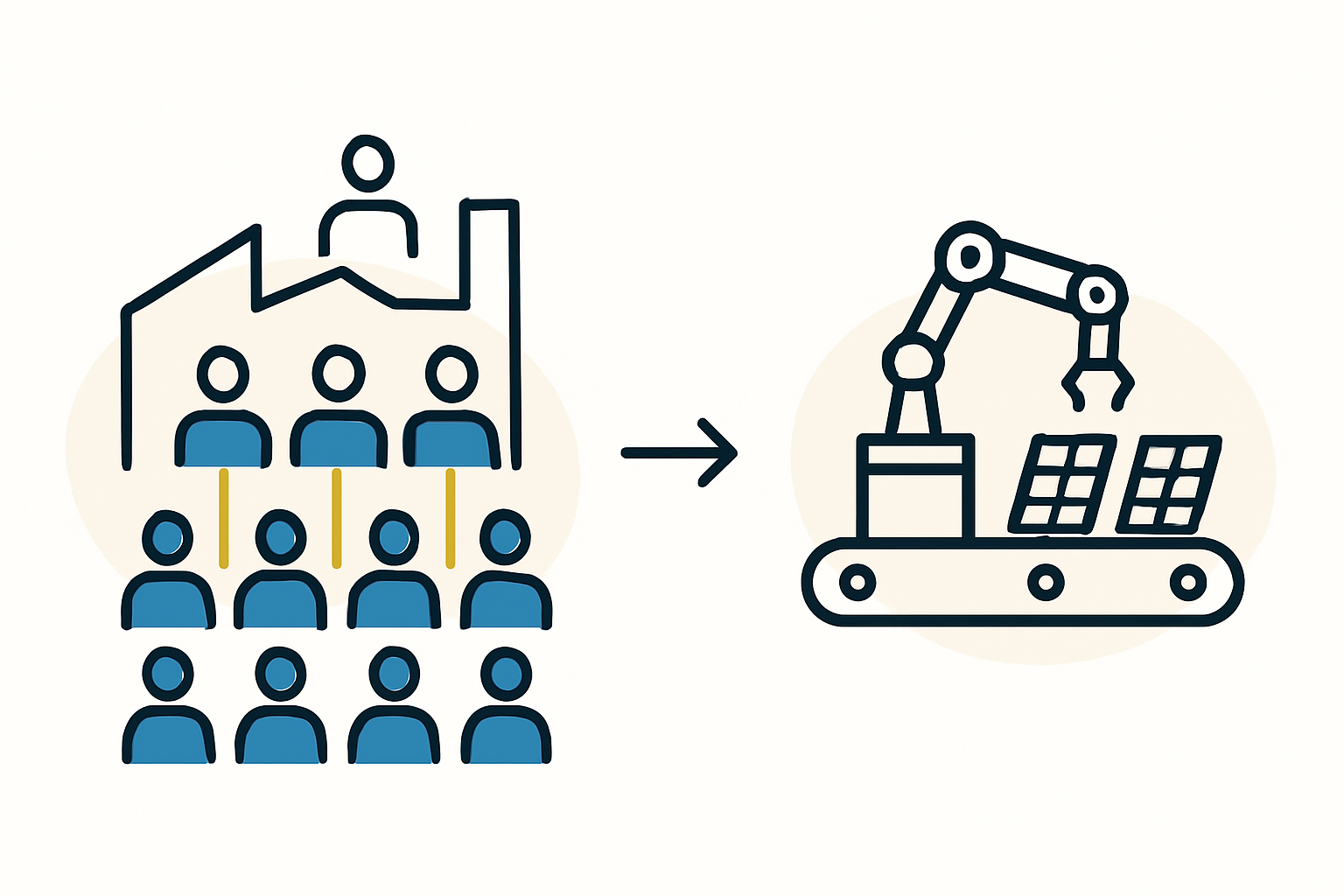
The Critical Shift Handover: Preventing Errors Before They Start
The most vulnerable period in a 24-hour production cycle is the 15-minute window during a shift change. This is when information is transferred, responsibility is handed over, and the risk of miscommunication is highest. A poorly managed handover can lead to significant production errors and efficiency losses.
Experience shows that a structured handover protocol can prevent up to 80% of the errors that typically occur within the first hour of a new shift. This underscores that most handover issues are process problems, not personnel problems. A formal checklist is the most effective tool for ensuring a smooth transition.
A comprehensive handover protocol should document:
- Machine Status: The operational condition of key equipment.
- Quality Control: Any recent defects, trends, or materials under observation.
- Production Targets: Progress against the daily goal and any pending orders.
- Material Supply: Status of consumables like EVA, backsheets, and junction boxes.
- Unresolved Issues: Any pending maintenance or technical queries for the incoming team.
Compensation and Motivation for Non-Standard Hours
Attracting and retaining qualified staff for night and weekend shifts requires a thoughtful compensation strategy. These unsociable hours disrupt personal lives, and motivation can naturally decline without the proper incentives and management support.
Compensation models are highly region-dependent and must align with local labor laws. However, a common best practice is a tiered approach rather than a simple flat overtime rate. One proven model includes:
- Night Shift Premium: A 15–25% wage premium for hours worked during the night shift.
- Weekend/Holiday Premium: A separate, often higher, premium or time-off-in-lieu for work scheduled on public holidays or weekends.
This tiered structure is more effective at motivating staff because it specifically acknowledges the distinct challenges of working non-standard hours.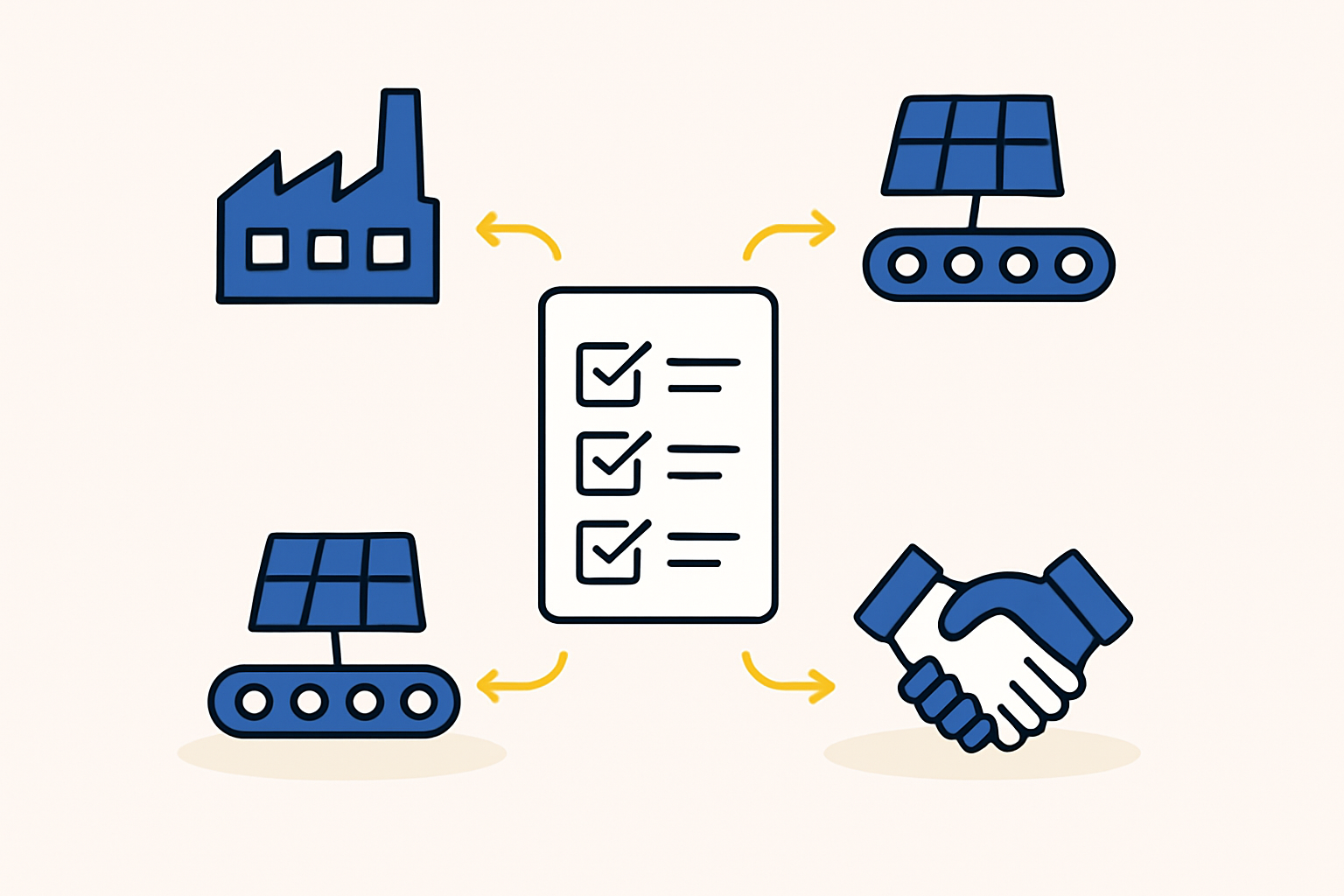
Frequently Asked Questions (FAQ)
How many employees are needed for a 3-shift operation?
For a typical 50 MW solar module factory, a three-shift system requires around 21 operators and 3 shift supervisors to cover a 24-hour period, in addition to maintenance, quality control, and administrative staff.
What is the biggest challenge with a 3-shift system?
The primary challenge is maintaining consistent quality, communication, and process discipline across all shifts. Without strong systems, a “day shift” versus “night shift” mentality can emerge, leading to process deviations and blame-shifting.
Is a 24/7 operation necessary from day one?
Not necessarily. Many facilities begin with a single shift to stabilize processes, then scale to a second and third shift as customer demand grows and the team gains experience. However, the complete factory setup should be planned with 24/7 operation in mind from the start.
What is Overall Equipment Effectiveness (OEE) and why is it important?
Overall Equipment Effectiveness (OEE) is a key performance indicator that measures manufacturing productivity. It combines three factors: Availability (runtime), Performance (speed), and Quality (good parts). A high OEE score indicates that a factory is getting the most out of its equipment, which is essential for profitability.
From Theory to Practice: A Structured Approach
Implementing a successful multi-shift operation is a foundational step in transforming a new factory into a highly efficient, profitable asset. It requires moving beyond machinery and focusing on the human systems that drive performance: clear staffing structures, robust handover processes, and fair compensation models.
For business professionals looking to develop these operational systems methodically, structured educational resources, such as the e-courses provided by pvknowhow.com, can offer a clear roadmap from initial planning to full-scale production. By investing in these systems, you ensure your factory not only runs, but thrives.