
In solar module manufacturing, the most significant risks are often hidden in plain sight. An entrepreneur might focus on the efficiency of solar cells or the precision of a stringer machine, yet a startling finding from the Fraunhofer Institute for Solar Energy Systems (ISE) points toward a different vulnerability. Their research indicates that up to 80% of module failures in the field trace back to the degradation of non-cell materials, with encapsulants and backsheets being the primary points of failure.
This statistic underscores a crucial point: the long-term performance, safety, and bankability of a solar panel depend profoundly on the quality of its most fundamental components, particularly the EVA film and the solar panel backsheet.
Choosing a supplier for these materials based on price alone is a common but costly mistake. A thorough on-site supplier audit is not a bureaucratic formality; it’s an essential risk-management strategy. This guide provides a structured checklist for business professionals to evaluate potential suppliers and ensure the foundation of their product is secure.
The Strategic Importance of Supplier Audits
A supplier audit is a proactive measure to verify that a supplier’s processes, documentation, and quality controls meet the necessary standards. For a new solar module manufacturer, this process is fundamental to protecting the entire operation.
The goal is to ensure that every roll of material received is consistent and meets specifications. This consistency directly determines whether the final product can pass critical tests. For instance, the International Electrotechnical Commission (IEC) standard 61215 is a mandatory benchmark that requires modules to withstand specific environmental stresses. A supplier’s weak quality control can lead directly to a finished module that fails these expensive and time-consuming module certification tests, causing significant delays and financial loss.
Based on experience from J.v.G. turnkey projects, factories that implement a rigorous supplier qualification and incoming material inspection process face significantly fewer production halts and long-term warranty claims.
Core Areas of a Supplier Audit Checklist
A successful audit moves beyond a simple tour of the facility, requiring a systematic examination of four key operational areas.
1. Raw Material Management
A final product is only as good as its raw materials. A supplier’s control over its own supply chain is the first indicator of its professionalism. A report from TÜV Rheinland illustrates this point, linking backsheet cracking—a serious safety failure—to inconsistencies in raw material composition and curing processes at the supplier’s facility.
Audit Checklist:
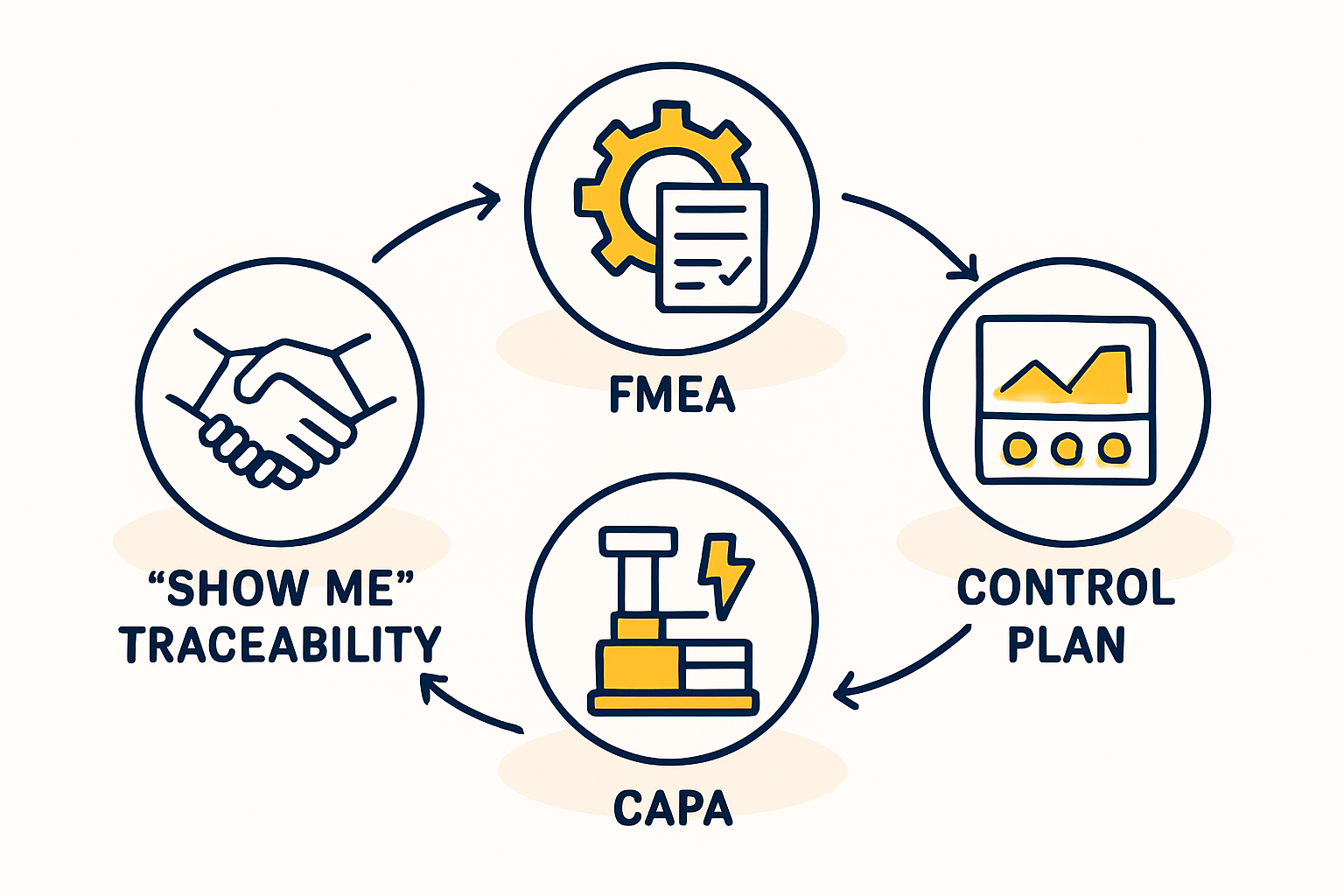
- Traceability System: Does the supplier have a documented system to trace every batch of finished product back to the specific batches of raw materials used?
- Incoming Goods Inspection: Are there clear procedures and records for inspecting all incoming raw materials (e.g., polymers, additives, adhesives)?
- Supplier Qualification: What is their process for qualifying and monitoring their own raw material suppliers? Request to see their criteria.
2. Production Process Control
Consistency in production is what separates a premier supplier from an unreliable one. Look for evidence of controlled, repeatable processes that minimize variation between batches.
Audit Checklist:
- Standard Operating Procedures (SOPs): Are there clearly written, accessible SOPs for every critical production step, from mixing to extrusion and coating?
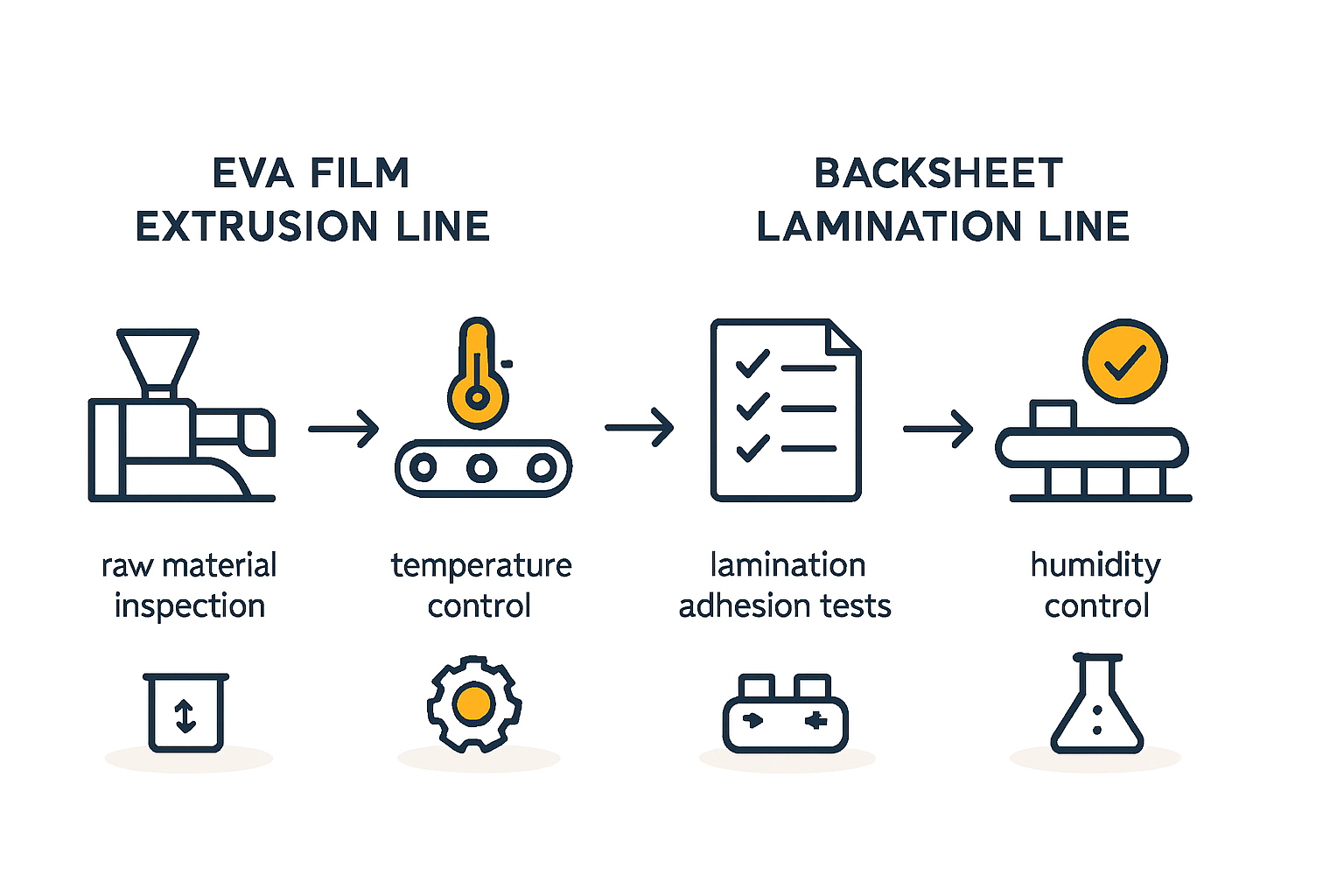
- Environmental Controls: Is the production environment controlled for temperature, humidity, and particulates? A clean, organized facility is a strong positive indicator.
- Equipment Calibration: Are there records showing that all critical machinery is calibrated regularly to ensure consistent output?
3. Material Storage and Handling
EVA film and backsheets are sensitive materials. Improper handling and storage can introduce latent defects that only become apparent years after a module is installed. Research from the National Renewable Energy Laboratory (NREL) confirms this, showing that incorrect storage of EVA film—particularly exposure to humidity—can cause premature delamination and power loss in modules after just 5 to 7 years in the field.
Audit Checklist:
- Climate Control: Are raw materials and finished goods stored in a climate-controlled warehouse to protect against temperature extremes and humidity?
- Inventory Management: Does the supplier use a First-In, First-Out (FIFO) system to prevent old stock from being used?
- Protective Packaging: Is the final product packaged securely to prevent damage from moisture, UV light, and physical impact during transit?
- Handling Procedures: Observe how workers handle the rolls. Are they using appropriate equipment to avoid creasing, tearing, or contamination?
4. Quality Control and Testing
A supplier’s commitment to quality is best measured by its investment in testing and its transparency with the results. Trust must be verified through objective data.
Audit Checklist:
- On-Site Laboratory: Does the supplier have an in-house lab with the equipment to perform key tests (e.g., peel strength, dimensional stability, shrinkage tests, gel content for EVA)?
- Batch Testing Records: Request to see the quality control records for several recent production batches. Is testing systematic and well-documented?
- Handling of Non-Conforming Product: What is the documented procedure when a batch fails a quality test? Is it clearly quarantined and investigated?
- Final Inspection: What is the final inspection process before a product is packaged and shipped to the customer?
Beyond the Checklist: Assessing the Supplier’s Mindset
A checklist confirms capability, but a conversation reveals character. The ideal supplier is more than a vendor; they’re a technical partner invested in your success. During the audit, assess:
- Transparency: Is the management team open to answering questions and sharing documentation, or are they defensive and secretive?
- Technical Support: Does the supplier have a knowledgeable technical team that can help troubleshoot issues or provide guidance on material integration?
- International Experience: For entrepreneurs in emerging markets, it’s crucial to ask about the supplier’s experience with international logistics, documentation, and payment terms.
Frequently Asked Questions (FAQ)
How often should a supplier be audited?
An in-depth, on-site audit is essential before signing an initial supply contract. After that, a follow-up audit every 1-2 years is good practice. For established, trusted partners, this can sometimes be replaced by a remote audit or a review of documentation.
Can a third-party specialist perform this audit?
Yes, this is a common and highly recommended practice, especially for companies new to the solar industry. Firms that specialize in factory planning and setup often include supplier qualification and audits as part of their services, bringing extensive experience to the evaluation process.
What is a major “red flag” during an audit?
The most significant red flag is a lack of documentation. If a supplier cannot produce calibration records, batch test results, or clear SOPs, it suggests their processes are inconsistent and uncontrolled. Resistance to providing such information is also a serious warning sign.
Is the cheapest supplier always the wrong choice?
Not necessarily, but an exceptionally low price demands exceptional scrutiny. A thorough audit must confirm that the low cost is not achieved by compromising raw material quality, process controls, or testing. The cost of materials is a key part of the solar module Bill of Materials (BOM), but a failure in the field due to poor quality will always be more expensive than any initial savings.
A Foundation for Long-Term Success
Conducting a meticulous supplier audit for critical materials like EVA and backsheets is a foundational investment in the future of a solar module factory. It protects the capital invested, ensures the product’s long-term reliability, and builds a brand reputation based on quality.
This process is core to planning a successful turnkey solar manufacturing line. By verifying quality at the source, a business leader builds a resilient supply chain and sets the stage for producing bankable, high-performance solar modules that can stand the test of time.