
While the market for refurbished electronics is dominated by consumer-facing brands, the operational standards behind their “Renewed” or “Certified” labels are often a black box. For investors, industrial groups, and waste management operators looking to enter the circular economy, this opacity creates significant risk. True commercial viability isn’t built on simple repairs, but on a systematic, industrial process for asset recovery, reconditioning, and certification.
This guide lays out the professional framework for establishing a credible and scalable refurbishment operation. It moves beyond consumer-level descriptions to detail the core technical and quality assurance processes that underpin a successful business model, transforming used assets into reliable, market-ready products. The information here provides clear orientation for decision-makers assessing this strategic opportunity.
THE BUSINESS CASE FOR A STANDARDS-BASED APPROACH
The current market reveals a clear divide. Retail giants like Amazon and Best Buy focus exclusively on building consumer trust through warranties and return policies, offering little insight into their technical processes. Conversely, repair services like uBreakiFix market their skills to end-users but do not disclose their operational workflows.
This creates a distinct content gap—and a strategic opportunity. There is an underserved need for authoritative guidance on the business of refurbishment itself. By implementing and transparently communicating a robust operational standard, an enterprise can differentiate itself from competitors and build trust with B2B clients and discerning consumers. This approach is supported by several growing market drivers:
-
Regulatory Tailwinds: The “Right to Repair” movement and expanding e-waste legislation, such as the EU’s WEEE Directive, are creating a more favorable environment for reuse and remanufacturing over disposal.
-
Corporate Sustainability: ESG (Environmental, Social, and Governance) mandates are compelling large organizations to seek certified partners for IT asset disposition (ITAD) and lifecycle management.
-
Economic Value: Remanufacturing often captures significantly more residual value from an asset than raw material recycling, creating a stronger business case, particularly for complex electronics.
SETTING UP YOUR REFURBISHMENT WORKSHOP
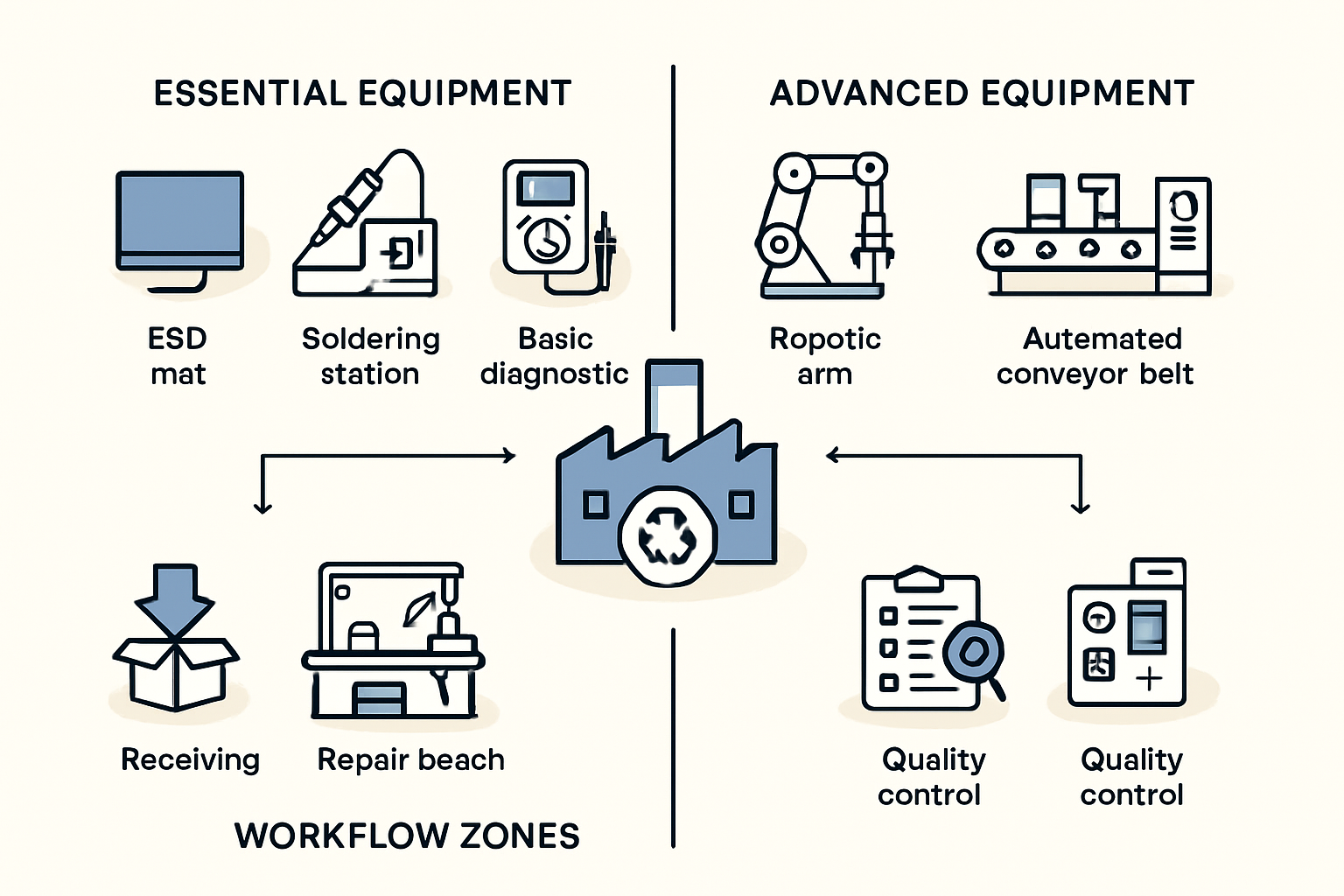
The foundation of any professional refurbishment operation is a well-designed workspace that prioritizes safety, efficiency, and quality. Underestimating the need for process-oriented layouts and specialized equipment is a common mistake that directly impacts throughput and unit profitability. A professional setup is more than a simple workbench; it’s a controlled production environment.
Key considerations for an effective workshop include:
-
Electrostatic Discharge (ESD) Protection: Essential for handling modern electronics, this means using ESD-safe flooring or mats, wrist straps for technicians, and grounded work surfaces to prevent component damage.
-
Workflow-Oriented Layout: The physical space should mirror the operational process, moving from receiving and triage at one end, through diagnostics, repair, and cleaning, to quality control and packaging at the other. This minimizes handling time and reduces the risk of errors.
-
Tiered Equipment Investment: Operators should distinguish between essential and advanced equipment. Essentials include diagnostic software, power supplies, and precision hand tools. Advanced equipment, like BGA rework stations or cell balancing hardware, can be added as the operation scales into more complex repairs.
A detailed plan for your workshop layout and equipment is a critical first step in developing a realistic business model and calculating initial capital expenditures.
A FRAMEWORK FOR OPERATIONAL EXCELLENCE: THE CORE PROCESSES
A successful refurbishment operation depends on repeatable, documented processes that ensure every unit receives the same level of scrutiny. This systematic approach is what separates professional remanufacturers from informal repair shops. The process can be broken down into four distinct stages.
CORE PROCESS 1: TRIAGE, DIAGNOSTICS, AND GRADING
This initial stage determines the potential value and required workflow for each incoming asset.
-
Initial Inspection: A visual check for major cosmetic defects (cracked screens, deep scratches, bent frames) and functional tests for power-on and port connectivity.
-
Software Diagnostics: Using specialized software to run a full suite of tests on internal components, including battery health, processor performance, memory, and storage integrity.
-
Grading: Based on the diagnostic and cosmetic results, the asset is assigned a grade (e.g., Grade A: Like-new; Grade B: Minor cosmetic flaws; Grade C: Fully functional with visible wear). A consistent grading system is crucial for accurate pricing and inventory management.
CORE PROCESS 2: COMPONENT-LEVEL REPAIR AND REMANUFACTURING
This is the most technically intensive stage, where faults are corrected and components are upgraded. Unlike simple part-swapping, professional remanufacturing involves deeper intervention to restore assets to original performance specifications.
Standard component-level repair procedures include:
-
Battery Replacement and Cell Rebalancing: For multi-cell battery packs, replacing the entire unit or performing cell rebalancing to restore capacity and extend lifespan.
-
Board-Level Repair: Advanced repairs involving micro-soldering to replace faulty capacitors, resistors, or integrated circuits on the main logic board.
-
Junction Box Replacement: In solar applications, replacing damaged or corroded junction boxes to restore electrical safety and performance.
-
Screen and Housing Replacement: Replacing damaged displays and external casings to meet cosmetic grading standards.
The ability to perform these repairs in-house, rather than outsourcing, is a key driver of profitability and quality control.
CORE PROCESS 3: COSMETIC RECONDITIONING
An asset’s physical appearance heavily influences its perceived value. A dedicated reconditioning stage ensures that products meet the aesthetic expectations of the market. This process includes:
-
Deep Cleaning: Professional cleaning of all surfaces, ports, and vents to remove dirt and residue.
-
Polishing: Buffing out minor scratches and scuffs from plastic or metal surfaces.
-
Part Replacement: Replacing worn parts like keycaps, feet, or bezels to give the unit a “like-new” appearance.
This attention to detail significantly impacts the final sale price and differentiates a premium refurbished product from a typical “used” item.
CORE PROCESS 4: DATA SANITIZATION AND SOFTWARE RESTORATION
For any device that stores user data, this is the most critical process for building trust and mitigating liability.
-
Secure Data Erasure: Wiping all previous user data using methods that comply with recognized standards like NIST 800-88. A simple factory reset is insufficient, as data can often be recovered.
-
Firmware and OS Installation: Flashing the latest stable firmware and installing a clean, factory version of the operating system.
-
Final Functional Test: A brief check to ensure the software is running correctly and the device is ready for the next user without any remnants of its past.
Transparently communicating adherence to a recognized data sanitization standard is a powerful differentiator, particularly for corporate clients.
QUALITY CONTROL, CERTIFICATION, AND PACKAGING
This final stage validates all preceding work and prepares the product for sale. It is the last opportunity to catch any errors and is crucial for building a reputation for reliability.
-
Final QC Checklist: A technician—separate from the one who performed the repair—runs the unit through a comprehensive checklist, testing every function one last time. This dual-check system minimizes human error.
-
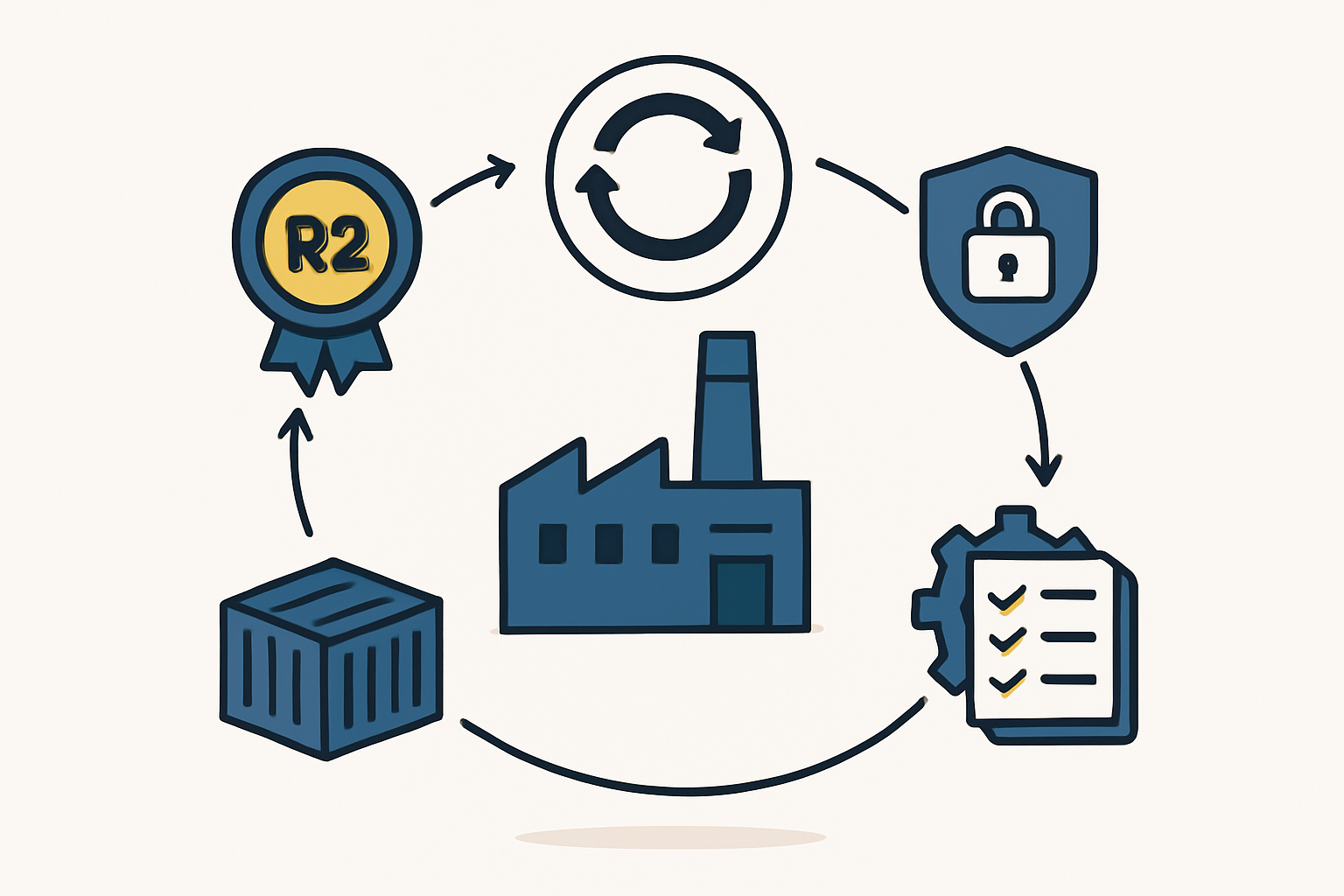
Professional Certification: Adherence to industry standards like R2 (Responsible Recycling) or RIOS (Recycling Industry Operating Standards) provides third-party validation of your processes. These certifications are often a requirement for winning enterprise-level contracts.
-
Protective Packaging: The product is packaged in custom-fit, professional packaging with all necessary accessories. This not only prevents damage during transit but also shapes the customer’s first impression of the product’s quality.
FREQUENTLY ASKED QUESTIONS
What is the difference between refurbished, remanufactured, and renewed?
While often used interchangeably in consumer marketing, these terms have distinct meanings in an industrial context. “Refurbished” typically implies testing, cleaning, and minor repairs. “Remanufactured” suggests a more intensive process of disassembly, component replacement, and reassembly to meet original factory specifications. “Renewed” is a marketing term, popularized by Amazon, that implies a certain quality standard backed by a warranty but is not a technical definition.
What are the biggest operational challenges in scaling a refurbishment business?
The primary challenges are: 1) securing a consistent supply of high-quality used assets (core acquisition), 2) managing a complex inventory of spare parts, and 3) training and retaining skilled technicians capable of performing advanced, board-level repairs.
How do warranty offerings impact the business model?
A warranty is a direct reflection of confidence in your refurbishment process. While offering a warranty (e.g., 90 days, 1 year) increases financial risk, it is a powerful trust signal that enables premium pricing. The potential cost of warranty claims must be factored into each unit’s price.
Which certifications provide the most commercial value?
For electronics, R2 and e-Stewards are highly recognized certifications that demonstrate environmental responsibility and data security best practices. For operational excellence, ISO 9001 (Quality Management) and ISO 14001 (Environmental Management) are valuable. The choice depends on the target market; enterprise clients in North America and Europe often require R2 or e-Stewards certification.
FROM PROCESS TO PROFITABILITY
Establishing a successful refurbishment and remanufacturing operation requires a shift in perspective—from that of a repair shop to that of a light manufacturer. Success depends not on the ability to fix a single device, but on the capacity to execute a standardized, efficient, and auditable process across thousands of units.
By investing in a purpose-built workshop, documenting each core process, and committing to internationally recognized quality and data security standards, an organization can build a defensible position in the growing circular economy. This operational discipline is the foundation for creating trusted products, securing high-value contracts, and establishing a profitable, long-term business.