
The growing market for second-life energy assets offers a significant opportunity for investors and operators. But capitalizing on the value of used solar panels, inverters, and battery storage systems requires more than logistical expertise.
The primary challenge lies in managing the complex web of legal, warranty, and liability risks that accompany the sale of used equipment. For business operators, the core question extends beyond asset value to how to mitigate the legal and financial exposure that can erode profitability.
Existing guidance on this topic is fragmented, often focusing on consumer electronics or offering speculative legal advice. This leaves a critical gap for business leaders who need a structured framework to de-risk their operations. To fill this gap, this guide provides a consolidated overview of the essential components for building a compliant and defensible second-life asset program, transforming potential liabilities into a strategic advantage.
Part 1: The Foundation of Legal Obligations
Before structuring any warranty or sales program, an operator must understand their fundamental legal position. This understanding is the foundation of any risk mitigation strategy and differs significantly depending on the business model and region of operation.
Producer vs. Reseller Liability
A common point of confusion surrounds the distinction between the original equipment manufacturer (OEM) and the reseller. Legal analysis shows that while an OEM often shoulders the primary liability for a product’s inherent design defects, a reseller is not automatically shielded.
A business that regularly sells used assets may be classified as a retailer or distributor under law. This classification exposes the business to potential lawsuits if an asset fails or causes harm, even if the OEM is ultimately found responsible.
The reseller becomes the first point of contact in the chain of liability, creating significant legal and reputational risk if not properly managed. If the reseller performs any testing, repairs, or modifications, their liability increases substantially.
The As Is Fallacy
A frequent misconception is that selling a product as is or without warranty provides complete legal protection. While an as is clause can limit certain implied warranties, it does not absolve a seller of all responsibility.
It generally does not protect against claims of gross negligence, fraud, or failure to disclose known defects. Courts may also set aside such clauses if they are deemed unconscionable or against public policy, particularly when an asset’s failure results in property damage or injury. Relying solely on this clause is an incomplete and often ineffective risk management strategy.
Navigating Regional Regulatory Frameworks
The legal landscape for used electronics is not uniform globally. Operators must adapt their compliance frameworks to specific regional mandates.
-
In the European Union: The Waste Electrical and Electronic Equipment (WEEE) Directive imposes strict obligations on producers and distributors for the collection, treatment, and recycling of electronics. Selling second-life assets may fall under these regulations, requiring registration and compliance. Additionally, robust consumer protection laws provide buyers with statutory rights that cannot be easily overridden by a seller’s terms and conditions.
-
In North America: Regulations can vary by state and province. Consumer protection laws and the Uniform Commercial Code (UCC) govern sales contracts and warranties. Emerging right to repair legislation is also changing the landscape for spare parts and serviceability, impacting the viability of refurbishment operations.
-
In Africa, the Middle East, and Southeast Asia: Regulatory frameworks are often in earlier stages of development. While this may present fewer direct compliance hurdles, it also creates market uncertainty. Operators in these regions must conduct thorough due diligence on import/export laws, e-waste handling standards, and local commercial codes. In these markets, a strong, self-imposed warranty and quality assurance program becomes a key competitive differentiator.
Part 2: Designing Your Warranty Framework – From A-stock to C-stock
A well-structured warranty is more than a cost center—it is a powerful tool for building buyer confidence, justifying premium pricing for higher-quality assets, and creating a transparent operational standard.
The tiered warranty models used by major electronics marketplaces provide a useful template that can be adapted for industrial energy assets. The key is to link the warranty’s duration and coverage directly to the asset’s condition, which is determined through rigorous testing and grading of factors like a solar panel’s power output or a battery’s state-of-health.
Structuring Limited Warranties by Asset Grade
A practical approach involves defining clear asset grades and associating each with a specific warranty package:
-
Grade A (Excellent Condition): Assets with minimal cosmetic wear and performance metrics near original specifications (e.g., >90% of nameplate capacity).
Warranty: A 1-year limited warranty covering functional defects. This tier signals a high degree of confidence in the asset and commands the highest price. -
Grade B (Good Condition): Assets showing moderate use but are fully functional and tested to meet a defined performance threshold (e.g., 80-90% of nameplate capacity).
Warranty: A 90-day or 180-day limited warranty covering core functionality, balancing buyer assurance with the asset’s age and condition. -
Grade C (Functional Condition): Assets with significant cosmetic wear or lower performance but are certified as functional and safe.
Warranty: A 30-day functional guarantee. This warranty confirms the asset works upon arrival and gives the buyer a short window to report issues, minimizing the seller’s long-term exposure.
Managing the Claims Process
A warranty is only as good as the process behind it. An efficient claims process is essential for maintaining customer trust and controlling costs. The process should include:
- Clear Documentation: The sales agreement must explicitly state the warranty terms, including coverage, duration, exclusions (e.g., damage from improper installation), and the claims procedure.
- Standardized Intake: A simple, documented procedure for customers to submit a claim.
- Technical Verification: A process to validate the defect and confirm it falls within the warranty’s scope.
- Defined Resolution: A clear policy for resolution, such as repair, replacement with a comparable unit, or a partial refund.
Part 3: Mitigating Catastrophic Risk – Insurance & Compliance
Warranties manage operational risk, but a comprehensive strategy must also account for low-probability, high-impact events. This is where insurance and rigorous compliance documentation become critical lines of defense.
General vs. Product Liability Insurance
Understanding the difference between two key types of insurance is crucial:
-
Commercial General Liability (CGL) Insurance: This covers bodily injury or property damage that occurs at your business premises or as a result of your general operations. It is essential but may not cover damages caused by the products you sell once they have left your control.
-
Product Liability Insurance: This is specifically designed to protect a business against claims of bodily injury or property damage caused by a product it sold, manufactured, or distributed. For any operator selling used energy assets—especially those like batteries that carry inherent risks—this coverage is a fundamental requirement.
Documentation as a Shield
In any dispute or legal claim, comprehensive documentation is an operator’s most powerful tool. It demonstrates due diligence and a commitment to professional standards. Essential records include:
-
Asset Intake & Testing Reports: Detailed logs of each asset’s condition upon arrival, including serial numbers, visual inspection notes, and quantitative performance data (e.g., solar panel flash test results, battery capacity readings).
-
Repair & Refurbishment Logs: A complete record of any work performed on the asset, including parts used and tests conducted post-repair.
-
Chain of Custody: Records showing the asset’s origin and transfer of ownership.
-
Customer Agreements: Signed contracts clearly outlining the terms of sale, asset grade, and warranty limitations.
Part 4: The Complete Framework – A Checklist for Investors & Operators
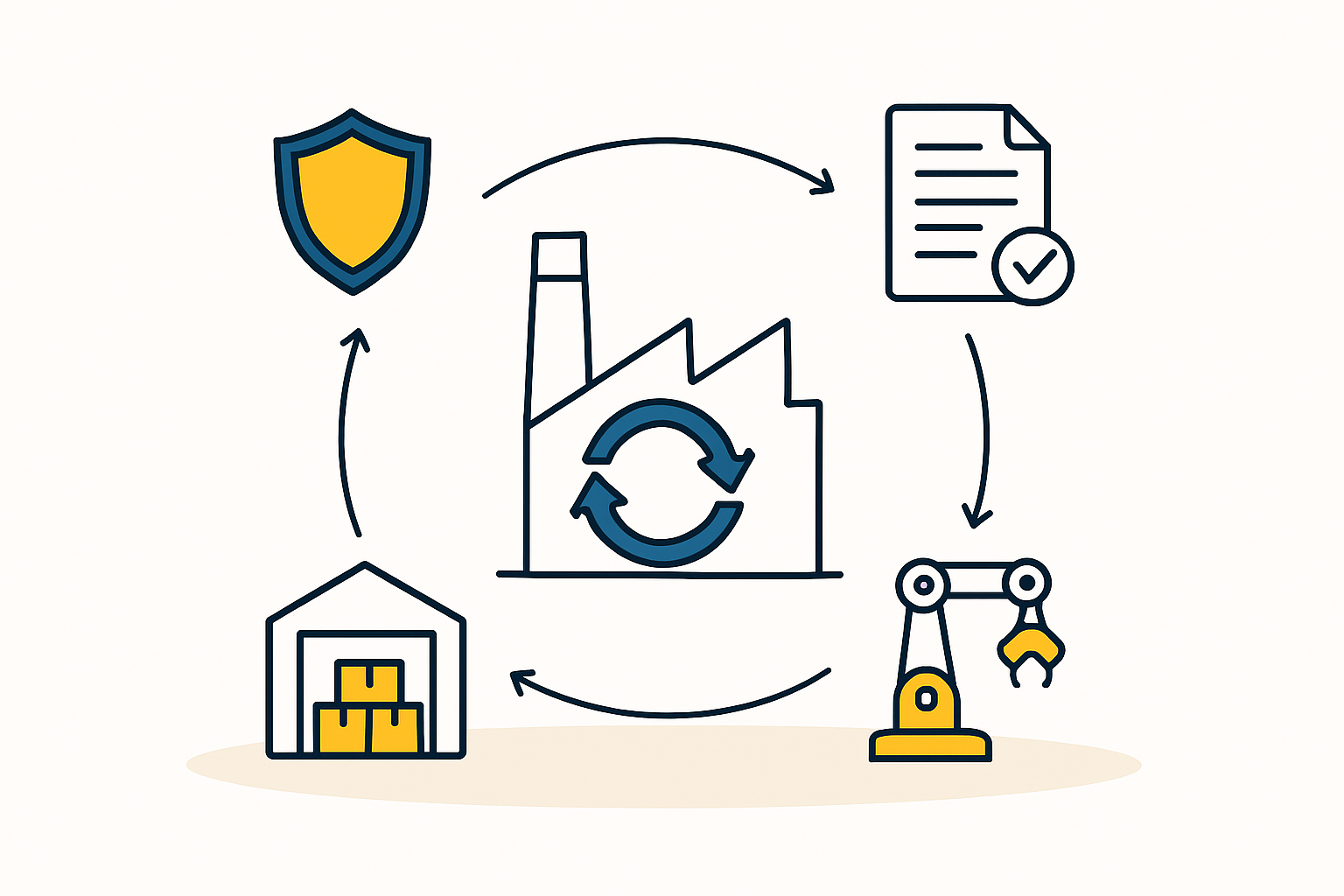
Integrating these legal, warranty, and insurance components creates a robust risk management framework. The following checklist summarizes the key actions for establishing a defensible second-life asset program.
Legal & Regulatory Compliance:
- Consult with legal counsel to understand liability exposure in your specific operating regions.
- Determine your legal status (reseller, distributor, refurbisher) and its implications.
- Ensure compliance with all regional e-waste and consumer protection laws (e.g., WEEE).
- Develop a standardized sales agreement with clear terms and a limited liability clause.
Warranty Program Development:
- Establish objective testing and grading criteria for all assets (e.g., Grade A, B, C).
- Design a tiered limited warranty structure corresponding to each asset grade.
- Create a formal, documented process for handling warranty claims.
- Clearly state all warranty terms, conditions, and exclusions in sales documentation.
Insurance & Documentation:
- Secure adequate Product Liability Insurance in addition to General Liability coverage.
- Implement a rigorous system for documenting every stage of the asset lifecycle (testing, repair, sales).
- Maintain all records for a period that exceeds your longest warranty and any relevant statutes of limitations.
Frequently Asked Questions (FAQ)
1. Is a warranty legally required when selling used energy assets?
In most jurisdictions, no explicit law requires a seller to offer a warranty on used goods. However, certain implied warranties may apply by default unless they are expressly disclaimed in a written contract. More importantly, from a business perspective, a warranty is a critical tool for building market trust and is standard practice among reputable operators.
2. How should I price a used asset with a limited warranty?
The warranty is a value-add that should be factored into the price. A Grade A asset with a 1-year warranty should command a significant premium over a Grade C asset sold with only a 30-day functional guarantee. The price should reflect the lower risk for the buyer and your higher confidence in the product’s quality, backed by your testing and refurbishment process.
3. What happens if the manufacturer’s original warranty is still active on a used product I sell?
This can be complex. Manufacturer warranties are often non-transferable or may be voided if the product has been modified or repaired by an unauthorized party. You must clearly state whether any original OEM warranty is still valid and transferable.
To avoid confusion and liability, best practice is to state that your seller’s warranty is the sole warranty provided, superseding any potential remaining OEM warranty.
4. Can I sell assets internationally with this framework?
Yes, but the framework must be adapted for each target market. Legal compliance, consumer protection laws, and insurance requirements vary significantly between countries. An international operator must conduct thorough due diligence for each region and may need separate sales agreements and warranty terms to comply with local laws.
Conclusion: Turning Risk into a Competitive Advantage
The market for second-life energy assets is maturing. As it grows, so will the scrutiny from regulators and the expectations of professional buyers. Operators who proactively manage legal, warranty, and liability risks will not only protect their businesses but also establish a reputation for quality and reliability.
A well-defined framework is not a barrier to entry; it is a blueprint for sustainable success. By integrating robust legal protections, a transparent warranty structure, and comprehensive insurance coverage, a business can transform risk management from a defensive necessity into a powerful competitive advantage that builds lasting trust with investors and customers. The guidance on pvknowhow.com offers investors and operators a structured starting point for evaluating this emerging market opportunity.