
For industrial investors considering entry into battery manufacturing, the focus often falls on CAPEX, cell chemistry, and supply chain logistics. Yet the most critical—and often underestimated—factor in long-term operational viability is the human element. A world-class facility with an undertrained workforce is an inefficient and hazardous investment. The difference between a high-performing asset and a high-risk liability hinges on a disciplined approach to operational safety.
This guide goes beyond generic checklists to provide a structured framework for implementing robust safety protocols in a battery production environment. It outlines essential Standard Operating Procedures (SOPs), Personal Protective Equipment (PPE) requirements, Lockout/Tagout (LOTO) protocols, and a practical workforce training curriculum. This is not merely a matter of compliance; it is the foundation of operational excellence and asset protection.
The Foundation: 10 Unbreakable Safety Rules for a High-Performing Workplace
While superficial lists often fail to provide actionable guidance, a set of foundational principles establishes a clear safety standard for the entire organization. In an industrial facility, these are not mere suggestions; they are non-negotiable operational mandates that form the basis of a resilient safety culture. Any effective program must, at a minimum, address these ten core areas.
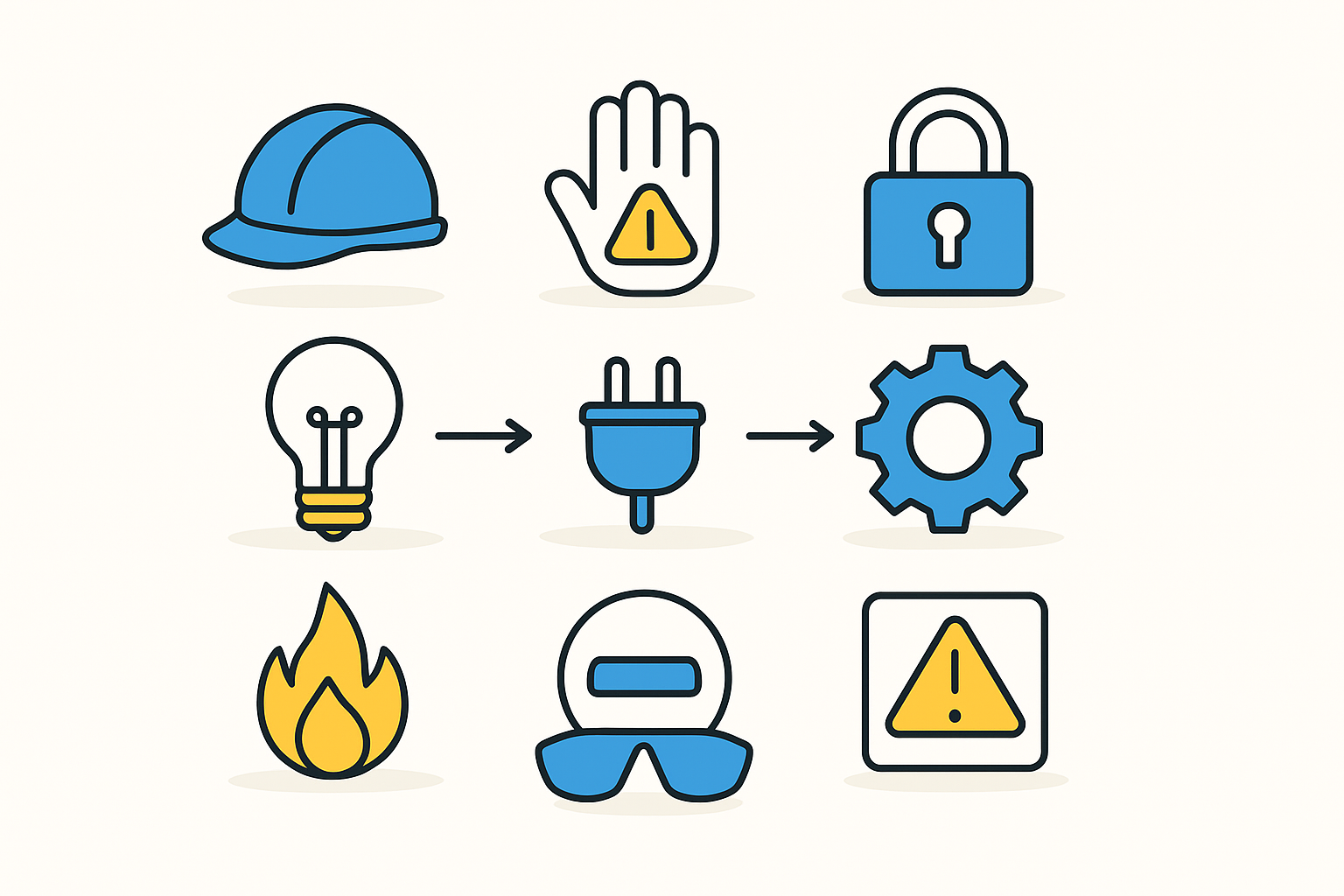
Visual comparison of 10 essential safety rules forms a clear foundation for evaluating comprehensive workplace safety programs, aiding managers in assessing key coverage areas with clarity and confidence.
Putting these principles into practice requires clear documentation and rigorous training.
From Rules to Reality: How to Develop & Document Your Standard Operating Procedures (SOPs)
Standard Operating Procedures are the bridge between safety rules and safe actions. In practice, an SOP is a detailed, written instruction that documents how to perform a specific task safely and correctly. In battery manufacturing—where processes involve chemical handling, high-voltage electricity, and heavy machinery—SOPs are not administrative paperwork but critical risk-control instruments.
Developing effective SOPs involves a systematic process:
- Task Identification: List all routine and non-routine tasks that present a potential hazard.
- Hazard Analysis: For each task, identify potential risks to personnel and equipment.
- Procedure Drafting: Write clear, step-by-step instructions for performing the task, integrating control measures to mitigate identified hazards.
- Review and Validation: Have experienced operators and safety personnel review and test the SOP in a controlled environment.
- Training and Implementation: Formally train all relevant personnel on the finalized SOP.
- Periodic Review: Update SOPs regularly, especially after an incident, equipment change, or process modification.
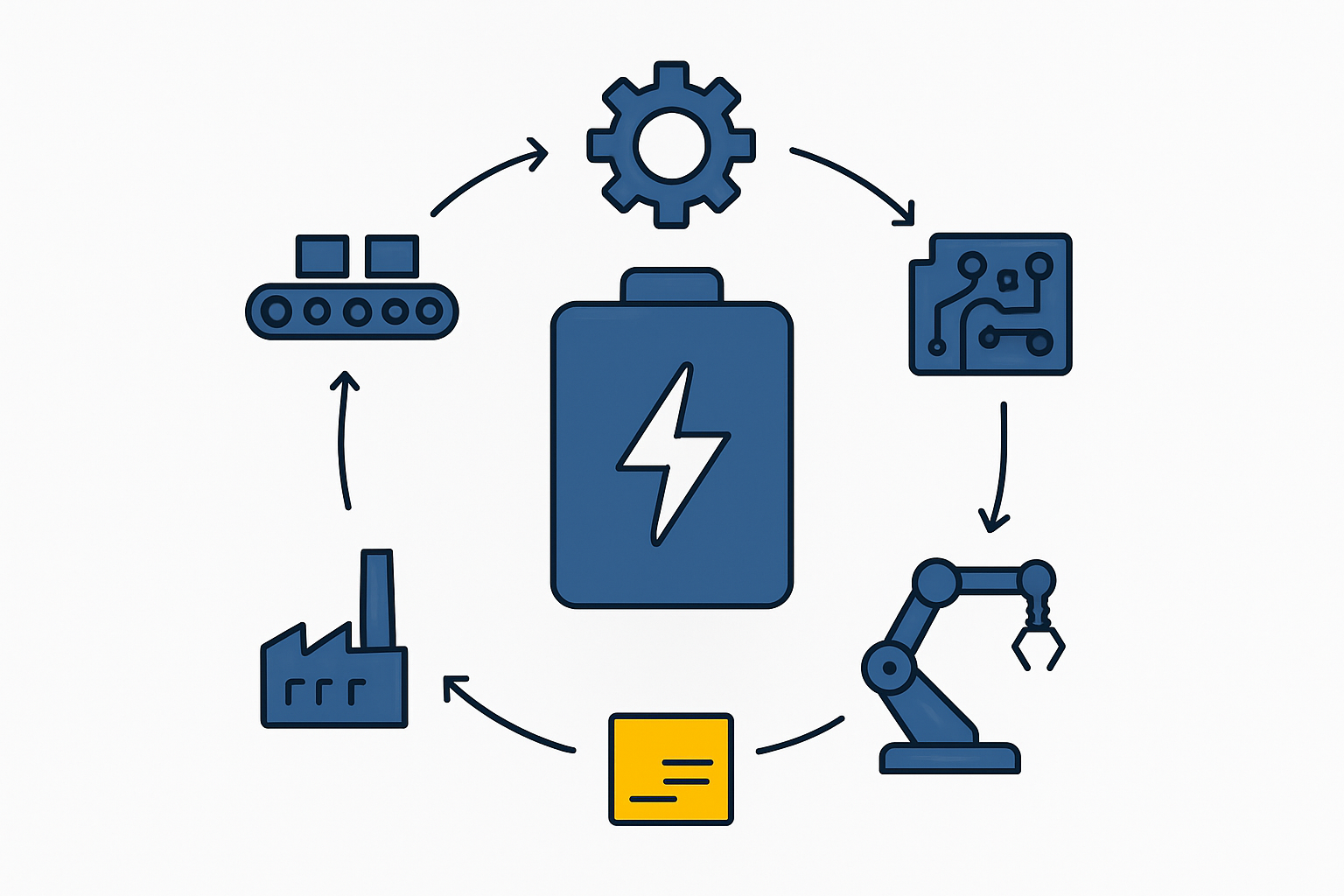
Visualizing the SOP development workflow assures decision makers of a disciplined, expert approach to operational safety procedures, building trust in the company’s commitment to workforce protection and compliance.
Deep Dive I: Mastering Personal Protective Equipment (PPE) Requirements
PPE is the last line of defense against hazards that cannot be eliminated through engineering or administrative controls. Its effectiveness depends entirely on a systematic program for selection, training, and enforcement.
The PPE Hazard Assessment
The foundation of any PPE program is a formal hazard assessment. This process systematically evaluates the workplace to identify hazards that require the use of PPE. Key steps include:
- Identifying Sources: Pinpoint potential sources of impact, penetration, compression, chemical exposure, heat, harmful dust, and radiation.
- Evaluating Exposure: Assess the type, level, and duration of worker exposure to these hazards.
- Selecting Appropriate PPE: Choose equipment that meets or exceeds the required safety standards for the identified hazards (e.g., ANSI in the US, EN in Europe).
Decoding PPE Levels
While highly specific to the hazard, PPE is often categorized into four broad levels—a concept that translates dense regulatory text into a more accessible framework for managers.
- Level D: The minimum level of protection for general work environments. Includes safety glasses, gloves, and safety footwear.
- Level C: Requires a higher level of skin and respiratory protection than Level D. Includes chemical-resistant clothing, gloves, and an air-purifying respirator.
- Level B: Used when the highest level of respiratory protection is needed but a lower level of skin protection is acceptable. Includes a self-contained breathing apparatus (SCBA) and chemical-resistant clothing.
- Level A: Provides the highest level of protection against vapors, gases, mists, and particles. It consists of a fully encapsulating chemical-resistant suit with an SCBA.
In battery manufacturing, most operations will require personnel trained for Levels D and C, with specialized teams (e.g., emergency response, chemical spill cleanup) trained for Level B.
Deep Dive II: Lockout/Tagout (LOTO) Procedures Made Simple
The unexpected startup of machinery or release of stored energy is a primary cause of serious industrial accidents. Lockout/Tagout (LOTO) is a safety procedure that ensures dangerous machines are properly shut off and not restarted before maintenance or servicing work is completed. It is a lifeline for any personnel interacting with industrial equipment.
The 6-Step LOTO Procedure
While official standards from bodies like OSHA are dense, the core procedure can be simplified into six logical steps that must be followed without deviation.
- Preparation: The authorized employee identifies all energy sources for the equipment.
- Shutdown: The machine is turned off using its normal stopping procedure.
- Isolation: The energy-isolating devices (e.g., circuit breakers, valves) are located and used to isolate the machine from its energy source.
- Lockout/Tagout: A lock and tag are affixed to each energy-isolating device by the authorized employee.
- Stored Energy Check: Any residual stored energy (e.g., in capacitors, springs, hydraulic systems) is dissipated or restrained.
- Verification: The employee verifies that the equipment is fully isolated by attempting to operate it.
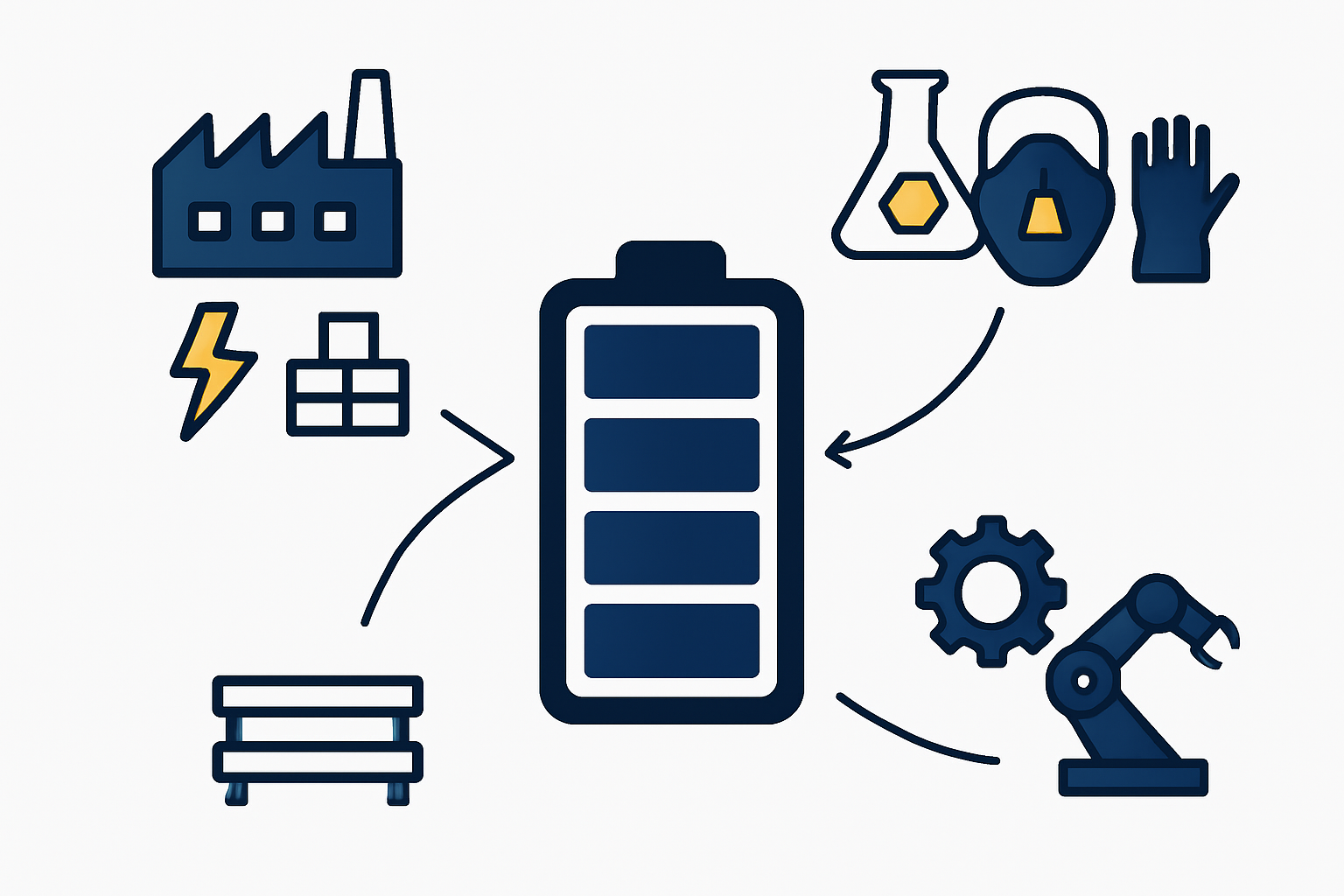
Clear visualization of the Lockout/Tagout procedure flow enhances trust in the company’s expertise in hazard control and workforce protection, encouraging manager confidence in safety implementation.
A critical distinction in LOTO protocols is between “Authorized” and “Affected” employees.
- Authorized Employee: A person trained to perform LOTO procedures to service or maintain equipment.
- Affected Employee: An individual who operates the equipment being serviced under LOTO or works in the area. They must be trained to recognize LOTO devices and understand that they must not attempt to restart the equipment.
The Core of Your Program: A Sample Workforce Safety Training Curriculum
Policies and procedures are only as effective as the people trained to execute them. A tangible training framework is the critical component that turns a safety manual into a safety culture. A structured program ensures that every employee understands the risks and their role in mitigating them.
A comprehensive curriculum can be organized into three distinct modules:
-
Module 1 (All Employees): Foundational Safety Principles
- Introduction to the company’s safety culture and policies.
- Procedures for hazard identification and reporting.
- Emergency evacuation routes and procedures.
- Basic ergonomics and manual handling techniques.
-
Module 2 (Task-Specific): Operational Safety Procedures
- Proper use, care, and limitations of required PPE.
- Safe handling procedures for specific chemicals (e.g., electrolytes).
- Training on specific SOPs relevant to the employee’s role.
- Recognition of LOTO applications (for “Affected” employees).
-
Module 3 (Authorized Personnel): Advanced and Specialized Training
- Full Lockout/Tagout (LOTO) procedures for authorized employees.
- First aid and emergency response training.
- Specialized training for operating heavy machinery or high-voltage equipment.
- Spill response and hazardous material containment.
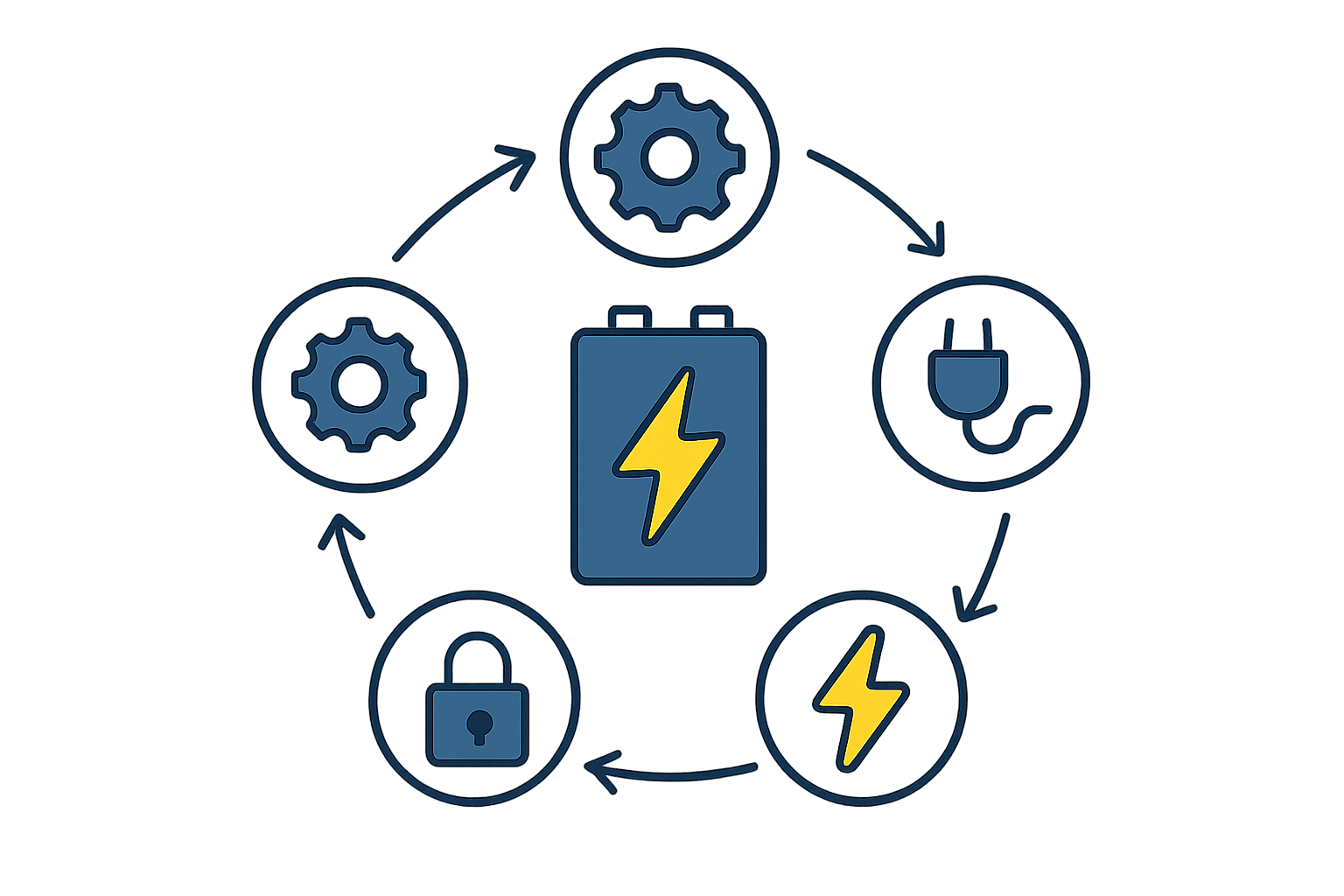
A clear visualization of the structured workforce safety training curriculum supports confident purchase decisions by simplifying complex training components into an actionable, integrated framework.
This modular approach ensures that training is relevant, efficient, and targeted to the specific responsibilities of each team member.
Frequently Asked Questions (FAQ)
-
What is the typical investment required for a comprehensive safety program?
Investment in safety is an ongoing operational expenditure, not a one-time cost. It includes initial outlays for PPE, LOTO equipment, and signage, plus recurring costs for training, equipment inspection, and program administration. While the exact amount is facility-specific, this investment must be factored into the operational budget as a critical component of risk mitigation and insurance premium management. -
How does a strong safety culture impact the facility’s ROI?
A robust safety culture directly improves ROI by reducing accident-related costs, including medical expenses, equipment damage, lost production time, and potential regulatory fines. It also enhances productivity and employee morale, leading to lower turnover and higher operational efficiency. Global data from organizations like the ILO confirms that work-related accidents cost economies a significant percentage of their annual GDP. -
Do these safety procedures apply to both LFP and NMC battery production?
Yes, the fundamental principles of operational safety—SOPs, PPE, LOTO, and structured training—are universal and apply to any industrial manufacturing process. However, the specific hazard assessments will differ. For example, NMC production may involve stricter protocols for handling cobalt and nickel dust, while both chemistries require rigorous procedures for electrolyte handling and high-voltage electrical safety. -
How do safety standards differ between North America, the EU, and emerging markets?
While core safety principles are global, regulatory frameworks vary significantly. North America (OSHA), the European Union (EU-OSHA), and other regions have their own specific legal requirements. Setting up a facility in Nigeria or India involves navigating different regulatory bodies and compliance standards than a comparable facility in the United States. A key part of the planning phase is to conduct a thorough review of local and national occupational health and safety legislation. The frameworks presented here offer a universal starting point for developing a compliant, region-specific program. -
What is the role of management in enforcing these procedures?
Management commitment is the single most important factor in the success of a safety program. Leadership must not only allocate resources but also visibly champion safety through their actions. This includes participating in safety meetings, enforcing all rules consistently, recognizing and rewarding safe behavior, and holding the entire organization accountable for safety performance. Without active management leadership, even the best-written procedures will fail.