
The transition to electric mobility is creating a significant secondary resource: used electric vehicle (EV) batteries. While no longer suitable for demanding automotive applications, these batteries often retain 70-80% of their original capacity, making them ideal for stationary energy storage.
Transforming this potential into a bankable asset, however, requires a structured approach. Investors must move beyond the concept to address the critical questions of technical viability, operational safety, and financial returns. This guide provides a framework for evaluating a Second-Life Battery Energy Storage System (SLBESS). It outlines the essential technical validation process, analyzes viable business models, and presents a clear financial perspective to support investment decisions.
The Second-Life Battery Market: A Data-Driven Overview
The SLBESS market is no niche segment; it is a rapidly expanding industrial sector. According to analysis by McKinsey & Company, the global supply of second-life batteries could exceed 200 gigawatt-hours (GWh) per year by 2030. This growth is driven by the sheer volume of EVs entering the market, creating a predictable and scalable stream of battery packs for repurposing.
Key market drivers include:
-
Cost Advantage: Repurposed battery packs can be acquired for a fraction of the cost of new, utility-scale batteries, significantly lowering the initial capital expenditure (CAPEX) for energy storage projects.
-
Supply Chain Resilience: Utilizing a domestic or regional supply of used EV batteries reduces dependence on the volatile global supply chain for raw materials like lithium and cobalt.
-
Circular Economy Incentives: Government and corporate sustainability mandates are promoting circular business models. As the International Energy Agency (IEA) has noted, SLBESS plays a crucial role in reducing waste and maximizing the value of resources invested in battery production.
For industrial investors, this translates into a definable market opportunity with a growing and predictable feedstock. The central challenge lies in establishing the industrial processes to reliably convert used EV packs into grid-compliant storage assets.
Technical Validation: A Step-by-Step Guide
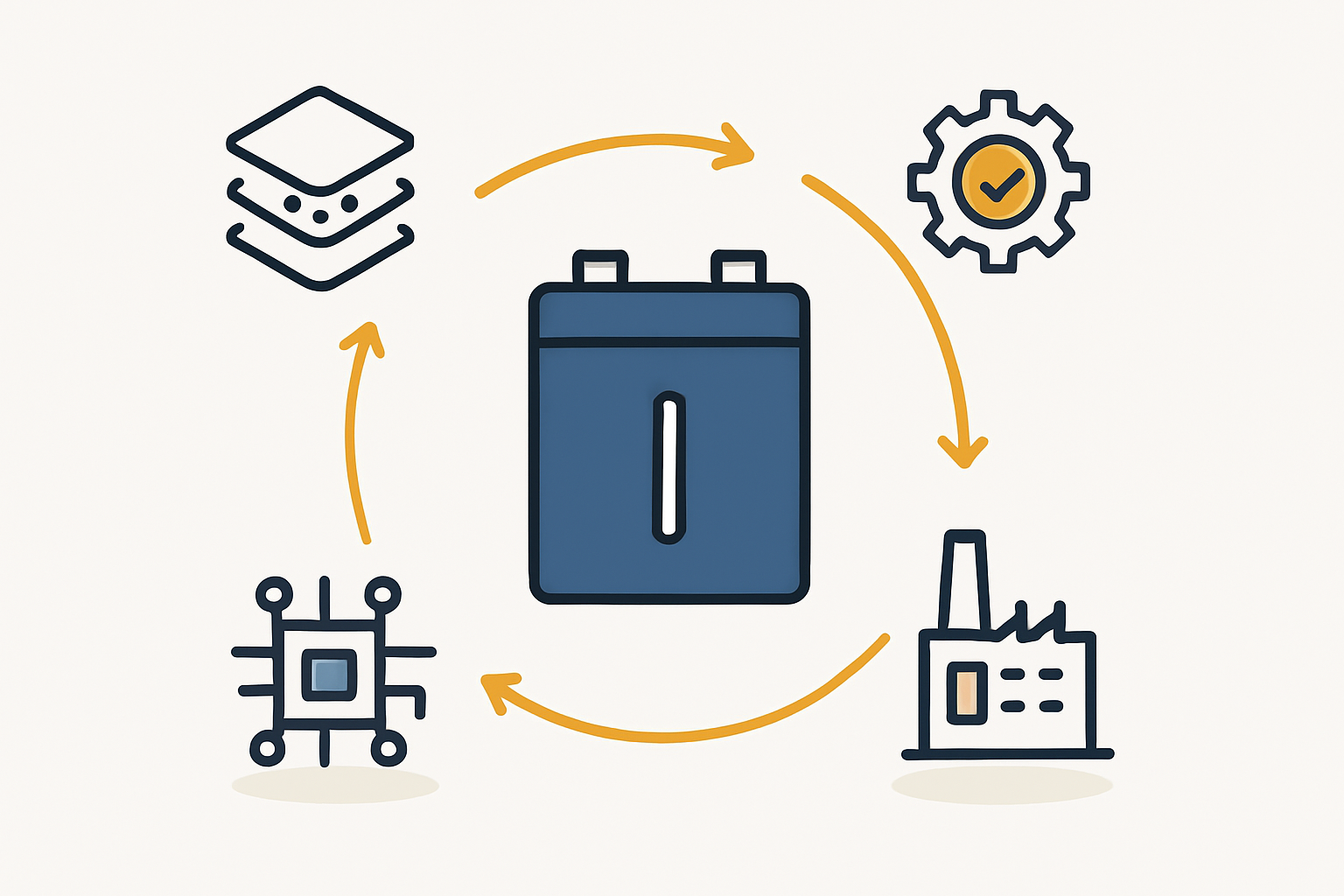
A rigorous technical validation and refurbishment process is the core of any viable SLBESS operation. A systematic approach to testing, sorting, and re-certifying batteries is essential for guaranteeing the safety, reliability, and performance required for commercial applications. This process transforms a variable-quality input (used batteries) into a standardized, predictable output (certified energy storage modules).
Key Validation Stages:
-
Initial Triage and Disassembly: The process begins with the safe disassembly of EV battery packs, which requires specialized equipment and trained technicians to manage high-voltage components. Each pack is cataloged, and its history is documented where available.
-
State-of-Health (SOH) Assessment: This is the most critical step. SOH measures a battery’s current condition relative to its original specifications. Advanced testing equipment cycles individual modules to accurately determine their remaining capacity, internal resistance, and efficiency. This data is essential for grading and sorting.
-
Remaining Useful Life (RUL) Prediction: Using SOH data and advanced modeling, engineers predict the RUL of each module in a less demanding stationary application. This forecast is crucial for determining the financial viability and warranty terms for the final SLBESS.
-
Cell Sorting and Balancing: Modules with similar SOH and internal resistance characteristics are grouped to create balanced strings. This approach prevents weaker modules from degrading faster and compromising the entire system. Precise balancing is key to maximizing the lifespan and performance of the finished SLBESS.
-
System Integration and Re-certification: The sorted and balanced modules are integrated into a new racking system with a dedicated Battery Management System (BMS). The complete system undergoes rigorous safety and performance testing to ensure it complies with relevant grid codes and safety standards (e.g., UL 9540).
A robust technical validation process is non-negotiable. It mitigates performance risk, ensures operational safety, and provides the foundation for a bankable business model.
Viable Business Models for SLBESS
The lower capital cost of SLBESS unlocks a range of business models, some of which may not be financially viable with more expensive new batteries. The ideal application depends on regional energy markets, regulatory frameworks, and specific customer needs.
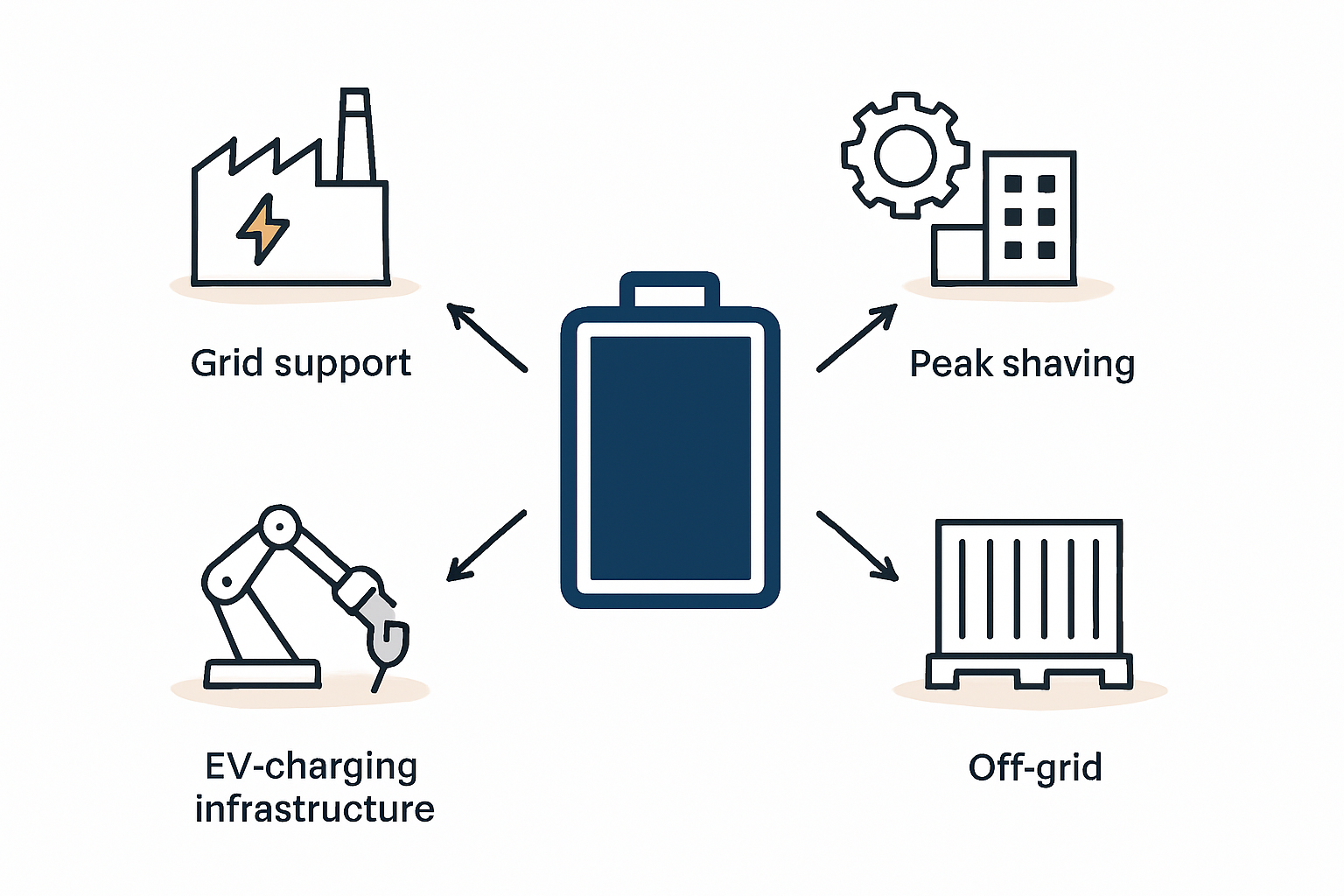
Primary Market Applications:
-
Grid Support Services: SLBESS can provide ancillary services like frequency regulation and grid balancing. While technically demanding, these services offer consistent revenue streams in liberalized energy markets.
-
Commercial & Industrial (C&I) Peak Shaving: For large electricity consumers, SLBESS can reduce demand charges by discharging during peak consumption hours. This is one of the most common and financially proven applications.
-
EV Charging Infrastructure Support: Co-locating SLBESS with DC fast chargers mitigates high grid connection costs and demand spikes. This application creates a symbiotic relationship, as the charging station itself can become a source of end-of-life batteries.
-
Off-Grid and Microgrid Applications: In emerging markets across Africa and Southeast Asia, SLBESS offers a cost-effective solution for electrifying remote communities, powering telecom towers, and ensuring energy resilience for critical infrastructure. The cost structure of SLBESS makes it particularly well-suited for these regions.
Choosing the right application requires a thorough analysis of local market conditions, including electricity tariffs, grid stability, and regulatory incentives.
Financial Analysis: The Business Case for Second-Life
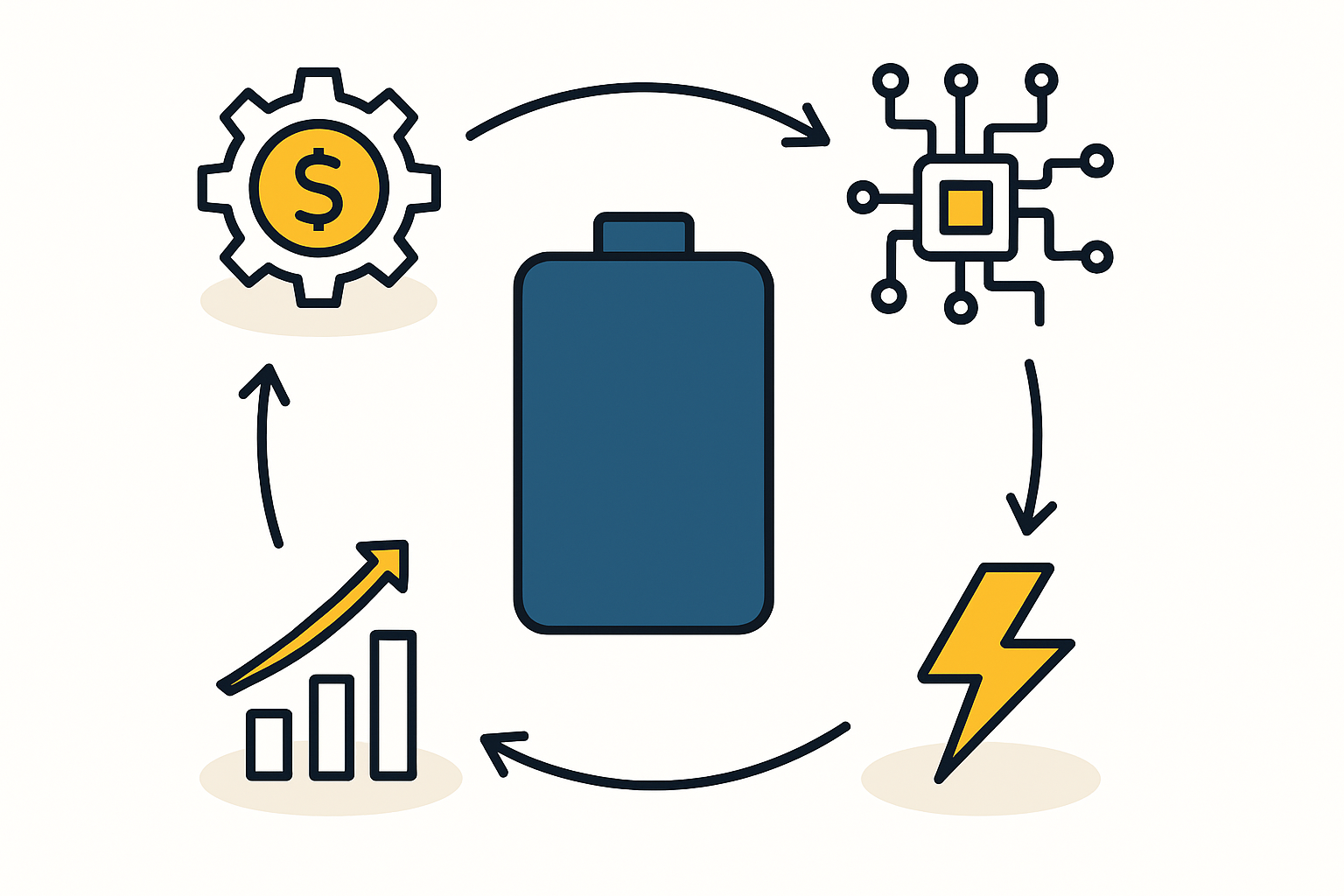
The primary investment driver for SLBESS is its compelling economic case compared to systems using new batteries. However, a comprehensive financial analysis must look beyond the initial acquisition cost and consider the entire project lifecycle.
SLBESS vs. New BESS: A Cost-Benefit Analysis
-
Capital Expenditure (CAPEX): The core advantage of SLBESS is a significantly lower upfront CAPEX. According to research from bodies like the American Council for an Energy-Efficient Economy (ACEEE), the cost per kilowatt-hour (kWh) for a fully installed SLBESS can be 30-50% lower than a comparable system with new batteries. This lower battery cost is a critical enabler for many projects.
-
Levelized Cost of Storage (LCOS): LCOS is a more accurate metric, as it accounts for CAPEX, operational expenses, performance degradation, and system lifetime. While SLBESS has a shorter remaining lifespan, its low initial cost often results in a competitive or even superior LCOS, particularly in applications with daily cycling.
-
Performance and Warranties: New batteries offer higher performance and longer, more comprehensive warranties. SLBESS performance depends entirely on the quality of the technical validation process. Reputable SLBESS integrators offer warranties, but these are typically shorter (e.g., 5-7 years) than those for new systems (10-15 years). This risk must be factored into financial models.
The decision between second-life and new batteries is not a simple choice, but an engineering and economic trade-off based on the specific application, required lifespan, and the investor’s risk tolerance.
Frequently Asked Questions (FAQ)
-
How reliable are second-life batteries compared to new ones?
The reliability of an SLBESS depends directly on the quality of its technical validation and system integration. A system built from well-matched, high-SOH modules and controlled by a robust BMS can be highly reliable for its intended application. It will, however, inherently have a shorter operational life than a system built with new cells. -
What are the typical warranty terms for an SLBESS?
Warranties for SLBESS typically range from 5 to 7 years and guarantee a certain level of performance (e.g., retaining 60% of its initial repurposed capacity). These terms are less generous than for new batteries but are aligned with the lower capital cost and expected RUL. -
Is the supply of used EV batteries consistent enough for a large-scale business?
Yes. With millions of EVs sold annually, the future supply is both large and predictable. The primary challenge is not volume but logistics and establishing an efficient supply chain for collection, transportation, and processing—an area where platforms like pvknowhow.com provide structured guidance for industrial planning. -
What are the main safety considerations for SLBESS?
Safety is paramount. The key risks are thermal runaway and electrical hazards. These are mitigated through a multi-layered approach: rigorous initial testing, a high-quality BMS with multiple safety cutoffs, proper thermal management, and adherence to installation standards like UL 9540. A properly re-certified SLBESS can be as safe as a new system.
Conclusion: A Viable Industrial Opportunity
Second-life battery energy storage represents a substantial industrial opportunity for investors prepared to take a structured, process-driven approach. The compelling economics, coupled with a growing and predictable supply of used batteries, create a strong foundation for various business models, from grid support in developed markets to off-grid electrification in emerging economies.
Success is determined not by simply acquiring cheap batteries, but by mastering the industrial process of technical validation, quality control, and system integration. Investors and developers evaluating this market must focus on establishing a bankable, repeatable process that turns a used component into a certified, high-performance energy asset.