Maharashtra is spearheading a major transformation in its agricultural sector by implementing ambitious solar energy programs designed to provide farmers with reliable, low-cost daytime electricity. Through strategic initiatives like the Mukhyamantri Saur Krishi Vahini Yojana (MSKVY) 2.0, the state is addressing the significant energy demands of farming, paving the way for increased productivity, reduced operational costs, and a smaller carbon footprint.
Unprecedented Scale and Strategic Goals for Maharashtra’s Solar Agriculture Initiative to Revolutionize Farming with Clean Energy
The state’s commitment is underscored by impressive targets and large-scale projects. Under the Chief Minister’s Solar Energy Project 2.0, the Maharashtra State Power Generation Company (MAHAGENCO) is set to commission 1,071 MW of solar power, directly benefiting over 300,000 farmers. This initiative is part of a broader goal to solarize approximately 30% of the state’s agricultural feeders by December 2025, with 2,731 substations already identified for the rollout.
The Mukhyamantri Saur Krishi Vahini Yojana 2.0 specifically targets the sector’s 14,000 MW energy demand, aiming to meet 4,000 MW of this need with solar by April 2025. This is being achieved through a distributed renewable energy model, where solar PV systems ranging from 0.5 MW to 25 MW are established within a 5-10 km radius of agricultural substations, minimizing transmission losses and ensuring efficient power delivery.
Ready to make big Profits?
The solar Industry is Booming
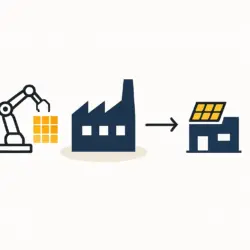
WE HELP NEWCOMERS to the solar industry start their own solar module production line. Customers can make BIG PROFITS by selling modules and finding investors, without wasting money and time on things they don't need!
Direct Benefits and a Sustainable Future for Farmers Through Maharashtra’s Solar Agriculture Initiative to Revolutionize Farming with Clean Energy
The shift to solar energy offers tangible advantages for Maharashtra’s farming communities. By providing a consistent and sustainable power source, these programs mitigate the risks associated with power outages and fluctuating fuel prices that have long hampered agricultural operations. The financial benefits are significant, leading to reduced electricity consumption and lower operational costs for irrigation and other farm activities.
Beyond grid-connected projects, the state is also promoting off-grid solutions. A key component of this push includes plans to finance 500,000 off-grid solar water pumps over the next five years, further empowering farmers with energy independence. This comprehensive approach not only boosts agricultural resilience but also aligns with national objectives, positioning Maharashtra as a key contributor to the PM-KUSUM program’s goal of deploying over 10 GW of solar capacity by 2025.
A National Model for Green Agriculture via Maharashtra’s Solar Agriculture Initiative to Revolutionize Farming with Clean Energy
By integrating renewable energy directly into its agricultural framework, Maharashtra is creating a powerful model for sustainable development. The state’s strategic, large-scale implementation demonstrates how targeted policies can enhance energy security, support rural economies, and drive meaningful climate action. As these initiatives continue to expand, they promise a more prosperous and resilient future for farmers, powered by clean energy.
Sources
- GESP: Maharashtra Power Distribution Enhancement Program for …
- MAHANIRMITI to Set Up 1071 MW Solar Power Projects in …
- [PDF] Maharashtra Power Distribution Enhancement Program for …
- Maharashtra Power Distribution Enhancement Program to Facilitate …
- Maharashtra and Rajasthan Lead Solar-Powered Agriculture Under …
- Maharashtra’s Solar Turning Point | Rise of Local Manufacturing
- India: Maharashtra Climate Resilient Distributed Renewable Energy …
- Maharashtra and Rajasthan Pioneering Solar-Powered Agriculture …