The National Capital Region Transport Corporation (NCRTC) is aggressively pursuing a green energy strategy for its Delhi-Ghaziabad-Meerut Regional Rapid Transit System (RRTS) Corridor, aiming to source approximately 70% of its total energy needs from renewable sources. This comprehensive solar policy positions the transit authority as a pioneer in sustainable public transportation infrastructure in India.
Operational Milestones Show NCRTC Reduces Carbon Emissions toward Solar-Powered Transit
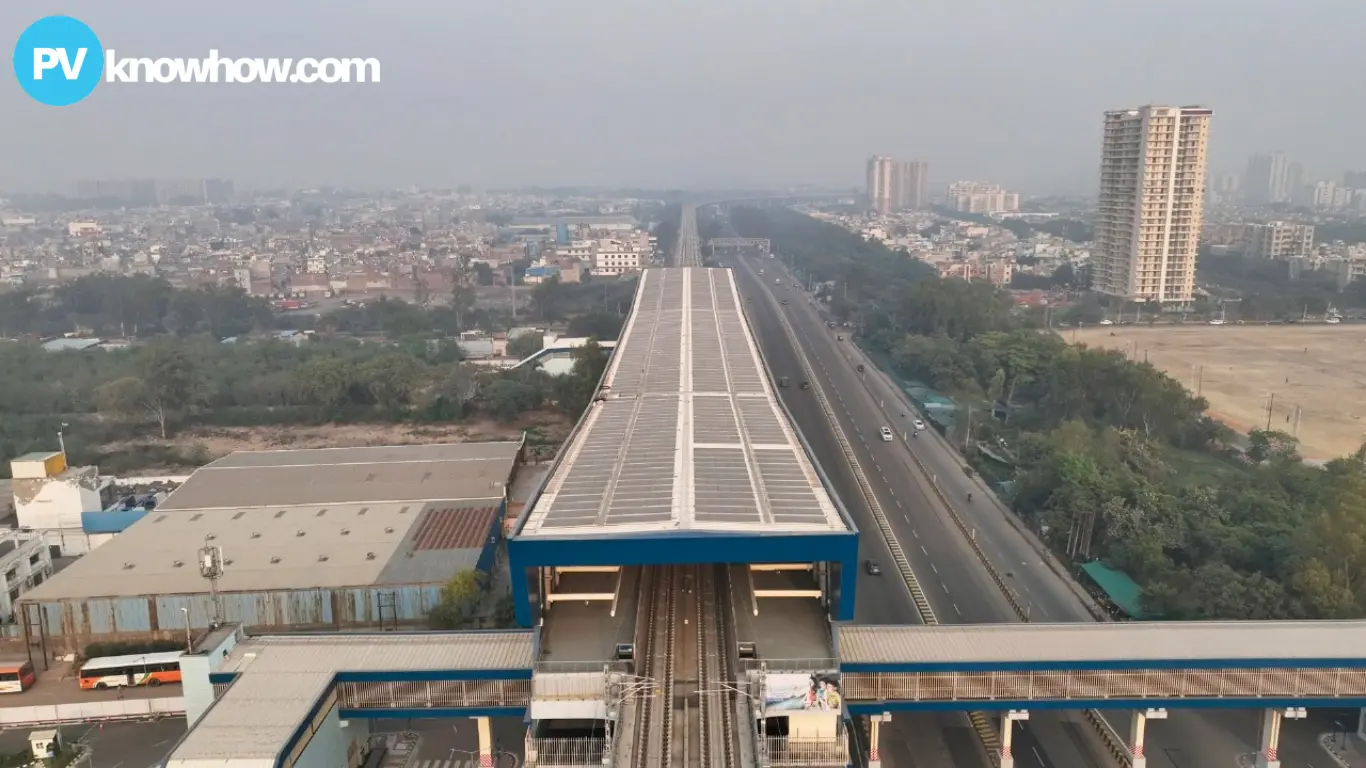
As of recent reports, NCRTC has already made substantial progress, with approximately 5.5 MW of solar power capacity now operational across various stations, depots, and buildings. These installations are actively reducing the corridor’s carbon footprint, cutting annual carbon dioxide emissions by more than 2,300 tons. Notably, the solar power plants at the Sahibabad and Guldhar RRTS stations are generating more electricity than the stations consume, earning them the distinction of being “carbon negative.”
Pioneering ‘Solar on Track’ Technology for NCRTC Reduces Carbon Emissions toward Solar-Powered Transit
Beyond conventional rooftop installations, NCRTC has broken new ground by launching India’s first ‘Solar on Track’ system at the Namo Bharat Depot in Duhai. This innovative pilot project features 28 solar panels installed over a 70-meter stretch of track. With a capacity of 15.4 kWp, the system is projected to generate 17,500 kWh of electricity annually, further reducing CO2 emissions by an estimated 16 tons per year and showcasing a novel approach to land use for power generation.
Ambitious Goals for NCRTC Reduces Carbon Emissions toward Solar-Powered Transit
Looking ahead, NCRTC has set a target of achieving 11 MW of solar power capacity across the corridor, a goal that would increase its environmental impact by saving an estimated 11,500 tons of CO2 emissions annually. The corporation’s ambition extends even further, with plans underway to develop a massive 110 MW solar plant in Uttar Pradesh specifically to power the Namo Bharat corridor. This large-scale project, combined with energy efficiency measures like regenerative braking systems in its trains, underscores a deep commitment to long-term sustainability.
Economic and Environmental Synergy with NCRTC Reduces Carbon Emissions toward Solar-Powered Transit
The integration of comprehensive solar PV systems delivers significant ecological and economic advantages. Utilizing energy-efficient technologies, such as solar-powered lighting systems equipped with high-performance LED bulbs, eliminates the need for utility grid connections, thereby reducing both operational expenditures and installation costs. By strategically placing solar panels on available infrastructure, NCRTC is creating a self-sustaining transit model that minimizes environmental impact while ensuring economic viability. This holistic approach sets a powerful precedent for future infrastructure projects nationwide.
Sources
- NCRTC’s solar panels on RRTS corridor reduce CO2 emissions by …
- NCRTC introduces ‘Solar on Track’ System at Namo Bharat Depot in …
- Solar Panels Along RRTS Corridor Help NCRTC Reduce 2300 Tons …
- NCRTC Installs India’s First Solar-On-Track System in Metro Network
- NCRTC Launches India’s First ‘Solar on Track’ System – Drishti IAS
- NCRTC to Develop 110 MW Solar Plant in Uttar Pradesh to Power …
- NCRTC adopts solar policy for renewable energy – Hindustan Times