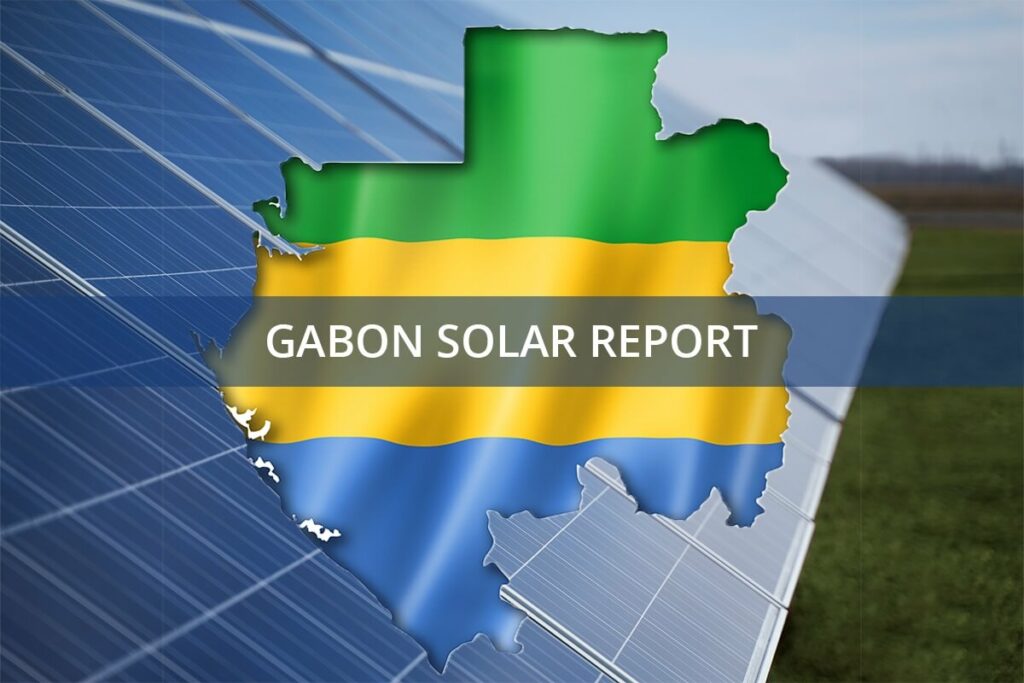
Gabon has inaugurated the Ayémé PV facility, its first utility-scale solar plant and the largest solar project in Central Africa. With plans to expand from 11 MW to 30 MW, the plant is set to reduce fossil fuel dependence and provide clean energy to over 300,000 homes.
Ayémé Utility-Scale Solar Plant: A Major Renewable Energy Breakthrough
The launch of Gabon’s first utility-scale solar plant is a historic milestone in the country’s renewable energy journey. Located in the Plaine-Ayémé area—just 30 kilometres from Libreville—the Ayémé PV plant is now the largest solar power facility in Central Africa.
This project marks a significant step toward reducing Gabon’s dependence on fossil fuels and expanding access to clean, reliable energy. Beyond boosting the country’s energy capacity, the Ayémé plant underscores Gabon’s commitment to combating climate change.
Developed by Solen SA Gabon, a subsidiary of Solen Renewable Dubai, the Ayémé utility-scale solar plant has an initial capacity of 11 MW. It is set to expand to 30 MW under a power purchase agreement (PPA) with the state utility, Société d’Energie et d’Eau du Gabon (SEEG). Once fully operational, the expanded facility will provide electricity to over 300,000 homes.
Announced in 2021, the project faced delays and funding challenges. Initially planned as a 120 MW facility split into two 60 MW phases, its scope was scaled back during development. Despite these hurdles, the plant’s completion marks a significant achievement for Gabon’s renewable energy sector.
A Boost for Sustainable Development
During the inauguration ceremony, President Brice Oligui Nguema highlighted the plant’s importance for Gabon’s sustainable development goals. “This utility-scale solar plant represents an important milestone in the production and distribution of clean, sustainable, and modern electricity. It reflects our nation’s commitment to improving energy access and fighting climate change,” said Nguema.
The project also provides a model for integrating renewable energy into Gabon’s national power grid. By creating 150 direct jobs during its construction and operational phases, the facility is also contributing to local economic development.
Gabon’s electricity generation currently relies heavily on hydropower (47.7%), natural gas (35%), and oil (16.9%), according to the International Energy Agency (IEA). Solar power has played a minimal role, with only 1 MW of installed capacity recorded at the end of 2022, as reported by the International Renewable Energy Agency (IRENA).
The Ayémé plant significantly boosts Gabon’s solar capacity, positioning the country as a regional leader in renewable energy. It also demonstrates how utility-scale solar plants can meet energy needs in a sustainable and cost-effective way.
Overcoming Challenges in Solar Development
While the Ayémé project faced challenges like funding reductions and delays, its completion showcases the resilience and innovation of Gabon’s energy sector. The plant’s success also highlights the importance of strong public-private partnerships in overcoming barriers to renewable energy development.
With its planned expansion, the Ayémé utility-scale solar plant will reduce Gabon’s reliance on fossil fuels, lower carbon emissions, and strengthen energy security. As the largest solar facility in Central Africa, it sets a strong precedent for future solar investments and demonstrates the viability of large-scale projects in addressing regional energy challenges.
The Ayémé plant reflects a broader trend across Africa, where nations are turning to solar power to meet rising energy demands. By transforming energy systems, reducing emissions, and improving grid reliability, it sets the stage for further renewable energy development in Gabon. With abundant sunlight and growing energy needs, Gabon is poised to expand its solar capacity and diversify its energy mix to achieve its climate goals.
The inauguration of Gabon’s first utility-scale solar plant marks a turning point for the country’s energy sector. By generating clean and reliable power for hundreds of thousands of homes, the Ayémé plant showcases the transformative potential of solar energy.