As the European Union accelerates its push for energy independence under frameworks like the REPowerEU plan, international entrepreneurs face a critical question: where is the most strategic location to establish a new solar module factory?
While larger nations often dominate the headlines, Belgium presents a unique and compelling blend of financial incentives, logistical advantages, and world-class research infrastructure.
Table of Contents
For an investor unfamiliar with European industrial policy, the landscape can seem complex. However, understanding how Belgium’s federal, regional, and EU-level support systems interlock unlocks significant opportunities. This guide provides a clear overview of the government funding and incentives available for solar manufacturing in Belgium, helping business professionals navigate the investment landscape.
Why Belgium? The Strategic Advantage Beyond Financial Support
Before diving into specific grants and tax credits, it’s worth understanding Belgium’s inherent strategic value. Financial incentives are a powerful tool, but their effectiveness is maximized in a supportive, well-positioned environment.
Belgium’s appeal to solar manufacturing investors rests on three pillars:
- Logistical Hub of Europe: With major ports like Antwerp-Bruges and a dense road and rail network, Belgium provides unparalleled access to key European markets, including Germany, France, and the Netherlands. This central location reduces supply chain friction and lowers the cost of distributing finished solar modules across the continent.
- A Hub of Innovation: Belgium is home to world-renowned research centers like IMEC, a global leader in nanoelectronics and digital technologies with a strong focus on photovoltaics. Proximity to such institutions facilitates collaboration, access to cutting-edge research, and a pipeline of highly skilled technical talent.
- A Stable & Pro-Business Environment: As the de facto capital of the European Union, Brussels provides a stable political and economic climate. The country’s multilingual workforce is accustomed to international business, simplifying operations for foreign-led enterprises.
These foundational strengths ensure that a solar factory in Belgium benefits from more than just financial support—it is strategically positioned for long-term growth and success.
Understanding the Belgian Incentive Landscape: A Three-Tiered System
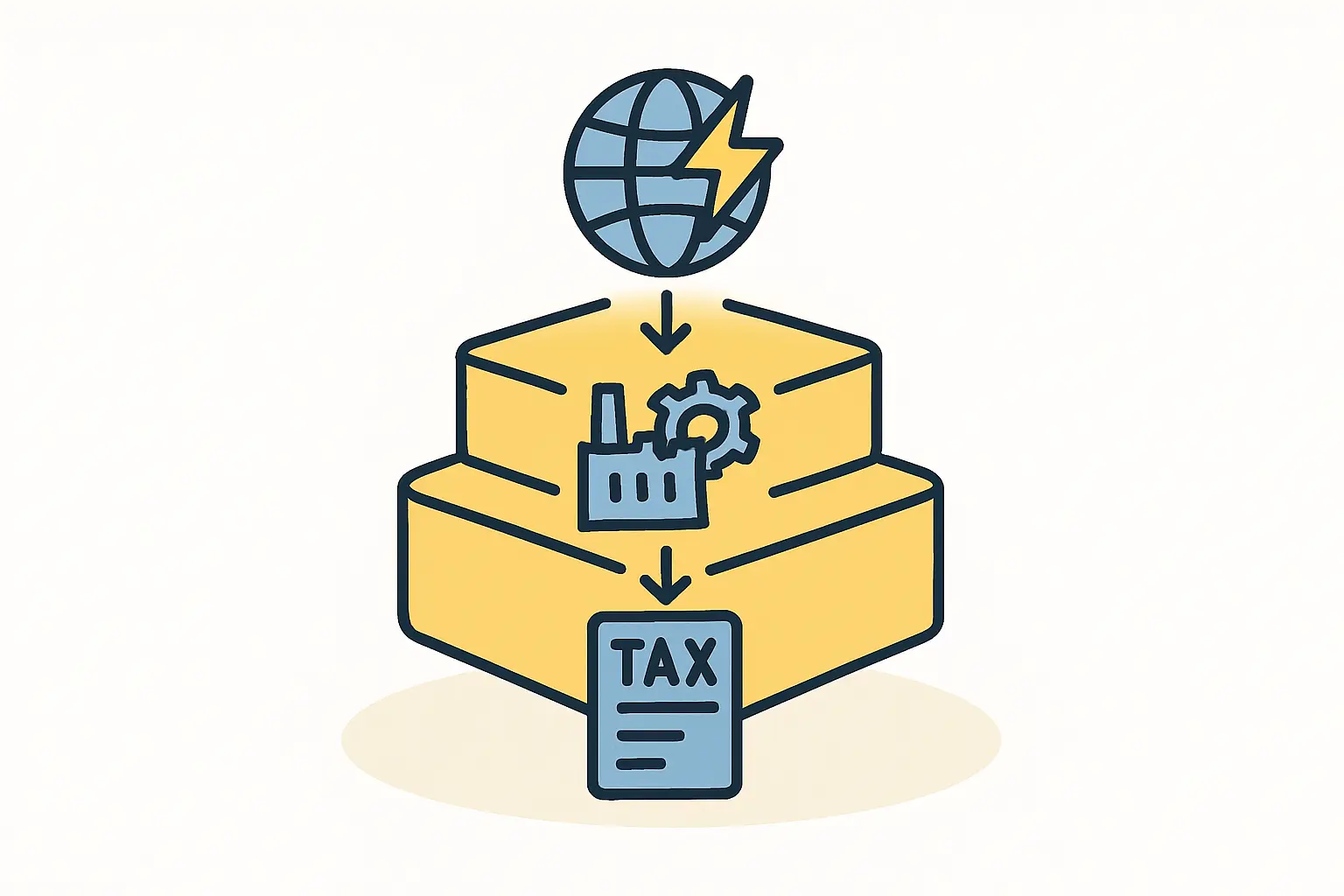
Support for industrial projects in Belgium is structured across three tiers. Funding and incentives can originate from the European Union, the Belgian federal government, and, most significantly, the country’s three autonomous regions. A successful funding strategy often involves “stacking,” or combining support from multiple levels.
European Union Level: The Overarching Framework
EU-wide programs are typically designed for large-scale, technologically advanced projects that align with the continent’s strategic goals for decarbonization and technological sovereignty.
- IPCEI (Important Projects of Common European Interest): This mechanism funds large, transnational projects that have a significant impact on European competitiveness and sustainability. A major solar manufacturing project with an innovative technology component could qualify for IPCEI status, unlocking substantial co-financing.
- EU Innovation Fund: As one of the world’s largest funding programs for innovative low-carbon technologies, the Innovation Fund supports the commercial demonstration of breakthrough products. A factory producing next-generation solar modules (e.g., perovskite or tandem cells) is a strong candidate.
Federal Incentives: The Foundation for Your Investment
The Belgian federal government offers nationwide tax-based incentives that apply to all regions, providing a reliable baseline of support for any new industrial investment.
- Investment Deduction: This key fiscal measure allows companies to deduct a percentage of their investment in new assets from taxable profits. For a capital-intensive project like a solar factory, this can significantly improve the financial outlook in the early years.
- R&D Tax Credits: To encourage innovation, the government offers generous tax credits for research and development. These credits can apply to work on new module designs, improved production processes, or greater material efficiency. For a business aiming to compete on technology, this is a vital long-term benefit.
Regional Support: Where Most Opportunities Are Found
The most direct and substantial grants for establishing a solar factory are typically provided by Belgium’s three regional governments: Flanders, Wallonia, and the Brussels-Capital Region. Each region has its own economic development agency and distinct priorities.
Flanders: The Economic Powerhouse
The northern region of Flanders is known for its export-oriented economy and highly efficient logistics. Its primary agency for business support is VLAIO (Flanders Innovation & Entrepreneurship).
- Strategic Transformation Support (STS): Designed for large-scale investments (over €3 million) that have a transformative effect on the Flemish economy, this program provides grants for the initial investment in land, buildings, and machinery, with a focus on sustainability and digitalization.
- R&D and Innovation Grants: VLAIO offers various grants for research, development, and feasibility studies, encouraging companies to anchor their innovation activities within the region.
Experience with turnkey projects in the region shows a highly professionalized Flemish system that favors well-documented business cases with strong export potential.
Wallonia: A Focus on Industrial Renewal
The southern region of Wallonia has a strong industrial heritage and is actively seeking to attract new manufacturing projects. Its primary agencies are the Walloon Agency for Enterprise and Innovation (AEI) and the financing body Sowalfin.
- Investment Grants: Wallonia offers direct cash grants linked to the size of an investment and, crucially, the number of jobs created. For a project like a semi-automated solar module line, which might start with as few as 25-30 employees, this can provide a significant injection of non-dilutive capital.
- Environmental Grants: Projects demonstrating strong environmental performance—such as using renewable energy in the production process or implementing recycling programs—can qualify for additional support.
Brussels-Capital Region: The R&D and Services Hub
While less focused on large-scale manufacturing, the Brussels-Capital Region offers attractive incentives for R&D and corporate headquarters through its agency, Innoviris. An international company could establish its primary factory in Flanders or Wallonia while locating its European headquarters and research center in Brussels to benefit from this ecosystem.
Key Considerations for Applicants
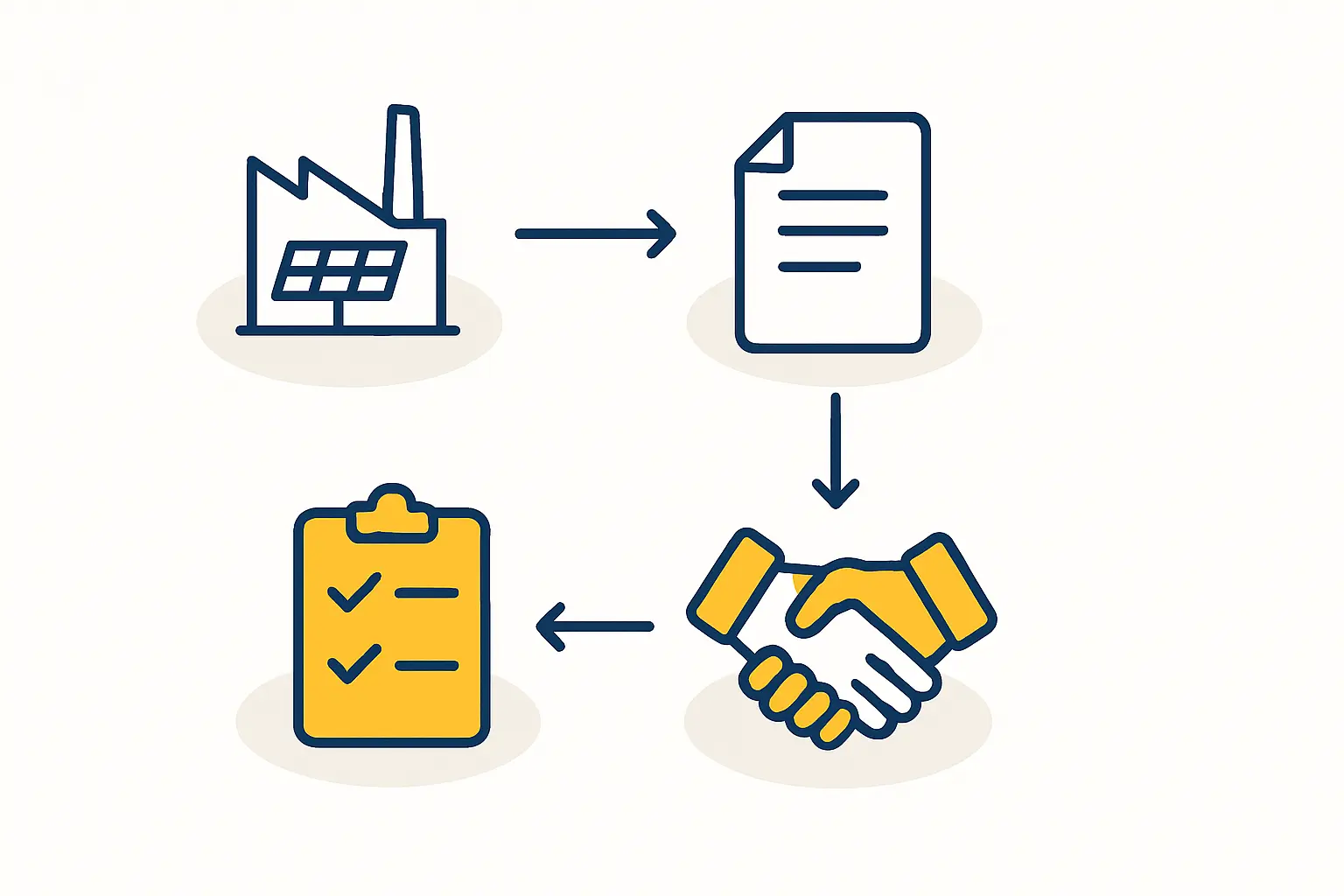
Navigating these programs requires careful preparation. Government agencies, whether in Flanders or Wallonia, require robust documentation to assess a project’s viability and strategic fit.
- The Business Plan is Crucial: A detailed business plan is non-negotiable. It must include credible financial projections, technical specifications for the production line, market analysis, and a clear explanation of the project’s value to the region.
- Job Creation & Sustainability Matter: Applications are often evaluated on their contribution to local employment and alignment with sustainability goals, so it’s essential to highlight these aspects.
- Local Expertise Can Accelerate the Process: Application processes are detailed and specific to each region. Working with advisors who understand local requirements can prevent common errors and delays. For instance, specialized resources like the e-course from pvknowhow.com help entrepreneurs build the foundational knowledge needed for these planning stages.
Frequently Asked Questions (FAQ)
Q1: Do I need a Belgian partner to apply for these incentives?
A1: No, a foreign-owned company legally established in Belgium is typically eligible to apply for all federal and regional incentives.
Q2: What is the typical timeline for grant approval?
A2: Timelines vary significantly by program and region. Simple tax credits are straightforward, but large strategic grants can take 6 to 12 months from application to approval. Early planning is therefore critical.
Q3: Are these incentives available for expanding an existing factory?
A3: Yes, most programs support both “greenfield” projects (new factories) and “brownfield” projects (expansion or modernization of existing facilities), especially if the expansion involves new technology or creates jobs.
Q4: How does Belgium compare to Germany or the Netherlands for incentives?
A4: While each country has its strengths, Belgium’s unique advantage lies in the combination of attractive regional grants (especially in Wallonia), strong federal tax incentives, and an unparalleled logistical position at the heart of the EU’s wealthiest consumer markets.
Q5: Is fluency in French or Dutch required to navigate the application process?
A5: While official documents must be submitted in the local language (Dutch for Flanders, French for Wallonia), the economic development agencies employ English-speaking professionals who are accustomed to working with international investors. However, professional translation and local legal support are highly recommended.
Your Next Steps in Exploring Belgium
Belgium offers a multi-layered yet highly attractive incentive system for entrepreneurs ready to contribute to Europe’s energy transition. Its combination of direct grants, tax relief, and strategic location makes it a leading contender for new solar module manufacturing facilities.
Your journey begins not with an application, but with diligent preparation. A thorough feasibility study and a detailed, bankable business plan are the essential first steps. These documents form the backbone of any successful funding application and provide the clarity needed to make a confident investment decision.