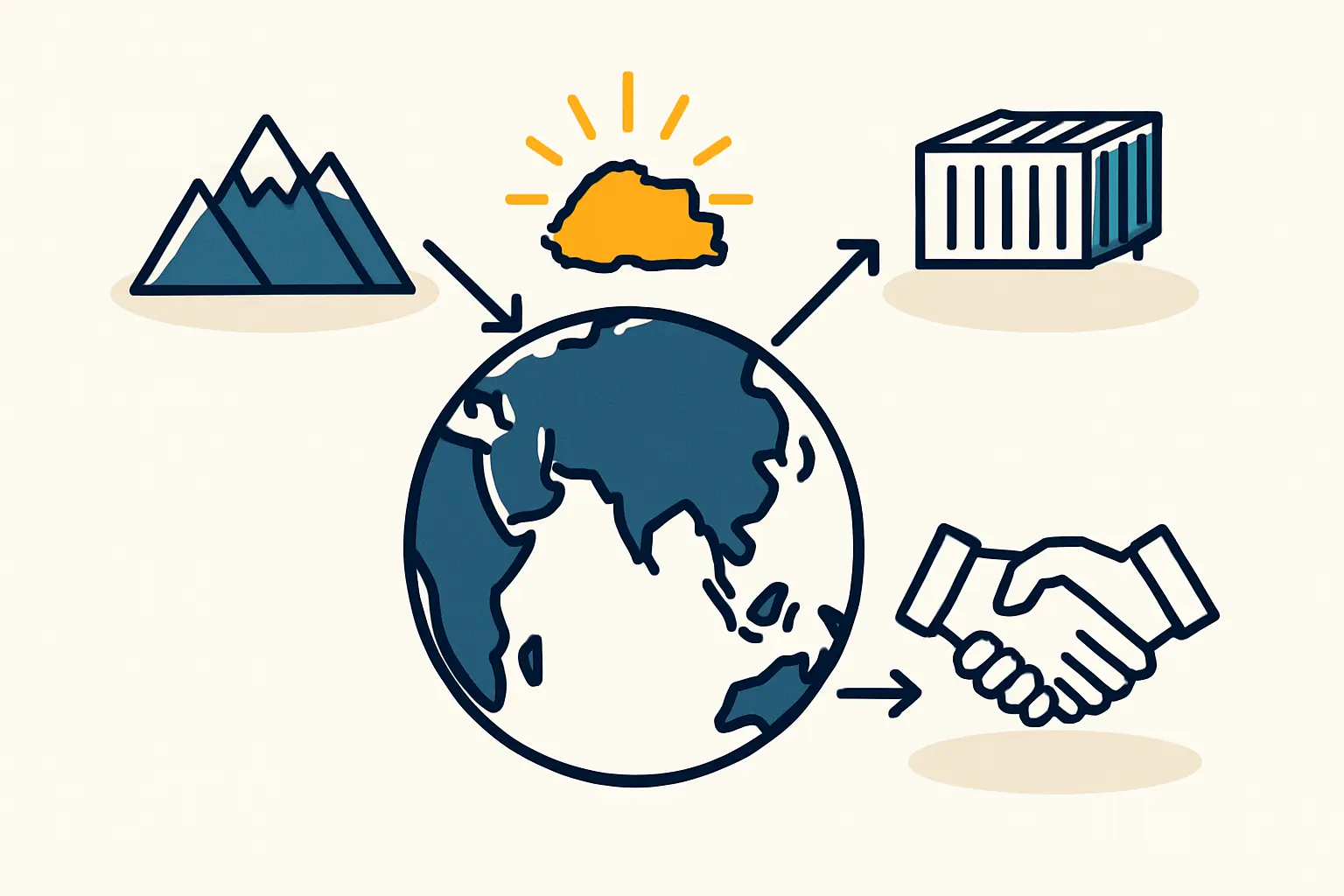
For an entrepreneur, Bhutan holds immense potential. A leader in renewable energy, with a foundation in hydropower and a pioneering philosophy of Gross National Happiness, Bhutan is a natural fit for a solar module factory.
Yet, a glance at a map reveals the central challenge: it is a landlocked country nestled between the economic giants of China and India.
For any manufacturing venture, this geographical reality makes logistics more than a routine operation—it becomes a core strategic pillar. Every raw material must be imported, and every finished solar panel exported, via a neighboring country. This guide breaks down the supply chain dynamics for a solar factory in Bhutan, focusing on the transport corridors, customs procedures, and cost factors involved in navigating this unique landscape.
Table of Contents
The Geographical Imperative: India as the Gateway
Bhutan’s economic and logistical lifeblood flows through India. Over 80% of Bhutan’s total trade is with its southern neighbor, making the transport infrastructure and trade agreements between the two nations paramount for any local manufacturer.
The primary gateway for international sea freight is the port of Kolkata in West Bengal, India, which includes the nearby Haldia Dock Complex. From there, goods begin the long overland journey to the Bhutanese border.
The main artery for this journey is the road network leading to Phuentsholing, Bhutan’s largest commercial hub on the Indo-Bhutan border. This city, adjacent to Jaigaon in India, serves as the principal gateway for nearly all commercial goods entering or leaving the country. Understanding this Kolkata-to-Phuentsholing corridor is the first step toward building a resilient supply chain.
The Inbound Journey: Importing Raw Materials
Importing the essential components for a Bhutanese solar factory is a multi-stage operation requiring meticulous planning. The raw materials for solar panel production—such as solar cells, tempered glass, EVA encapsulant, and aluminum frames—are typically sourced from international markets in East or Southeast Asia.
Step 1: Ocean Freight to Kolkata Port
The journey begins with raw materials loaded into 20-foot or 40-foot containers and shipped via standard ocean freight to the port of Kolkata. This is the most cost-effective method for transporting the large volumes of materials needed for continuous production.
Step 2: Customs and Transit Procedures in India
Upon arrival in Kolkata, the cargo does not enter the Indian domestic market. Instead, it is designated as “in-transit” cargo bound for Bhutan. This process is governed by the India-Bhutan Agreement on Trade, Commerce, and Transit, a critical pact that allows for the duty-free transit of goods destined for Bhutan through Indian territory.
Ready to make big Profits?
The solar Industry is Booming
WE HELP NEWCOMERS to the solar industry start their own solar module production line. Customers can make BIG PROFITS by selling modules and finding investors, without wasting money and time on things they don't need!
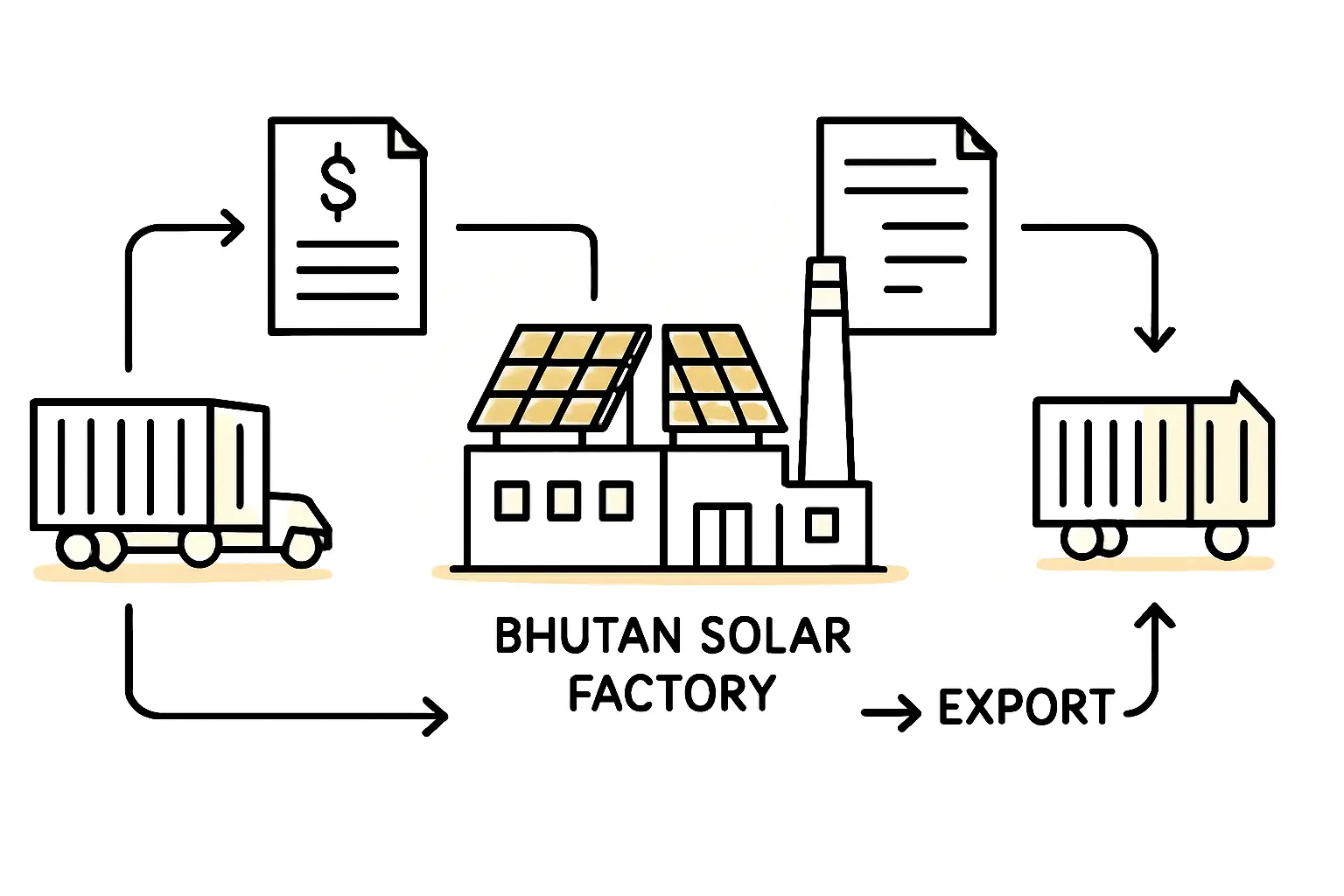
However, “duty-free” doesn’t mean “documentation-free.” A comprehensive set of documents is still required, including:
- Bill of Lading: Marked for transit to the final destination in Bhutan.
- Commercial Invoice & Packing List: Detailing the contents and value of the shipment.
- Bhutanese Customs Declaration: Processed through Bhutan’s customs system.
- Transit Declaration: Filed with Indian customs to move the goods through the country.
Engaging an experienced customs house agent and freight forwarder with specific expertise in this corridor is not just advisable; it is essential for avoiding costly delays, demurrage charges at the port, and administrative hurdles.
Step 3: Overland Transport to the Border
Once cleared for transit, containers are loaded onto trucks for the overland journey of approximately 700–750 kilometers from Kolkata to the Jaigaon-Phuentsholing border. This trip typically takes three to five days, though the timing can be highly variable.
Key Challenges on this Route:
- Road Conditions: While major highways are improving under initiatives like the South Asia Subregional Economic Cooperation (SASEC) program, sections of the route can still be challenging, particularly during the monsoon season (June to September), when landslides and flooding can cause significant delays.
- Congestion: Bottlenecks can occur at various points, including the border crossing itself.
Step 4: Border Crossing and Final Delivery
At the Jaigaon-Phuentsholing border, the goods undergo final customs clearance by Bhutanese authorities before being allowed entry. From Phuentsholing, the materials are transported to the factory’s location. The proximity of the factory to this border town can have a substantial impact on final-mile transport costs and timelines.
The Outbound Journey: Exporting Finished Modules
Exporting finished solar modules follows the same path in reverse. The modules must be robustly packaged to withstand the rigors of the overland journey back to Kolkata port.
The risk of vibration and shock on the roads makes high-quality packaging a non-negotiable step to prevent cell microcracks and other damage. Once the modules arrive in Kolkata, they are processed for export to international markets. Precise documentation and coordination are just as critical here, ensuring a smooth transition from truck to vessel.
Cost Modeling and Risk Mitigation
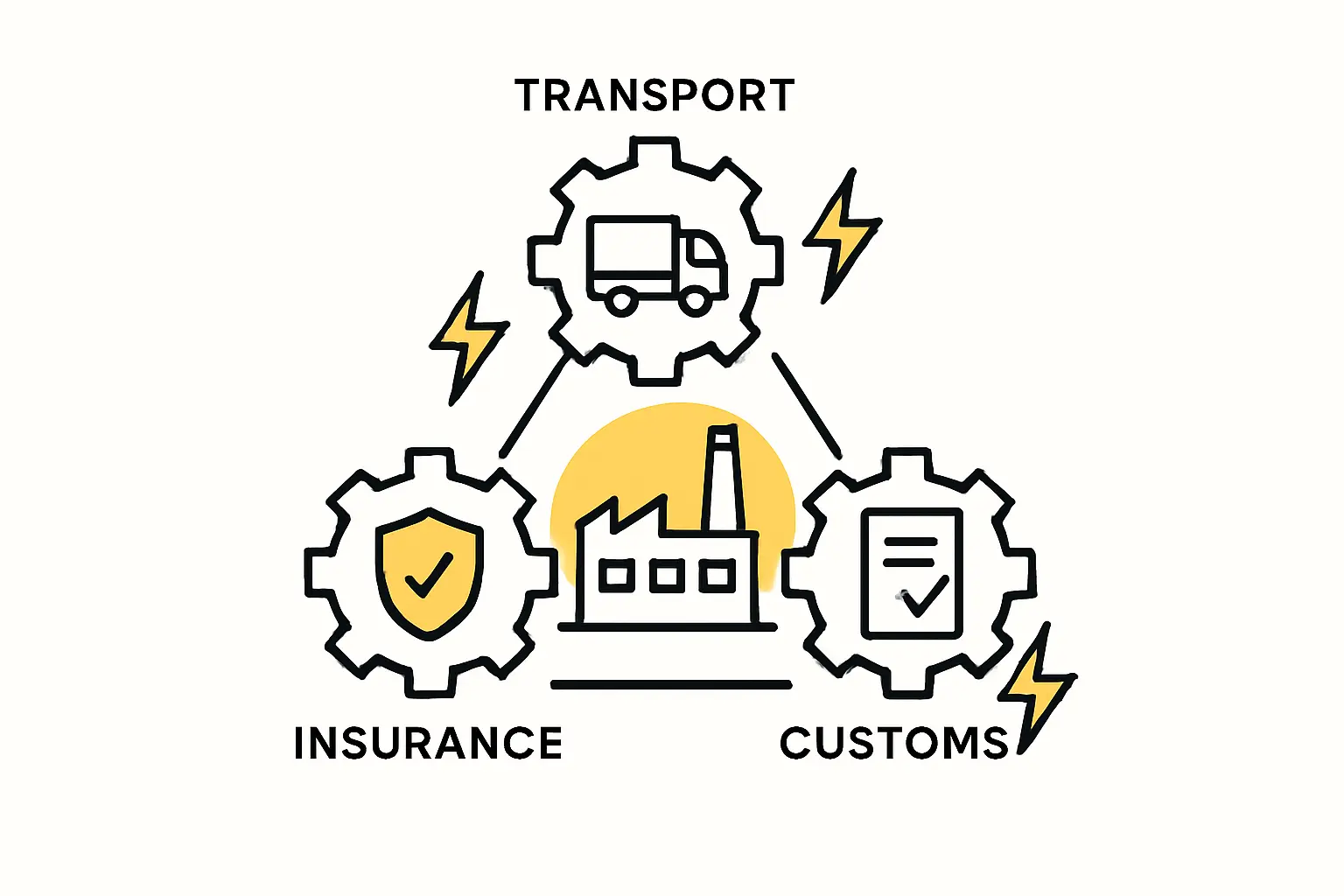
A realistic business plan must account for the unique costs and risks of this supply chain. Any investment in a Bhutanese solar factory must incorporate a detailed logistics budget that goes beyond standard shipping quotes.
Key Cost Components:
- Ocean Freight: Standard international shipping rates to Kolkata.
- Port Handling & Agency Fees: Charges in Kolkata for processing transit cargo.
- Inland Haulage: The cost of truck transport from Kolkata to the factory, which is often the most significant logistical expense.
- Customs Brokerage: Fees for agents managing documentation in both India and Bhutan.
- Insurance: Higher premiums may be necessary to cover the extended and more complex transit route.
- Buffer Stock: The cost of holding additional raw materials at the factory to guard against supply chain disruptions.
Risk Mitigation Strategies:
- Select Expert Logistics Partners: Partner with freight forwarders who have a proven track record on the India-Bhutan corridor. Their local knowledge is invaluable.
- Factor in Seasonality: Plan for longer lead times and potential delays during the monsoon season. Avoid scheduling critical shipments during the peak of this period if possible.
- Maintain Buffer Inventory: A 30- to 60-day supply of critical raw materials can prevent production stoppages caused by transit delays.
- Invest in Quality Packaging: For outbound modules, use packaging solutions designed for rough road transport, not just smooth sea transit.
Strategic Considerations for Starting a Factory
For any entrepreneur or investor considering setting up new factories in Bhutan, these logistical factors are central to the project’s viability. The design and planning of a turnkey solar manufacturing line must be integrated with the supply chain strategy from the very beginning.
Based on experience from J.v.G. turnkey projects in challenging environments, the location of the factory within Bhutan is a key decision. A site near Phuentsholing, for instance, could drastically reduce inland transport complexities compared to a more remote location, even if other factors there seem favorable. Feasibility studies must weigh land costs and labor availability against transportation and logistics realities.
FAQ: Navigating Bhutan’s Solar Logistics
Q: How long does it typically take for a container to get from Kolkata to a factory in Bhutan?
A: Under normal conditions, the entire process—from the vessel berthing in Kolkata to arrival at a factory near Phuentsholing—can take between 7 and 14 days. This includes port handling, customs clearance, and road transport. The timeframe, however, can extend to over 21 days during the monsoon season or if documentation issues arise.
Q: What is the most critical document for duty-free transit through India?
A: While all documents are important, the correctly filed Transit Declaration with Indian customs is crucial. It is the official document that allows the goods to move across Indian territory without being subject to Indian import duties. Errors in this document can lead to significant delays.
Q: Is air freight a viable alternative for a solar factory in Bhutan?
A: Due to the weight and volume of raw materials like glass and aluminum frames, as well as finished modules, air freight is prohibitively expensive for routine supply chain operations. It may be considered only for urgent, low-volume shipments of critical spare parts or specialized electronic components.
Q: How are road infrastructure improvements affecting logistics?
A: Programs led by organizations like the Asian Development Bank under the SASEC initiative are upgrading key highways connecting India, Nepal, and Bhutan. These long-term improvements are expected to reduce transit times, improve safety, and lower transportation costs, making Bhutan an increasingly attractive location for manufacturing.