When an entrepreneur envisions a state-of-the-art solar module factory, the focus is often on sophisticated machinery, a skilled workforce, and the layout of the production floor. Yet the factory’s daily success and profitability hinge just as much on a less visible but vital system: the supply chain.
A constant, reliable flow of raw materials into the facility and finished modules out to customers is the lifeblood of the operation. Without a robust logistics framework, even the most advanced factory can face costly delays and operational standstills.
This article explores the fundamentals of supply chain dynamics and BiH logistics for a solar module manufacturing plant in Bosnia and Herzegovina (BiH), outlining the key import and export pathways, customs considerations, and typical costs involved. It’s designed as a strategic overview for any business professional considering entry into this market.
Table of Contents
The Strategic Advantage of Bosnia and Herzegovina’s Location
Bosnia and Herzegovina’s geographical position in Southeast Europe presents a distinct strategic advantage. It serves as a natural bridge, connecting global suppliers of raw materials from the East with the high-demand energy markets of the European Union to the West. For a solar module manufacturer, this location offers straightforward access to major EU customers in Germany, Italy, Austria, and the Netherlands.
The country’s primary maritime gateway is the Port of Ploče in Croatia, the closest deep-sea port with robust road and rail connections to BiH’s main industrial centers like Sarajevo, Banja Luka, and Tuzla. While Ploče is the most common entry point, the ports of Rijeka (Croatia) and Koper (Slovenia) are also viable alternatives, providing flexibility in logistics planning.
This central location allows manufacturers to optimize both inbound and outbound logistics, balancing proximity to suppliers with efficient access to end markets.

The Import Pathway: Sourcing Your Raw Materials
A solar module is an assembly of specialized components sourced from around the globe. A typical factory in BiH manages two primary streams of inbound materials:
- From Asia (primarily China and South Korea): Core photovoltaic components such as solar cells, EVA film, and backsheets are typically procured from established Asian suppliers. These materials are shipped via ocean freight in 40-foot containers.
- From Europe and the Region (e.g., Turkey, Germany, Poland): Bulky or specialized materials like high-transmission solar glass and aluminum frames are often sourced closer to home to reduce transport costs and lead times.
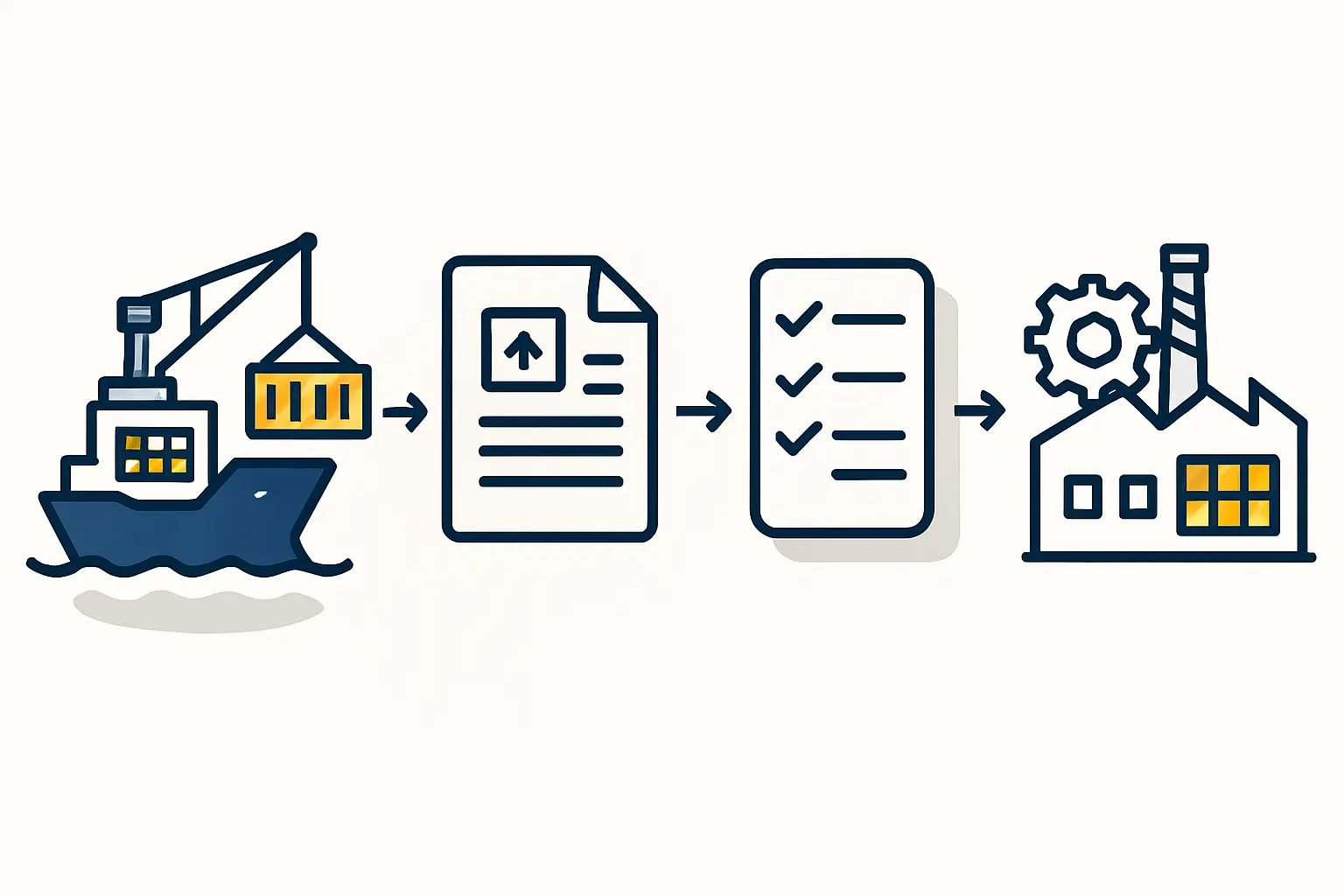
The journey for materials from Asia follows a clear path: shipment from the port of origin, arrival at the Port of Ploče, customs clearance, and finally, inland transport by truck or rail to the factory. Efficiently managing this process is essential for maintaining a smooth production schedule and ensuring the machines needed for a solar panel production line are never idle due to material shortages.
Navigating Customs and Tariffs: A Critical Step
The customs process is where many new ventures encounter unforeseen costs and delays. Understanding the trade agreements governing Bosnia and Herzegovina is essential for accurate financial planning.
Ready to make big Profits?
The solar Industry is Booming
WE HELP NEWCOMERS to the solar industry start their own solar module production line. Customers can make BIG PROFITS by selling modules and finding investors, without wasting money and time on things they don't need!
Central European Free Trade Agreement (CEFTA): This agreement allows for duty-free trade between BiH and neighboring non-EU countries in the Balkans, an advantage when sourcing certain materials or selling finished products within the region.
Stabilisation and Association Agreement (SAA) with the EU: This is the most critical agreement for a solar module exporter. It provides preferential trade terms, potentially reducing or eliminating tariffs on modules sold into the EU market.
However, to benefit from the SAA, products must meet strict ‘rules of origin.’ To qualify, a sufficient percentage of the module’s value must be generated within BiH—simply assembling foreign components may not be enough. Proper documentation and a clear understanding of these rules are non-negotiable for competitive access to the EU.
For all other imported materials from non-preferential countries, standard import duties will apply. Engaging an experienced local customs broker is not an optional expense; it is a vital investment to ensure compliance and prevent shipments from being held up at the border.
The Export Pathway: Delivering Modules to the European Market
Once the solar modules are manufactured, tested, and packaged, the outbound journey begins. The primary export market is the European Union, with overland trucking being the most common and efficient mode of transport.
A reliable logistics partner is crucial for managing the complexities of cross-border freight, including documentation, transit times, and delivery coordination. Based on experience from J.v.G. turnkey projects, a common oversight among new manufacturers is underestimating inland transport costs. For example, a project in the Tuzla region initially miscalculated the cost of moving finished goods to the border, impacting their final cost per module by nearly 3%. This oversight was later corrected by integrating logistics planning into the initial business model.
Understanding the Financial Landscape of Your Supply Chain
Logistics costs are a significant operational expense and must be factored into the overall business plan. While these figures fluctuate with market conditions, the following provides a realistic estimate for planning purposes:
- Ocean Freight (Asia to Port of Ploče): $2,000 – $4,000 per 40ft container.
- Inland Trucking (Ploče to Sarajevo): €500 – €800 per truck.
- Customs Brokerage Fees: €100 – €300 per shipment.
- Export Trucking (Sarajevo to Munich, Germany): €1,200 – €1,800 per truck.
These costs directly influence the final price of the solar module and the overall investment required to start a solar panel factory. The choice of location—as detailed in the guide to building requirements for a solar module factory—also directly impacts these recurring transportation expenses.
Common Challenges and How to Prepare for Them
Every international supply chain presents challenges. For operations in BiH, manufacturers should be prepared for:
- Bureaucratic Delays: Customs clearance can sometimes be slow. Working with a proactive and reputable customs broker can help mitigate these delays.
- Infrastructure Limitations: While major corridors are well-developed, transport infrastructure in more remote areas can be less reliable. This should be a factor in site selection.
- Navigating Trade Rules: The rules of origin for the SAA can be complex. Seeking expert consultation is advisable to ensure your products will qualify for preferential tariffs.
- Cost Volatility: Global shipping prices can change rapidly. Building a buffer for logistics into your financial projections is a prudent measure.

Frequently Asked Questions (FAQ)
Q: Why is the Port of Ploče so important for Bosnia and Herzegovina?
A: As the closest deep-sea port to BiH’s industrial centers, it offers the most direct and cost-effective route for ocean freight. Its strong road and rail connections make it the primary logistical hub for the country’s import and export activities.
Q: What does ‘rules of origin’ mean for my solar modules?
A: To qualify for lower or zero tariffs when exporting to the EU under the Stabilisation and Association Agreement (SAA), your modules must be proven to have ‘originated’ in Bosnia and Herzegovina. This means a specified threshold of the product’s value must be created locally through manufacturing and assembly, not just by packaging imported components. The exact requirements are detailed in the agreement.
Q: Can I manage customs clearance myself?
A: While technically possible, it is not recommended for those unfamiliar with local regulations and procedures. The process is complex and document-intensive. Errors can lead to significant delays and financial penalties. A professional customs broker manages this process efficiently, ensuring compliance and smooth transit.
Q: How much should I budget for logistics annually?
A: This depends entirely on your factory’s production volume. However, logistics costs should be treated as a major operational expense, often accounting for 5% to 10% of the total cost of goods sold. This figure should be carefully calculated and included in your business plan from the outset.
Conclusion: Building a Resilient Supply Chain
Establishing a solar module factory in Bosnia and Herzegovina offers considerable potential, thanks to its strategic location and access to the European market. However, realizing this potential depends on building a resilient and efficient supply chain.
Success is not just about producing a high-quality module; it is about managing the intricate flow of goods from global suppliers to European customers in a timely, cost-effective manner. Careful planning, strong partnerships with logistics providers and customs brokers, and a deep understanding of the region’s trade dynamics are the foundations of a successful manufacturing operation. Navigating this complexity is a core part of the planning process, and structured guidance, like the pvknowhow.com e-course, can provide a clear roadmap.