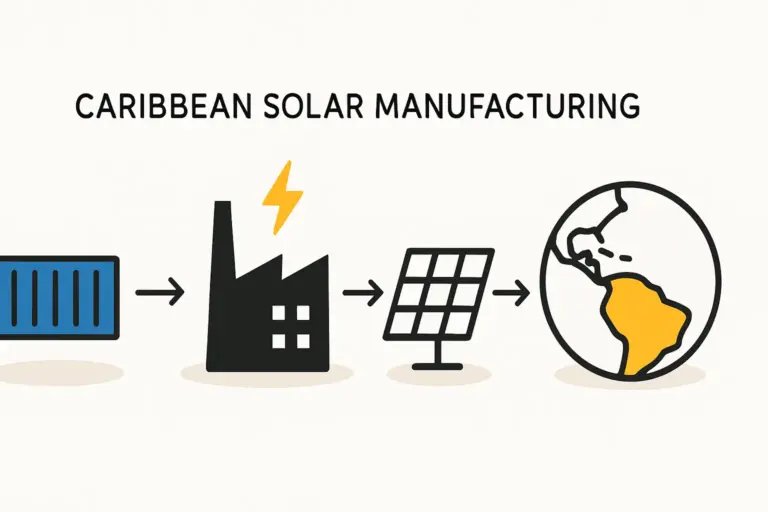
With its abundant sunshine, high electricity costs, and a growing demand for renewable energy, the Caribbean presents a compelling landscape for entrepreneurs. Establishing a solar module manufacturing facility to serve the region is a logical next step.
This vision, however, often encounters a complex reality: a patchwork of island nations, each with its own ports, customs, and regulations. How can a product made on one island seamlessly reach customers on another?
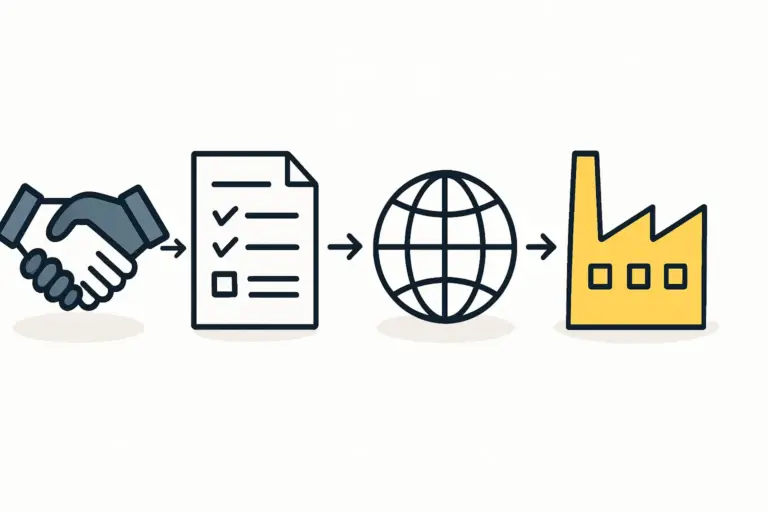
This is where a strategic location like Dominica, combined with a thorough understanding of the Caribbean Community (CARICOM) trade framework, becomes a powerful advantage. This guide explores the logistical and regulatory landscape for exporting solar modules from Dominica to fellow CARICOM member states, charting a path through shipping, customs, and trade agreements to unlock the regional market.
The CARICOM Advantage: Understanding the Single Market
The primary benefit of manufacturing within a CARICOM member state is access to the CARICOM Single Market and Economy (CSME). This economic union is designed to facilitate the free movement of goods, services, capital, and skilled labor among its members, creating a significant opportunity for a manufacturer in Dominica.
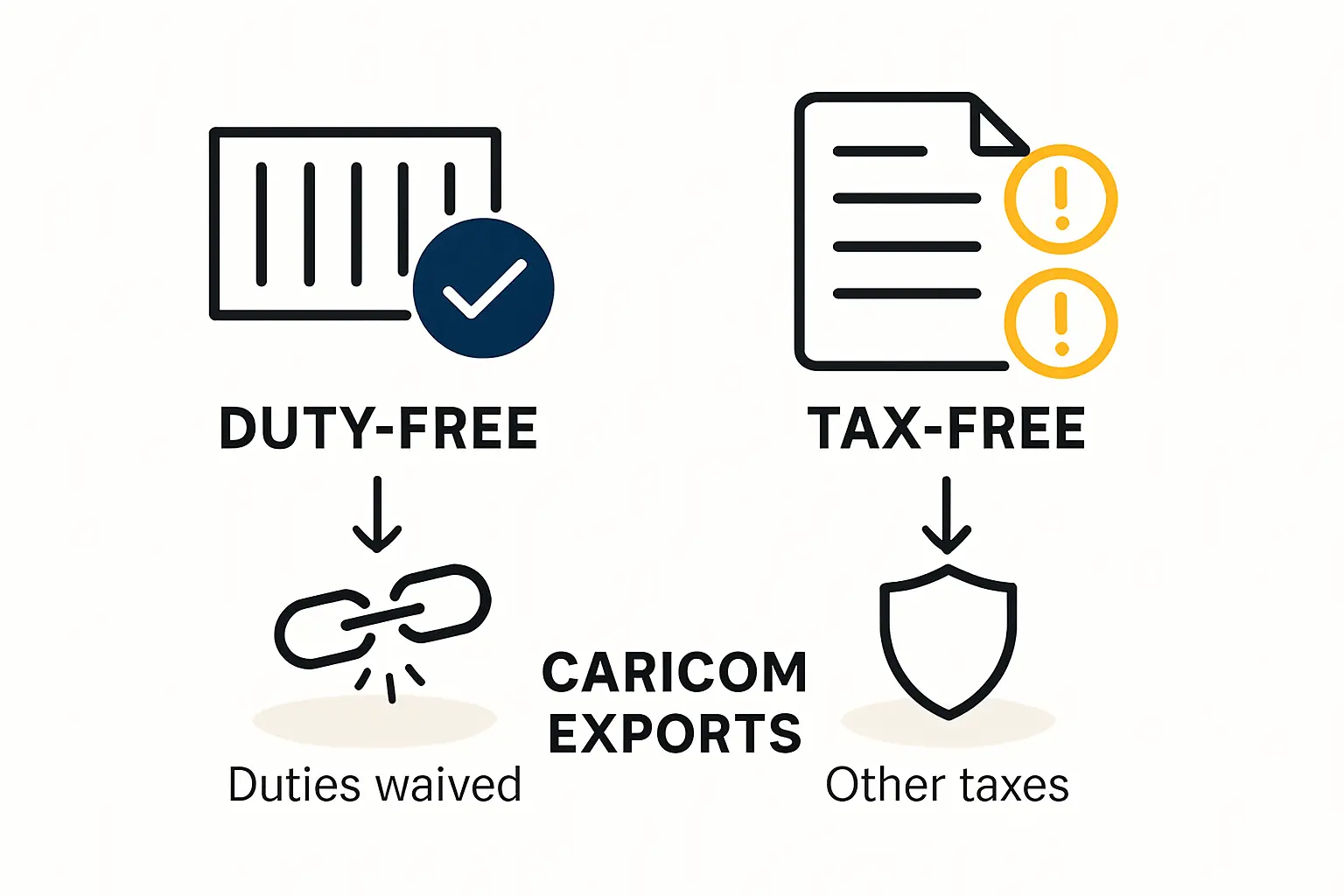
The Revised Treaty of Chaguaramas provides the legal foundation for this system. In practice, the treaty allows goods that originate within a member state to be traded duty-free across the region. The result is an immediate competitive edge over modules imported from outside CARICOM, which are subject to the Common External Tariff (CET).
To benefit from this, products must meet the CARICOM Rules of Origin. This means proving that the goods were wholly produced or have undergone “substantial transformation” within the region. For solar module assembly, compliance typically involves demonstrating sufficient local value-add in the manufacturing process—a critical step in the initial planning of your production line.
Dominica’s Strategic Position as a Manufacturing Base
While the CSME provides the framework, the choice of manufacturing location is crucial for logistical efficiency. Dominica offers several distinct advantages for an export-oriented solar enterprise, positioning it to diversify Dominica’s main exports beyond traditional goods.
- Central Location: Situated between the Leeward and Windward Islands, Dominica serves as a natural logistical hub. It is well-positioned to serve key markets to the north (like Antigua and Barbuda or St. Kitts and Nevis) and south (like Barbados, St. Lucia, and Trinidad and Tobago). Its central position reduces shipping times and costs compared to manufacturing at the geographical extremes of the Caribbean archipelago.
- Government Support and Stability: Dominica maintains a stable political environment and a pro-investment stance. The Invest Dominica Authority (IDA) is the primary agency for facilitating foreign investment, offering guidance and potential incentives for projects that align with national development goals, such as renewable energy manufacturing.
- Developing Infrastructure: The country has two main ports—the Roseau Port and Woodbridge Bay Port—which handle containerized and break-bulk cargo. Ongoing efforts to modernize port infrastructure aim to increase efficiency and capacity for growing trade volumes.
Navigating Export Logistics from Dominica
With a production facility in place, the operational focus shifts to moving finished solar modules efficiently and cost-effectively to customers across CARICOM.
Key Shipping Routes and Ports
Regular feeder and regional carrier services from Roseau’s ports connect Dominica to major transshipment hubs like Barbados, Trinidad, or Kingston, where cargo is then distributed to other CARICOM nations.
Ready to make big Profits?
The solar Industry is Booming
WE HELP NEWCOMERS to the solar industry start their own solar module production line. Customers can make BIG PROFITS by selling modules and finding investors, without wasting money and time on things they don't need!
Establishing relationships with reputable freight forwarders and shipping lines that have extensive regional networks is essential. They can manage the entire process, from container booking at your factory door to final delivery. While planning the physical infrastructure—such as a turnkey solar manufacturing line (http://pvknowhow.com/solar-panel-production-line/)—is the first step, mastering the logistics of moving the finished product is the next critical phase.
Customs Procedures and Documentation
Smooth customs clearance is paramount for avoiding costly delays. CARICOM has worked to harmonize procedures, largely through the Automated System for Customs Data (ASYCUDA). However, meticulous documentation remains the exporter’s responsibility.
Key documents include:
- CARICOM Certificate of Origin: This is the most critical document, providing official proof to the importing country’s customs authority that your solar modules meet the Rules of Origin and are therefore eligible for duty-free treatment.
- Commercial Invoice: A standard invoice detailing the transaction between your factory in Dominica and the buyer.
- Bill of Lading: The contract between the exporter and the shipping line, which also acts as a receipt for the goods.
- CARICOM Cargo Document (e-SAD): An electronic single administrative document used to declare goods to customs, streamlining the process across member states.
Overcoming Common Logistical Challenges
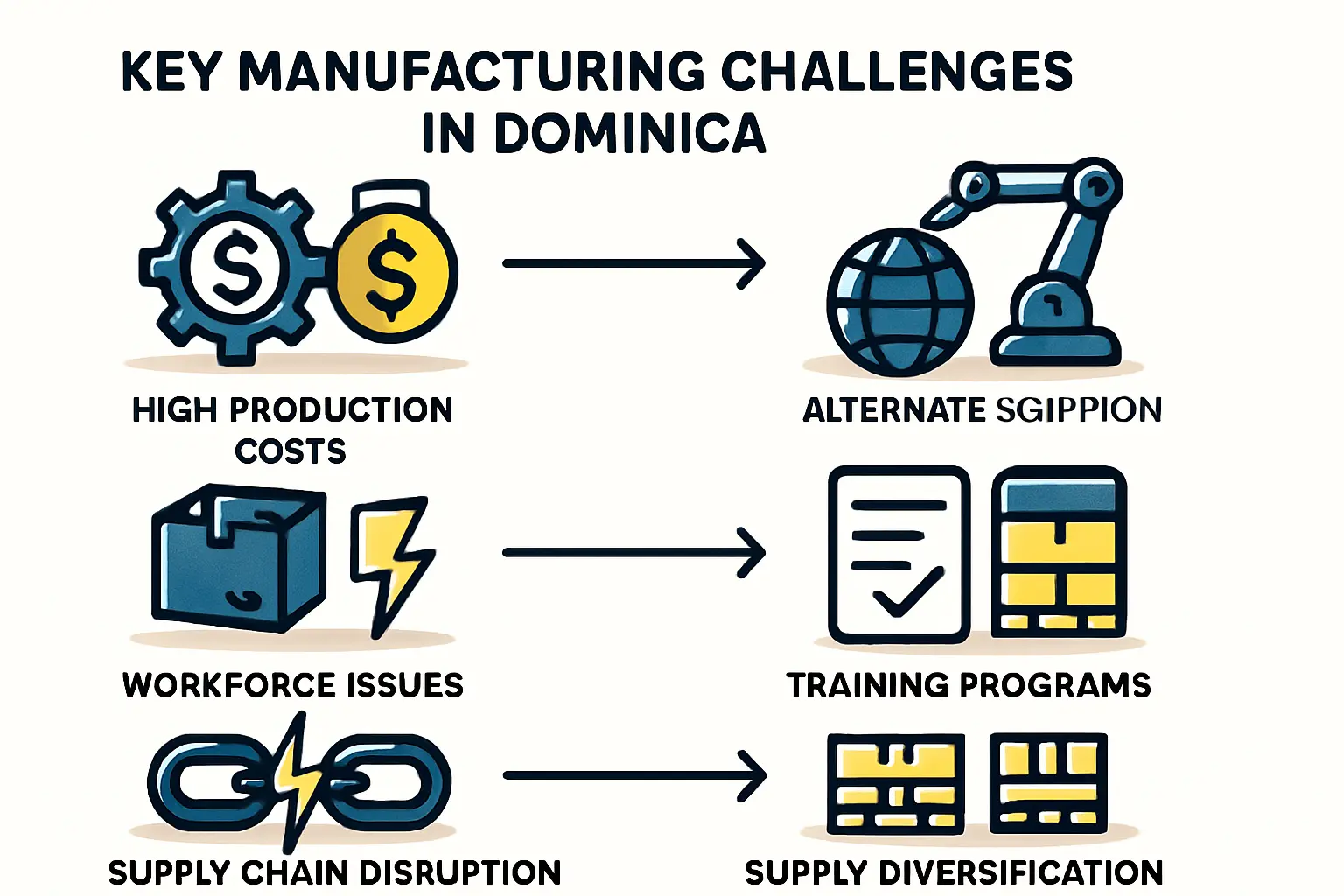
Entrepreneurs should anticipate potential challenges inherent to island logistics, including occasional port congestion, customs delays, and the risk of shipping disruptions during hurricane season.
Proactive planning—such as maintaining a small inventory buffer, working with experienced logistics partners, and having robust insurance coverage—can mitigate these risks. A successful business model must account for these potential costs and timelines when determining the overall investment for a solar factory (http://pvknowhow.com/investment-for-solar-factory/).
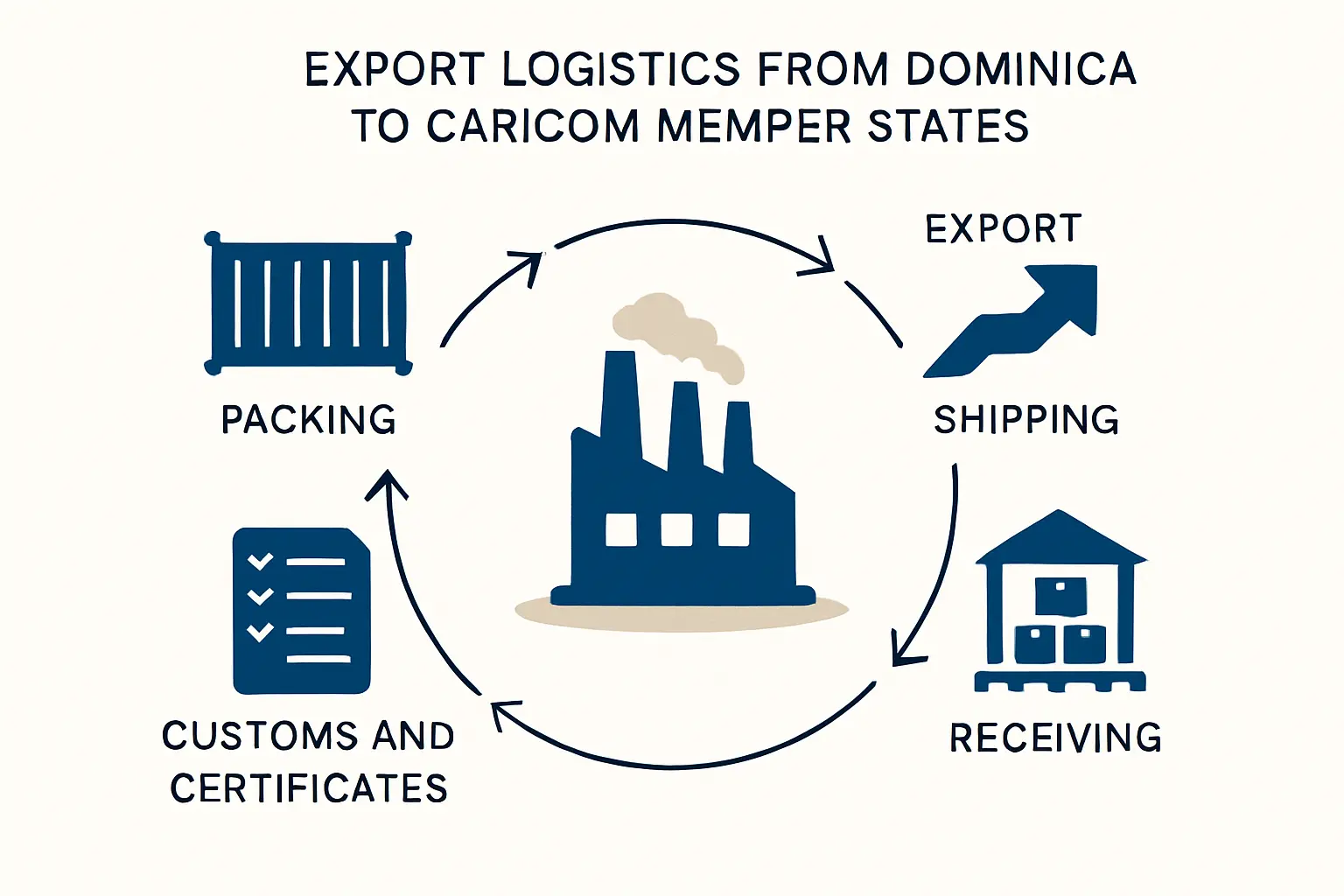
A Practical Scenario: Exporting from a 50 MW Facility
Consider a new 50 MW solar module factory established near Roseau, producing approximately 12,000 modules per month.
- Target Markets: The initial export focus is on Barbados (high energy costs) and Trinidad and Tobago (strong industrial base).
- Shipment Volume: A standard 40-foot container holds around 600-800 solar modules, meaning the factory would need to ship approximately 15-20 containers per month to meet production output.
- Logistics Process:
- Modules are packaged and loaded into containers at the factory.
- A local freight forwarder arranges transport to Woodbridge Bay Port.
- All necessary documentation (Certificate of Origin, Bill of Lading, etc.) is prepared and submitted electronically.
- The container is loaded onto a feeder vessel bound for the Bridgetown Port in Barbados.
- Upon arrival, a customs broker in Barbados uses the submitted documents to clear the shipment duty-free under CSME rules.
- The container is delivered to the customer’s warehouse or project site.
The CARICOM framework makes this streamlined process possible, transforming 15 separate island markets into one integrated economic space.
Frequently Asked Questions (FAQ)
What is the primary function of the CARICOM Certificate of Origin?
This certificate officially proves to the customs authorities of the importing CARICOM member state that the goods were produced or substantially transformed within the region. It is the key that unlocks duty-free access for your products.
How long does inter-island shipping typically take within CARICOM?
Shipping times can vary significantly based on the route and service frequency. Direct routes between major ports might take 2-4 days, while routes requiring transshipment through a larger hub could take 7-14 days. It is crucial to consult shipping lines for specific schedules.
Are there specific packaging requirements for exporting solar modules?
While CARICOM does not have a unique standard, international best practices must be followed. Solar modules are fragile and require robust packaging—typically crated vertically on specialized pallets with corner protection and weatherproof wrapping to prevent damage during transit and handling.
What is the Common External Tariff (CET)?
The CET is a single tariff rate applied by all CARICOM member states to goods imported from outside the community. By manufacturing within Dominica, your solar modules are exempt from the CET when sold to other member countries, giving you a direct price advantage over non-regional competitors.
Conclusion: A Calculated Opportunity
Leveraging Dominica as a manufacturing hub for the CARICOM market is a strategic decision that combines geographic advantage with a powerful trade framework. The CARICOM Single Market and Economy effectively removes the tariff barriers that would otherwise fragment the Caribbean, creating a unified market of millions.
Success, however, is not automatic. It requires a deep understanding of the Rules of Origin, meticulous attention to customs documentation, and reliable shipping and logistics partnerships. For entrepreneurs ready to navigate these operational details, the opportunity to supply locally manufactured, duty-free solar modules to a sun-rich region is compelling.
Understanding the full cost to build a solar panel factory (http://pvknowhow.com/cost-to-build-solar-panel-factory/) requires factoring in these critical logistical and administrative functions from day one. Proper planning, guided by expert knowledge of both technical and regulatory aspects, is the foundation for a successful Caribbean solar manufacturing venture.