In September 2017, Hurricane Maria made landfall in Dominica as a Category 5 storm, causing catastrophic damage and crippling the nation’s infrastructure. The storm exposed a critical vulnerability: energy systems that cannot withstand the region’s increasingly severe weather patterns.
For entrepreneurs and investors exploring the renewable energy sector, this challenge presents a significant market opportunity—the production of solar modules engineered for resilience in high-wind zones. This guide provides a technical overview of hurricane-resistant solar modules and explores the business case for establishing such a manufacturing facility in Dominica to serve the broader Caribbean market.
Why Standard Solar Modules Are Not Sufficient for Hurricane Zones
Standard photovoltaic (PV) modules are typically designed and tested for moderate weather conditions. In a hurricane, they face extreme forces that cause catastrophic failure in several ways:
- Extreme Wind Loads: Sustained high-velocity winds and powerful gusts exert immense positive and negative pressure on the module’s surface, causing it to flex, vibrate, and eventually shatter or delaminate.
- Flying Debris Impact: Hurricane-force winds can turn small objects into high-velocity projectiles, resulting in glass breakage and cell damage upon impact.
- Water Ingress: The combination of wind and torrential rain can force moisture past the seals of standard junction boxes and frame edges, leading to short circuits, corrosion, and long-term degradation.
- Structural Frame Failure: The lightweight aluminum frames of many standard modules can bend, twist, or detach completely from their mounting structures under sustained dynamic loads.
These failure points not only result in a loss of power generation but also create significant safety hazards and financial losses, undermining the very energy security they were installed to provide.
Key Technical Specifications for Hurricane-Resistant Modules
Manufacturing a solar module that can withstand hurricane conditions requires specific enhancements to its design and material composition. These are not minor adjustments but fundamental engineering choices that prioritize durability over minimizing cost.
Thicker Glass and Reinforced Backsheets
The first line of defense is the module’s primary surfaces. To withstand both high wind pressure and debris impact, several modifications are essential:
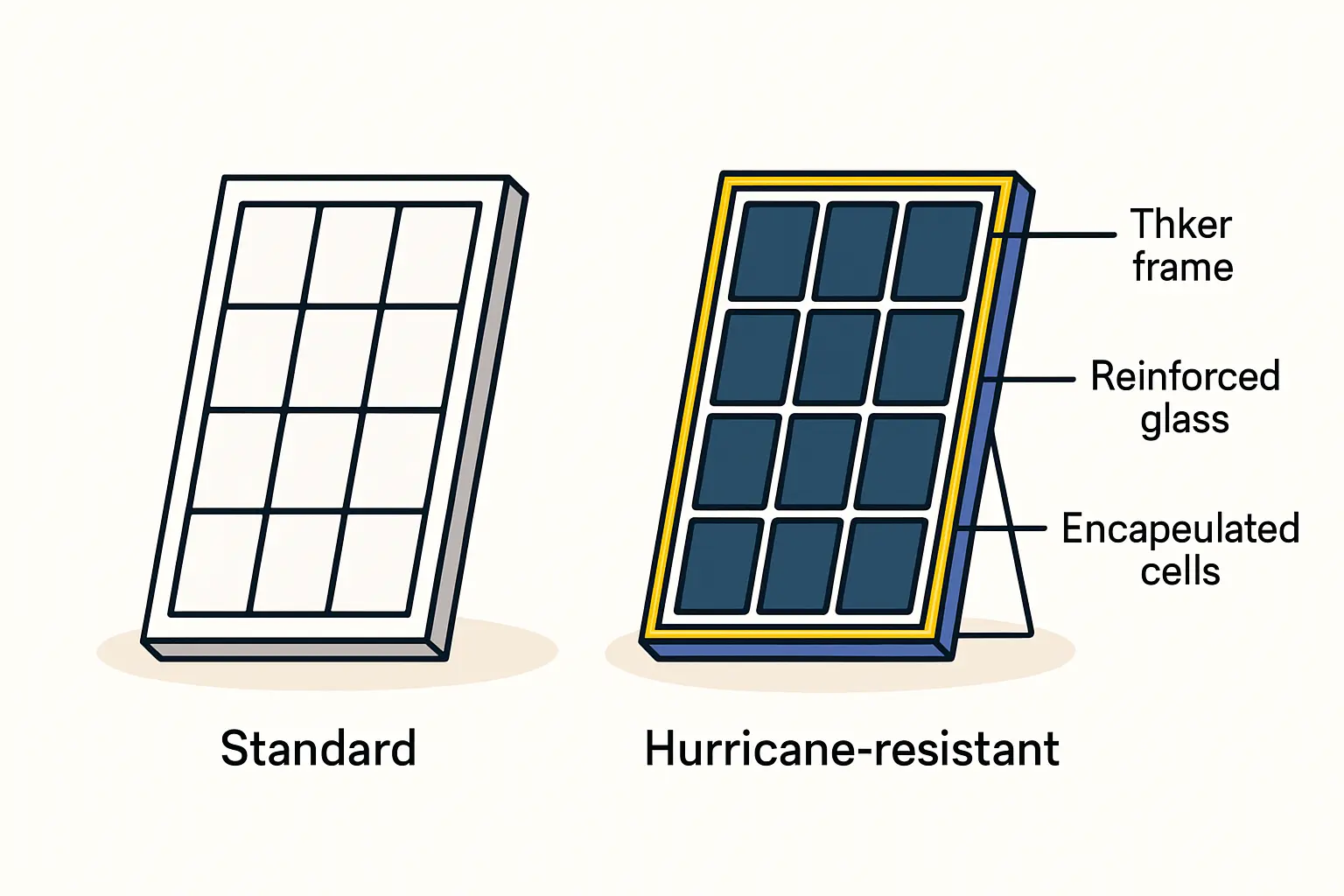
- Toughened Front Glass: Instead of the standard 3.2 mm glass, a hurricane-resistant module often utilizes heat-strengthened or fully tempered glass with a thickness of 4.0 mm or more. This significantly increases its mechanical strength and impact resistance.
- Reinforced Backsheet or Dual-Glass Construction: The rear side of the module is equally important. A thicker, multi-layer polymer backsheet with superior tear resistance is essential. Alternatively, a glass-glass (bifacial) construction, using a second sheet of heat-strengthened glass on the rear, provides exceptional rigidity and protection against pressure fluctuations.
Enhanced Frame Design and Mounting Systems
The module’s frame is its skeleton, responsible for maintaining structural integrity. For high-wind applications, the frame must be substantially more robust.
- Increased Frame Thickness: The aluminum profile of the frame should be thicker, often with a depth of 40 mm to 50 mm, compared to the 30-35 mm common in standard modules.
- Reinforced Corners: Corners are critical stress points. Hurricane-resistant designs feature reinforced, often keyed or screwed, corner connections instead of simple crimped ones. This prevents the frame from twisting and separating.
- Additional Mounting Points: Providing more mounting holes along the frame allows for a more secure connection to the racking system, distributing the wind load more evenly and reducing stress on any single point—a critical factor often overlooked in standard installations.
Robust Cell Interconnection and Junction Boxes
Internal components are also vulnerable. Vibrations from high winds can damage the delicate connections between solar cells.
- Stress-Relief Ribbons: Using wider, more ductile interconnect ribbons between cells helps absorb the strain from module flexing, reducing the likelihood of microcracks that degrade performance.
- IP68-Rated Junction Box: The junction box, which houses the module’s electrical connections, must have the highest level of protection against dust and water ingress. An IP68 rating ensures it can withstand prolonged immersion, a crucial feature during hurricane-induced flooding and torrential rain. Potting the box with silicone further protects the diodes and connections from vibration and moisture.
The Business Case: Market Advantages in Dominica and the Caribbean
Establishing a facility in Dominica to manufacture hurricane-resistant modules is more than a technical endeavor; it’s a strategic business decision aligned with regional needs and policy direction.
Meeting Local Demand and Resilience Goals
Dominica has set ambitious goals to become a climate-resilient nation, with renewable energy as a core component of this strategy. A local manufacturing plant can directly supply government tenders, commercial projects, and residential installations with products certified for local conditions. This creates a powerful competitive advantage over standard imported modules, which may not meet new, more stringent building and insurance codes.
Export Potential to Neighboring Islands
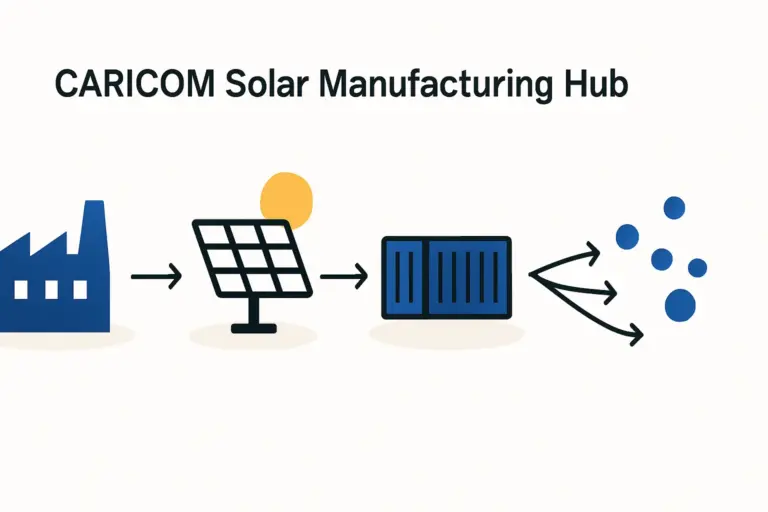
The entire Caribbean region represents a high-potential market. Nations like Barbados, St. Lucia, Antigua, and others in the ‘hurricane belt’ face the same climate challenges. A Dominican manufacturer can serve as a regional hub for high-resilience solar technology.
- Reduced Logistics Costs: Shipping from Dominica to other Caribbean islands is faster and more cost-effective than importing from Asia or Europe.
- Regional Expertise: A brand built on ‘Caribbean-proof’ technology develops a strong reputation and becomes the logical choice for critical infrastructure projects across the region.
Building a Reputation for Quality and Durability
In a market where energy security is paramount, a product’s resilience becomes its most valuable feature. By focusing on a high-specification niche, a new manufacturer can build a premium brand identity based on trust, reliability, and long-term performance, commanding higher margins than producers of commodity modules.
Navigating Certification and Testing Standards
Credibility in this market depends on third-party validation. Any manufacturing plan must include a budget and timeline for achieving key international certifications adapted for high-wind conditions.
- IEC 61215 (Design Qualification) and IEC 61730 (Safety Qualification): These are the foundational standards for PV modules.
- Enhanced Mechanical Load Testing: While standard tests require modules to withstand a static load of 2400 Pascals (Pa), modules for hurricane zones should be tested to much higher values, such as 5400 Pa or more.
- Cyclic and Dynamic Load Testing: More importantly, testing must simulate the fluctuating pressure of wind gusts. Dynamic mechanical load tests and cyclic testing provide a more accurate assessment of a module’s durability in real-world storm conditions.
Achieving these enhanced certifications is a powerful marketing tool and often a prerequisite for participation in government-funded projects or for securing insurance coverage.
Considerations for Establishing a Production Line in Dominica
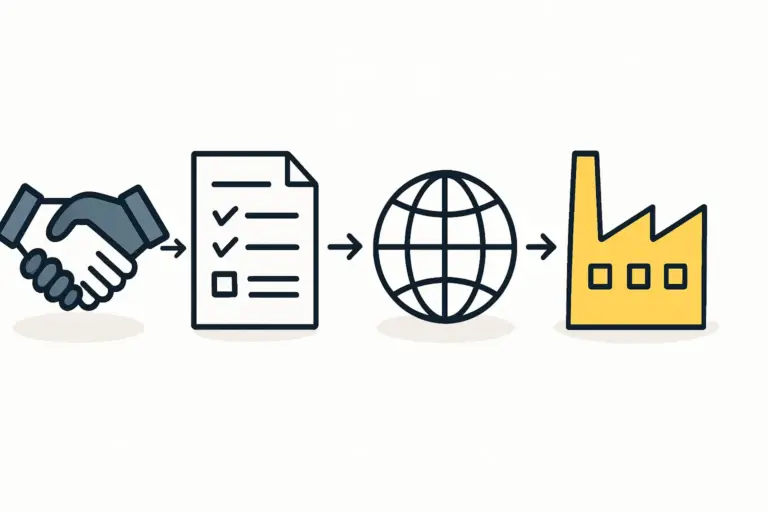
Entrepreneurs considering this venture should focus on a few key operational areas, as success hinges on careful planning.
- Supply Chain Logistics: Securing a reliable supply of specialized components, such as thicker glass and robust frames, is critical. Establishing relationships with multiple suppliers can mitigate risk.
- Skilled Labor and Training: The assembly of high-quality modules requires a well-trained workforce. An initial investment in training programs, potentially in partnership with a technical consultant, is essential. Guidance on how to set up a small solar panel factory can provide a structured framework for this process.
- Initial Investment: The cost of solar panel manufacturing equipment for specialized modules may be higher than for a standard line, due to the need for machinery that can handle thicker materials. A thorough analysis of the total investment required for a solar panel factory is a necessary first step. Based on experience from turnkey projects, a semi-automated 25-50 MW line is often a suitable starting point for a regional market.
Frequently Asked Questions (FAQ)
-
What is the main difference in cost between a standard and a hurricane-resistant module?
A hurricane-resistant module can cost 15-30% more to produce due to thicker glass, a more robust frame, and other reinforced components. However, this higher upfront cost is justified by a much lower total cost of ownership when factoring in replacement costs and long-term reliability in harsh climates. -
Do these reinforced modules produce less electricity?
No. The electrical performance is determined by the quality of the solar cells used. The structural enhancements are designed to protect these cells, ensuring they deliver their rated power for the full 25-30 year lifespan, even after enduring severe weather. -
Is a special type of mounting system required for these modules?
Yes, the module is only one part of the system. To ensure survivability, the reinforced modules must be installed on an equally robust, hurricane-rated racking system that is securely anchored to the building structure. The module’s extra mounting points are designed for this purpose. -
Can a standard module factory be upgraded to produce hurricane-resistant modules?
It is possible, but it may require significant modifications. Key machines like the laminator and framing station would need to be checked or upgraded to handle the thicker, heavier materials. It is generally more efficient to design the production line for these specifications from the outset.
Conclusion and Next Steps
The demand for resilient energy infrastructure in Dominica and the wider Caribbean presents a compelling business opportunity. Manufacturing hurricane-resistant solar modules locally addresses a critical market need, aligns with regional policy goals, and offers a path to building a premium, trusted brand in the renewable energy sector.
Success requires a deep understanding of the technical specifications for a durable product and a well-structured plan for production, certification, and market entry. For entrepreneurs ready to move from concept to execution, the next step involves detailed financial modeling and technical planning to build a resilient business for a resilient region.