The Caribbean’s energy landscape is rapidly transforming. With regional electricity costs among the highest in the world—often ranging from $0.30 to $0.40 per kWh—the shift toward renewable energy is not just an environmental goal but a critical economic imperative. For an entrepreneur or established business leader, this transition presents a substantial opportunity—one that extends beyond simple importation to local value creation through manufacturing.
This analysis outlines a strategic business case for establishing a solar module assembly facility in Dominica—starting with a manageable 20 MW capacity and scaling to 50 MW to serve the wider CARICOM market, breaking down the investment, infrastructure, and operational considerations such a venture requires.
The Strategic Imperative for Local Manufacturing in the Caribbean
Currently, the vast majority of solar modules installed in the Caribbean are imported, primarily from Asia. This model presents several inherent challenges for project developers and end-users, including long lead times, high shipping costs, vulnerability to logistical disruptions, and the financial burden of import duties.
A local assembly operation can directly address these issues. CARICOM has set an ambitious target of generating 53% of its electricity from renewable sources by 2030. This goal, supported by initiatives like the Caribbean Development Bank’s (CDB) $1 billion fund for renewable energy projects, signals a sustained, growing demand for solar modules.
Dominica, with its central location and commitment to becoming a climate-resilient nation, is a compelling choice for such an operation. A manufacturing presence here would position a business to become a key supplier for the entire region, enhancing supply chain security and fostering regional energy independence.
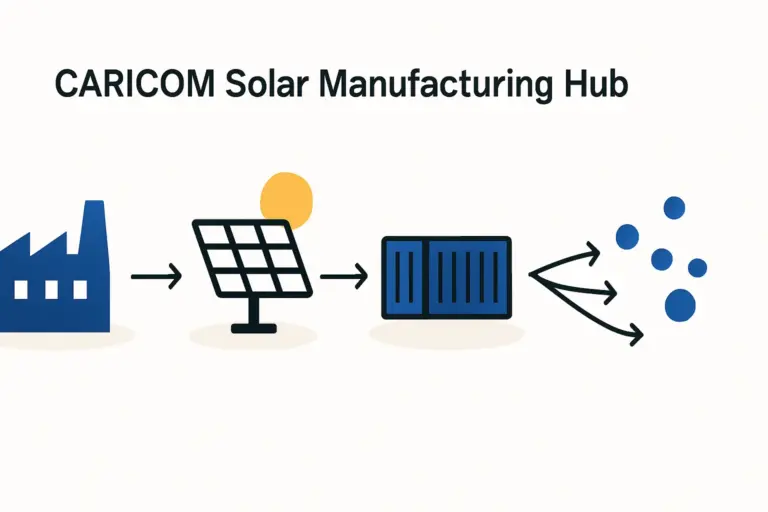
Such a facility in Dominica would serve as a hub, reducing delivery times and costs to neighboring islands while building a strong regional brand identity.
Defining the Initial Scope: A 20 MW Assembly Operation
For entrepreneurs entering the solar manufacturing space, a phased approach minimizes initial risk while allowing for scalable growth. A 20 MW semi-automated assembly line represents a balanced entry point—large enough to be commercially viable yet manageable in terms of capital investment and operational complexity. For any investor, launching this venture on a solid foundation requires a clear understanding of its core requirements.
Investment Requirements
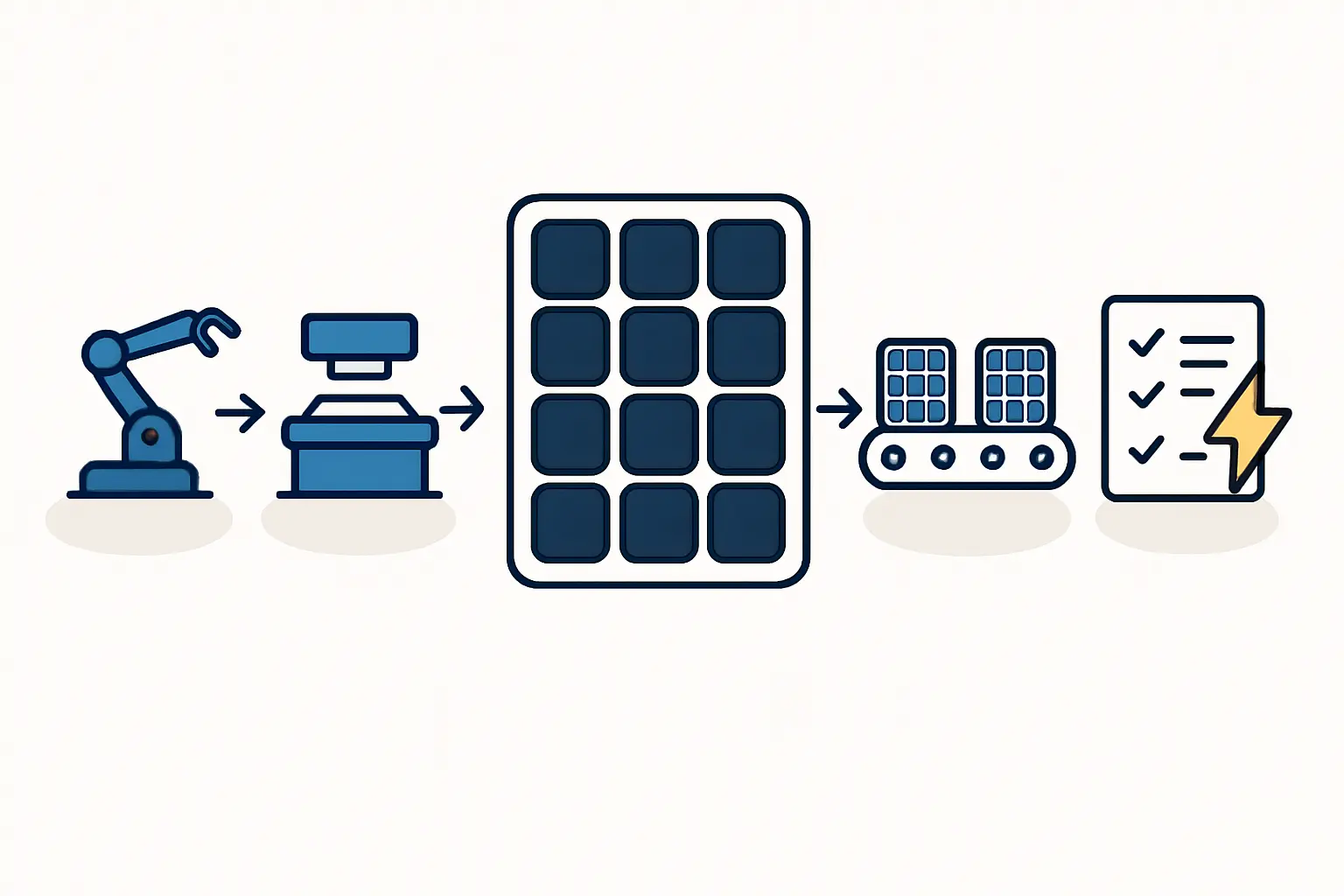
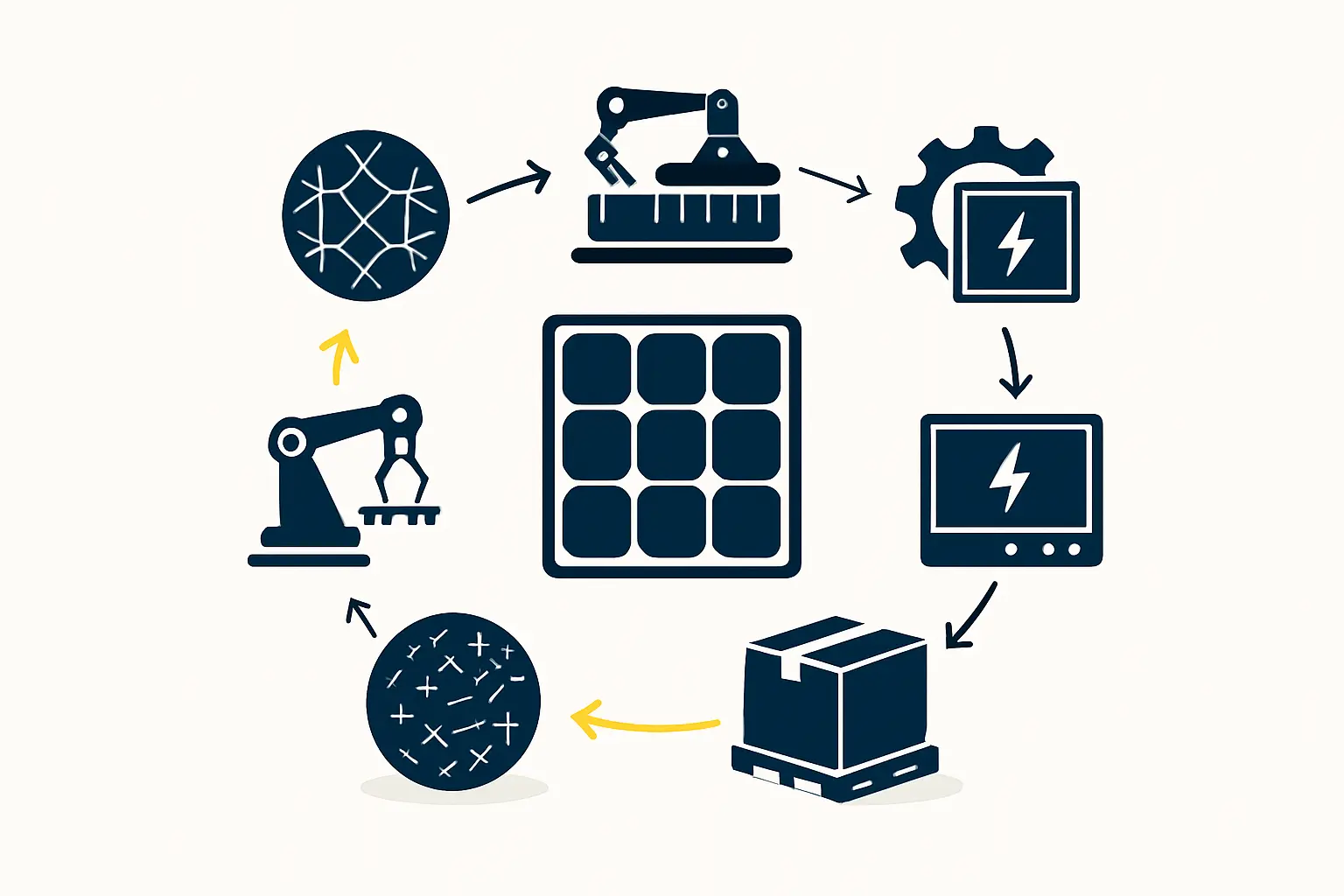
The primary capital expenditure is for the assembly equipment. Based on data from numerous turnkey projects in emerging markets, the investment for a 20 MW line typically falls between USD 1.5 million and USD 2.0 million. This figure covers the essential machinery for every stage of the process, including a stringer, bussing station, lay-up station, EL tester, laminator, and sun simulator.
Required Infrastructure and Footprint
A 20 MW assembly line requires a dedicated industrial space of approximately 1,500 square meters (around 16,000 square feet). This footprint accommodates the linear production flow, raw material storage, and finished goods warehousing. Operational efficiency hinges on a well-designed factory layout that ensures a smooth transition of materials from one station to the next without bottlenecks.
The building must meet standard industrial requirements for ceiling height, floor load capacity, and climate control to protect sensitive electronic components and lamination materials.
Staffing and Skill Development
A significant advantage of this model is its contribution to local employment. A 20 MW line runs effectively with a team of 25 to 30 employees, including production line operators, quality control technicians, maintenance staff, and administrative personnel.
A common concern for investors without a technical background in photovoltaics is the availability of skilled labor. However, the assembly process is highly trainable. With a structured training program from an experienced technology partner like J.v.G. Technology, a local workforce can be brought up to international production standards within a few weeks. The key is process discipline, not pre-existing solar expertise.
The Business Case: Comparing Local Assembly vs. Importation
The financial viability of local assembly hinges on a clear cost-benefit analysis. While imported modules may have a lower ex-factory price, their landed cost in the Caribbean is significantly higher once shipping, insurance, and import tariffs are factored in.
Local assembly allows for the bulk importation of raw materials—solar cells, glass, EVA, backsheets, and aluminum frames—which are often subject to lower duties than finished modules. This creates a direct cost advantage. A local operation also drastically reduces shipping costs for the final product, minimizes exposure to international supply chain volatility, and enables faster fulfillment for regional projects.
This model transforms a logistical challenge into a competitive advantage, allowing the business to offer a competitively priced, “Made in the Caribbean” product with superior availability.
A Phased Approach to Scaling Operations
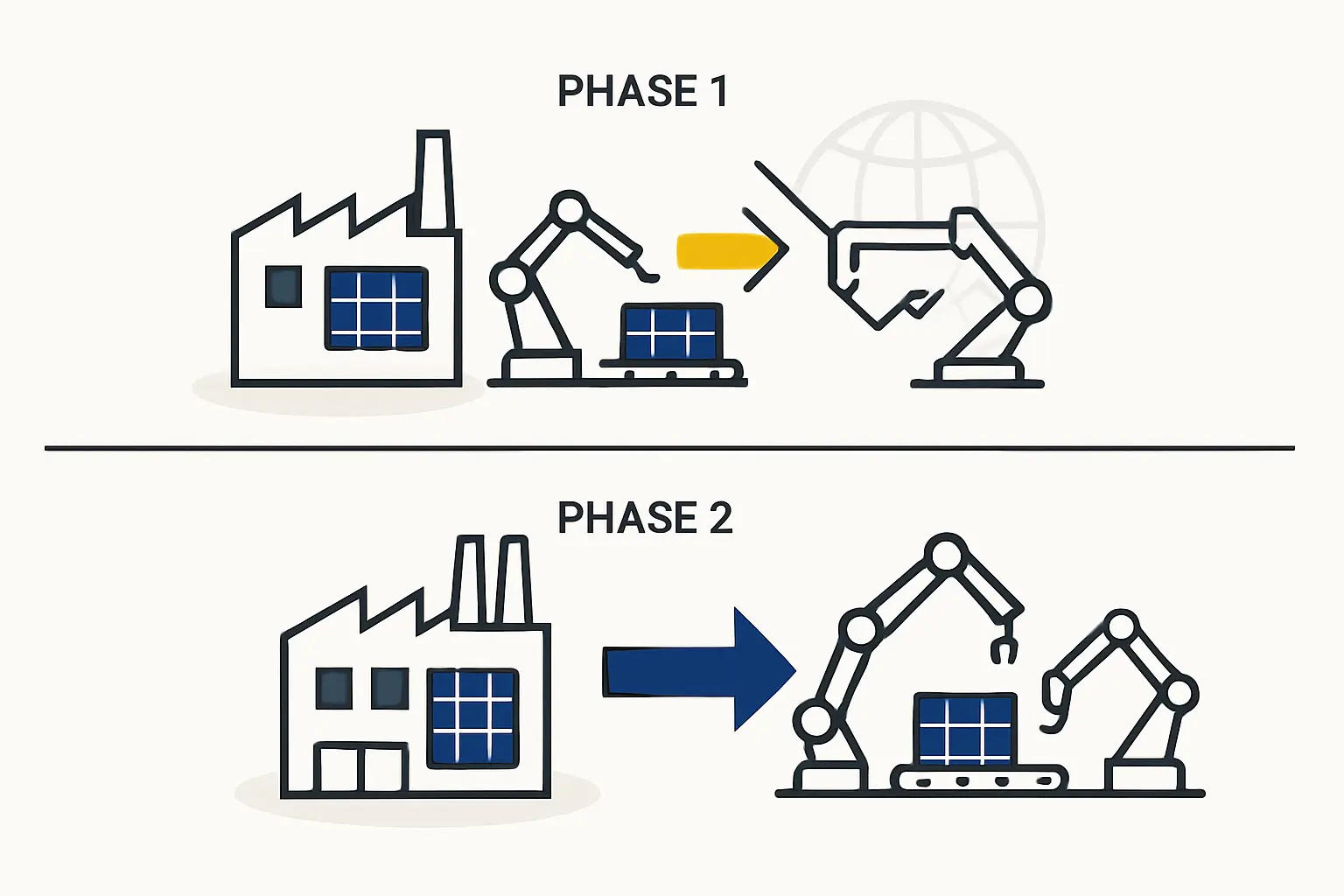
A long-term vision is crucial for sustainable success. The journey from a 20 MW start-up to a 50 MW regional player can be structured into clear, manageable phases.
Phase 1: Establishing the 20 MW Baseline (Years 1-2)
The initial phase focuses on operational excellence: commissioning the 20 MW line, training the local team, and securing initial contracts within Dominica and nearby markets. The primary goal during this period is to build a reputation for quality and reliability. Operations would likely begin with standard monofacial module types, which are in high demand for residential and commercial rooftop installations.
Phase 2: Scaling to 50 MW and Beyond (Years 3-5)
Once the initial line is running efficiently and profitably, the business can reinvest in expansion. Scaling to 50 MW involves adding a second, potentially more automated, assembly line. This expansion enables a broader product portfolio—including higher-efficiency technologies like bifacial or TOPCon modules—to serve larger utility-scale projects across the CARICOM region and solidify the company’s position as a leading regional manufacturer.
Frequently Asked Questions (FAQ)
What are the primary challenges for a new solar assembly plant in Dominica?
The main challenges are typically logistical, including the initial importation of machinery and establishing a consistent supply chain for raw materials. These can be mitigated through careful planning with an experienced logistics partner. Workforce training, while critical, can also be managed effectively with expert guidance.
Is prior solar industry experience necessary for the management team?
No, it is not a prerequisite. Strong business management, financial planning, and operational oversight are more critical skills. The technical aspects of solar module assembly can be learned. A successful entrepreneur from another industry can effectively lead such a venture by partnering with a knowledgeable technical consultant; the key is leadership, not pre-existing solar expertise.
How long does it take for a 20 MW line to become operational?
From the final investment decision to the production of the first certified module, a realistic timeline is between 9 and 12 months. This period includes equipment manufacturing, shipping, installation, commissioning, and staff training.
Where are the raw materials for solar modules sourced from?
Key components like solar cells, tempered glass, EVA encapsulant, and junction boxes are typically sourced from established international suppliers, primarily in Asia. An experienced partner can help establish reliable and cost-effective supply chains for these materials.
The Path Forward for Solar Manufacturing in Dominica
Establishing a 20-50 MW solar module assembly line in Dominica is a viable and strategic venture. It aligns with powerful regional trends toward energy independence, addresses clear market inefficiencies, and offers a scalable model for long-term growth.
For investors and business leaders in the Caribbean, this is an opportunity to build a foundational enterprise in the region’s clean energy future. The key to success lies not in prior solar knowledge, but in a structured, well-planned approach guided by proven technical and business expertise.