Imagine your new solar module factory in its first month of operation. The multi-million dollar production line is running smoothly, and the first batch of high-quality modules is nearing completion.
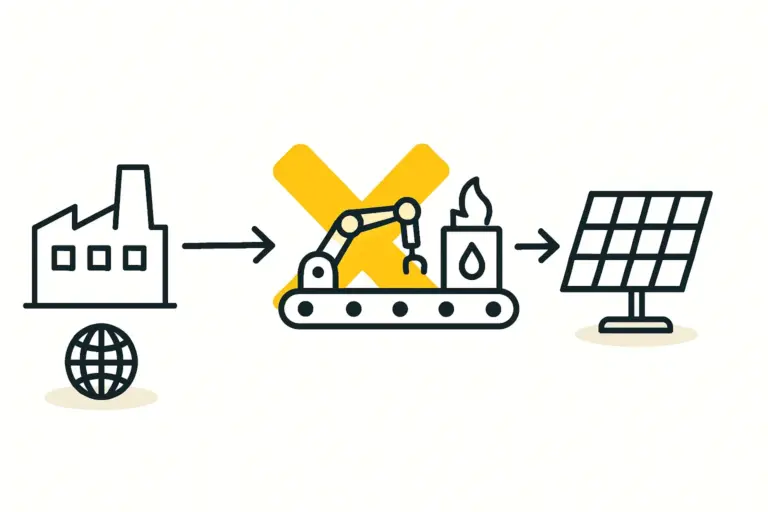
Suddenly, the lights flicker and the hum of machinery ceases. A power outage from the national grid brings the entire operation to a halt—a scenario that highlights a critical business risk for entrepreneurs, particularly in regions where energy infrastructure is unpredictable.
For any investor planning to enter the solar module manufacturing business, the factory building and its machinery are primary concerns. However, an equally vital—and often underestimated—component is the power infrastructure. Ensuring a stable and reliable energy supply is not merely an operational detail; it is a foundational pillar of a successful manufacturing venture. This article explains how to design a factory for energy self-sufficiency, turning a potential vulnerability into a strategic advantage.
The Unseen Challenge: Grid Reliability in Emerging Markets
While global electricity demand is projected to grow by 3.4% annually from 2024 to 2026, access to reliable power remains a significant hurdle in many parts of the world. Data from the World Bank highlights this disparity: in 2021, less than half the population of Sub-Saharan Africa had access to electricity.
For industrial users, the problem is not just access, but consistency. Businesses in these regions experienced an average of 10.1 hours of power outages per month in 2020. This is more than just an inconvenience; it represents a direct threat to production schedules, revenue projections, and equipment integrity. In a manufacturing facility where every hour of operation is carefully calculated, such interruptions can cripple profitability before the business even has a chance to scale.
This reality requires a shift in mindset. Instead of viewing the national grid as the sole source of power, successful factory planning must incorporate a strategy for energy resilience from the very beginning.
The High Cost of Interruption in Solar Module Production
In many industries, a power outage means a temporary pause. In solar module manufacturing, the consequences can be far more severe, given the nature of the processes involved.
Thermal Processes: The lamination process, for example, requires a precise and uninterrupted heating cycle to properly cure the encapsulant materials that bind the module together. A sudden power loss mid-cycle results in improperly laminated modules, leading to material waste and product defects.
Automated Machinery: Modern solar factories rely on highly sensitive and automated machines, such as cell stringers and bussing equipment. An abrupt shutdown can cause mechanical misalignments or damage to delicate components, requiring costly recalibration or repairs. The restart sequence for such critical manufacturing equipment is often complex and time-consuming.
Quality Control: Consistent power is essential for the testing and measurement systems, like sun simulators and electroluminescence (EL) testers, that guarantee product quality. Fluctuations or interruptions compromise the accuracy of these vital quality checks.
Each minute of downtime translates directly into lost output and increased operational costs. A single, prolonged outage can negate the profits of an entire production run.
A Strategic Solution: The Self-Sufficient Factory Model
The most effective way to mitigate the risk of an unreliable grid is to build energy independence directly into the factory’s design. This is achieved by creating a ‘captive power plant’—a dedicated power generation system for the facility’s own use. For a solar module manufacturer, this presents a unique and elegant opportunity: using the very product it creates to power its own operations.
Based on experience from J.v.G. turnkey projects, a typical 50 MW solar module factory consumes between 2,000 and 2,500 MWh of electricity annually. By dedicating just 1-2% of its yearly module output (approximately 0.5 to 1 MW worth of panels), a factory can build a robust solar power system.
This system typically consists of:
- A Solar PV Array: Installed on the factory roof or adjacent land.
- A Battery Energy Storage System (BESS): To store excess energy generated during the day and provide power during outages or at night.
- An Intelligent Energy Management System: To seamlessly switch between grid power and the captive system, ensuring uninterrupted electricity for critical machinery.
This approach transforms the factory from a passive consumer of electricity into a resilient, self-sustaining operation.
Planning for Energy Autonomy: Key Considerations
Integrating a captive power system requires careful planning from the initial design phase, as it influences both the facility layout and the overall business plan.
Calculating Your Power Needs
The first step is to conduct a thorough analysis of the factory’s projected energy consumption, calculating the power requirements of all machinery, lighting, HVAC systems, and office equipment. This analysis must also identify ‘critical loads’—the machines and processes, like lamination and testing, that must remain operational at all times.
Sizing the Captive Power System
Once power needs are established, the solar array and battery storage can be sized accordingly. For example, a 1 MW solar plant, paired with an appropriately sized BESS, can provide sufficient energy autonomy to run critical machinery during grid outages. This prevents costly production halts and protects sensitive equipment from damage caused by sudden power cuts.
Integrating with the Grid
Energy self-sufficiency does not necessarily mean operating completely off-grid. The most efficient model is often a hybrid approach. The captive power system can run in parallel with the national grid, reducing electricity bills during normal operation. When an outage occurs, the system’s management controller automatically disconnects from the grid and switches to stored battery power in milliseconds, ensuring critical operations are never interrupted. The upfront investment required for such a system is offset by the immense savings from avoided downtime and enhanced operational security.
Frequently Asked Questions (FAQ)
Why not just use diesel generators as a backup?
While diesel generators are a common backup solution, they have significant drawbacks. These include high and volatile fuel costs, regular maintenance, carbon emissions, noise pollution, and reliance on a potentially unreliable fuel supply chain. A solar and battery system offers a cleaner, quieter, and more predictable long-term solution with lower operating expenses.
Does the captive power system need to power the entire factory 24/7?
Not necessarily. The system is designed for resilience and can be scaled to meet specific needs. A common strategy is to size it to power the most critical production machinery during an outage, rather than the entire facility. This approach is the most cost-effective way to prevent production losses.
How does this affect the initial factory investment?
While a captive power system represents an additional upfront capital expenditure, it’s best viewed as an insurance policy against the much larger financial losses that result from production downtime. In many cases, the return on this investment is realized quickly through improved operational uptime, reduced energy costs, and enhanced production reliability.
Can excess power generated by the system be sold back to the grid?
This depends entirely on local regulations and grid policies, such as net metering or feed-in tariffs. In jurisdictions where this is permitted, selling surplus electricity can create an additional revenue stream for the business, further improving the financial case for the investment.
Building a Resilient Manufacturing Operation
For any entrepreneur entering the solar manufacturing sector in a region with grid instability, planning for energy independence is not a luxury—it is a prerequisite for success. By integrating a captive solar and battery storage system into the factory design, a business can insulate itself from external power uncertainties.
This strategic approach ensures production continuity, protects valuable equipment, and builds a more robust and profitable operation. Understanding these infrastructure requirements is critical to turning an initial concept into a fully functional, resilient solar module factory. A well-structured plan, developed with expert guidance, can turn one of the greatest operational risks into a powerful competitive advantage.