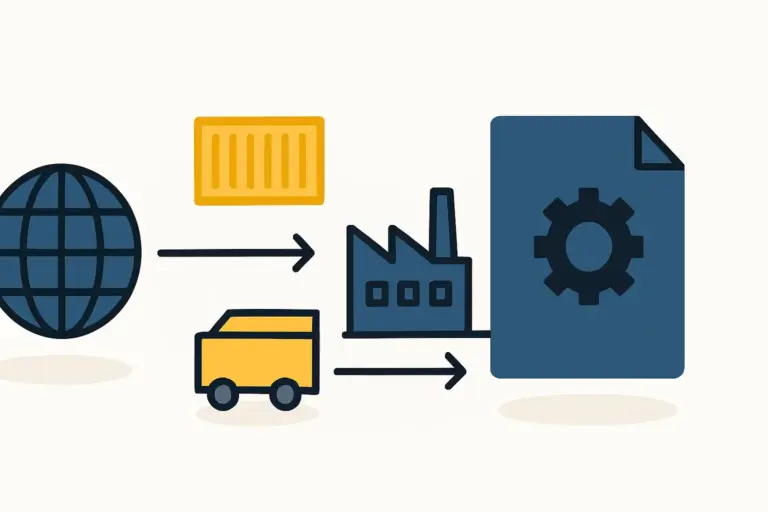
Entrepreneurs considering a new venture in solar module manufacturing typically focus on technology, financing, and market demand. But in regions with unique logistical challenges, such as the Democratic People’s Republic of Korea (DPRK), a more fundamental question is often overlooked: can a consistent and reliable supply of raw materials be secured? The answer determines the viability of the entire enterprise.
This article provides a technical and logistical analysis of supply chain feasibility for a solar module factory in North Korea. It examines the core components—solar glass, EVA encapsulant, and silicon cells—by evaluating the potential for local sourcing against the complexities of importation.
The Core Challenge: Sourcing Key Raw Materials
A solar module is an assembly of highly specialized components. While many parts are involved, the manufacturing process depends critically on three key materials that represent the bulk of the module’s cost and function. Understanding the origin of these materials is the first step in any serious feasibility study. A dependency on external suppliers for these items redefines the business model, shifting it from pure manufacturing to sophisticated assembly and logistics management.
The primary materials required are:
- Solar-Grade Glass: The front sheet that protects the cells while maximizing light transmission.
- EVA (Ethylene Vinyl Acetate): An encapsulant film that bonds the components and protects cells from moisture and impact.
- Silicon Wafers or Finished Solar Cells: The heart of the module, which converts sunlight into electricity.
The sourcing possibilities for each of these in the DPRK context are evaluated below.
Evaluating Local Sourcing vs. Importation
For any new manufacturing plant, sourcing locally offers significant advantages, including lower transportation costs, reduced import duties, and greater control over the supply chain. However, this approach is only viable if local industries can produce materials to the exacting technical specifications required for modern photovoltaics.
Solar-Grade Glass: A Question of Quality
At first glance, local production of glass seems plausible. The DPRK has abundant silica sand, the primary raw material for glass, and a history of industrial glass production at facilities like the Nampo Glass Factory.
However, solar glass is not ordinary glass. It requires two specific properties:
-
Low-Iron Content: Standard ‘float’ glass has a greenish tint from iron impurities, which reduces light transmission and lowers module efficiency. Solar glass must be low-iron and highly transparent.
-
Specific Texturing: The surface is often textured or patterned to reduce reflection and capture more light, especially at low angles.
Producing glass to these specifications requires specialized furnaces, advanced chemical processing, and rigorous quality control—a level of technological capability not known to exist in the country. While basic glass production may be possible, achieving the quality needed for competitive solar modules would likely demand a significant infusion of foreign technology and capital.
Conclusion: The most practical near-term strategy would be to import solar-grade glass. The primary source would be neighboring China, which dominates global production.
EVA Encapsulant: The Necessary Import
EVA is a specialized thermoplastic polymer derived from the petrochemical industry. Its production involves complex chemical engineering processes that require a highly developed industrial base.
There is no evidence to suggest that the DPRK has the capacity to manufacture EVA film. This critical component must therefore be imported. Like solar glass, the overwhelming majority of global EVA production is concentrated in China, making it the only logical sourcing region. Importing and storing rolls of EVA film also requires careful handling to protect them from moisture and contamination prior to their use in the solar panel manufacturing process.
Silicon Wafers and Cells: The Technological Bottleneck
The journey from raw silicon to a finished solar cell is the most technologically demanding part of the value chain.
-
Polysilicon Production: Raw silicon must be refined to an extraordinary purity of 99.9999% (often called ‘6N’ purity). This process is immensely energy-intensive and technologically complex.
-
Ingot and Wafer Slicing: The purified silicon is formed into large crystals (ingots), which are then sliced into ultra-thin wafers.
-
Cell Manufacturing: These wafers undergo multiple chemical processes—doping, coating, and printing of contacts—to become functional photovoltaic cells.
Although the DPRK possesses deposits of raw silicon, it is highly improbable that the country has the technology or the massive, stable energy supply needed for polysilicon refining and wafer production.
Conclusion: The only viable path is to import finished solar cells. This approach positions the factory as an assembly operation that imports the most valuable component and adds the final steps of lamination and framing. This reliance heavily impacts the overall solar panel manufacturing plant cost, as cells represent the largest single material expense.
The Logistical Framework: Land and Sea Routes
Since nearly all critical materials must be imported from China, the logistical framework is a central pillar of the business plan.
The primary logistical channels are:
-
Land Route: The Sino-Korean Friendship Bridge, connecting Dandong (China) with Sinuiju (DPRK), is the main artery for trade. Materials would likely arrive via truck or rail to this crossing before continuing to a factory.
-
Sea Route: The port of Nampo on the DPRK’s west coast is a major hub for international shipping. Bulky materials like glass could be shipped by sea from Chinese ports such as Dalian or Tianjin.
Both routes are subject to significant external risks. International sanctions, political tensions, and administrative hurdles can disrupt or halt cross-border traffic with little notice. A robust business plan must account for these risks, potentially by holding larger inventories of raw materials, which in turn would increase working capital requirements.

Strategic Implications for the Business Model
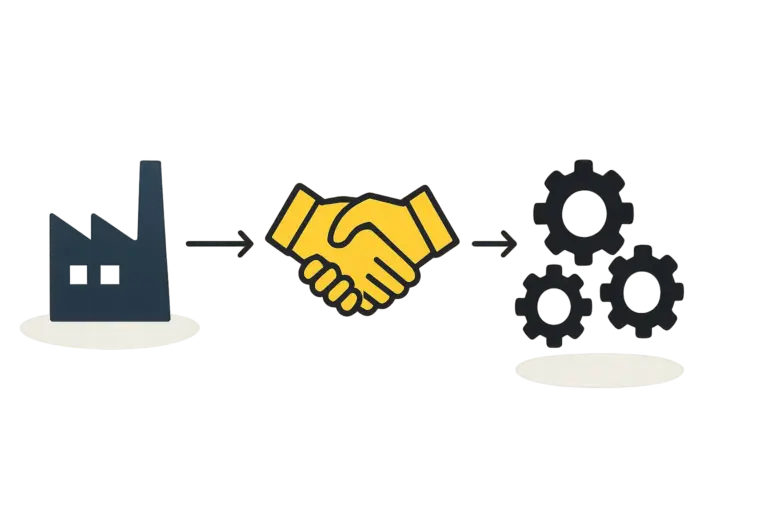
A solar factory in the DPRK would, by necessity, be a module assembly plant heavily reliant on a Chinese supply chain. This is not an unusual model; many new entrants in emerging markets begin by assembling components before gradually investing in deeper manufacturing capabilities.
The specific context, however, introduces unique risks:
-
Supply Chain Dependency: The operation would be almost entirely dependent on a single country for its core components, leaving it vulnerable to supply disruptions.
-
Geopolitical Risk: The flow of goods is contingent on a stable political and regulatory environment, which cannot be guaranteed.
-
Quality Control: Without local alternatives, the factory has limited leverage to enforce quality standards with its foreign suppliers.
For any entrepreneur considering how to start a solar panel manufacturing business in this environment, the initial focus must be on building resilient logistical partnerships and securing a stable, multi-channel supply line.

Frequently Asked Questions (FAQ)
Is it possible to source any solar materials locally in the DPRK?
Theoretically, the raw materials for glass (silica sand) are available. However, producing solar-grade, low-iron, textured glass requires a level of technology that is not known to be present. All other critical components, such as EVA and silicon cells, would need to be imported.
What is the biggest supply chain risk for a factory in this location?
The primary risk is geopolitical. Sanctions, border closures, or other political events could halt the flow of essential imported materials from China, shutting down production entirely. This dependency on a single geographic source for all critical inputs is a significant vulnerability.
How does this reliance on imports affect the project’s financial viability?
A high reliance on imports exposes the business to currency exchange fluctuations and potentially high transportation and customs costs. It also makes the final solar panel manufacturing plant cost sensitive to factors outside the factory’s control and limits the ‘local content’ value proposition, which can be important for government-supported projects.
Can a factory start by importing all components as a ‘kit’?
Yes, this is a common and practical strategy for new operations. This model, known as Semi Knocked-Down (SKD) or Complete Knocked-Down (CKD) assembly, minimizes initial capital expenditure on complex machinery. The focus shifts from raw material processing to efficient, high-quality assembly.
Conclusion and Next Steps
A solar module assembly plant in North Korea is technically conceivable, but it would function as the final link in a supply chain originating almost entirely in China. The project’s success would depend less on manufacturing prowess and more on mastering international logistics, managing geopolitical risk, and securing reliable cross-border trade relationships.
The path forward does not begin with purchasing machinery but with an exhaustive, on-the-ground feasibility study of logistics, import regulations, and supplier reliability. Navigating these unique challenges requires meticulous planning and expert guidance. A thorough assessment, such as those guided by the structured frameworks at pvknowhow.com, is essential to de-risk the investment and build a realistic business case.