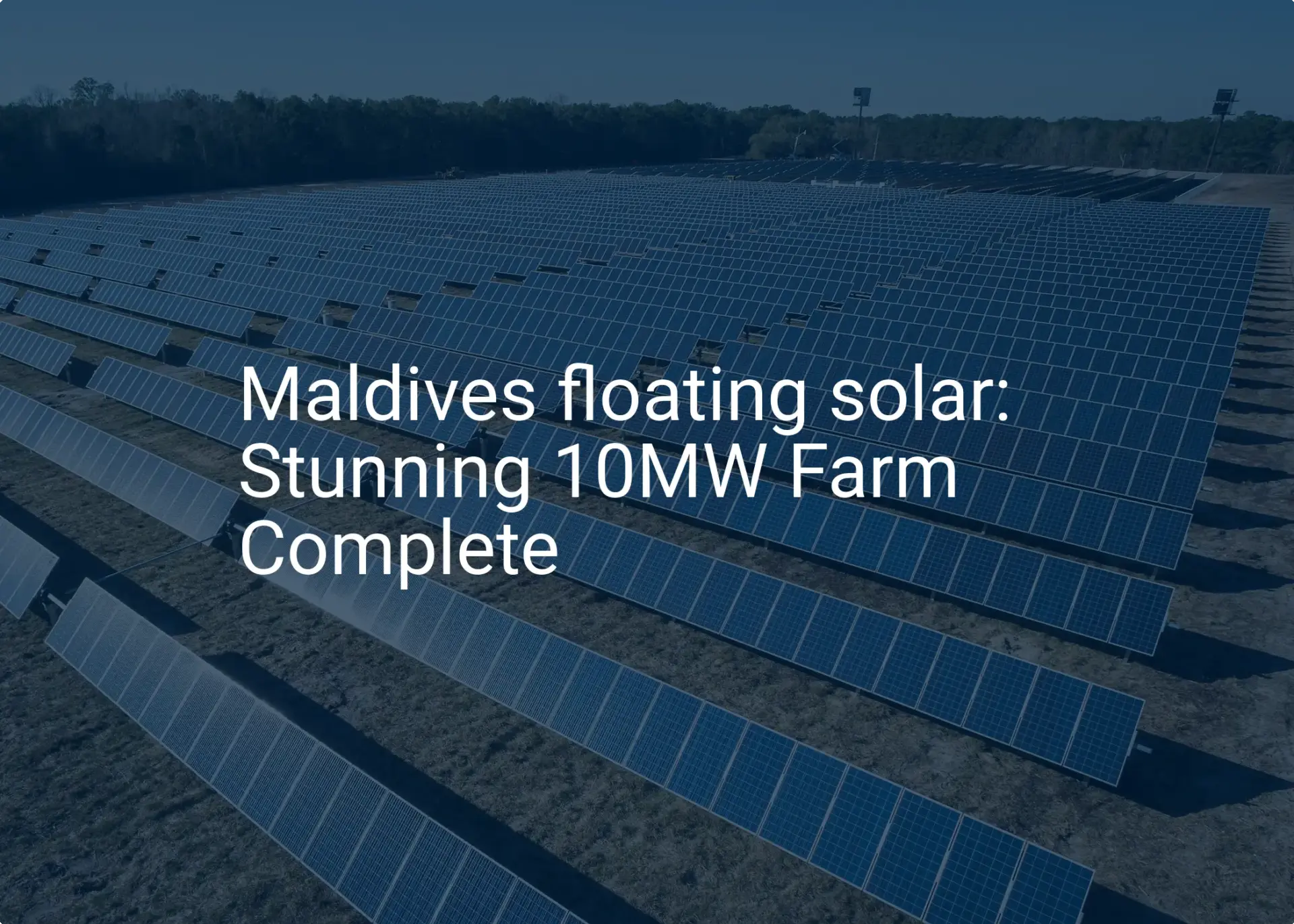
The Republic of Maldives, a nation of over 1,000 coral islands, is synonymous with pristine beaches and luxury tourism. But behind this idyllic image lies a critical economic vulnerability: an almost complete dependence on imported fossil fuels for power.
For an entrepreneur, however, this challenge presents a substantial opportunity. Establishing a solar module factory in the Maldives is not just a renewable energy venture; it is a strategic investment in the nation’s energy security and economic resilience.
Success hinges on a financial model that accurately reflects the unique operational realities of an island nation. Standard feasibility studies often fail to account for the specific cost structures and revenue dynamics of this market. This article outlines the key financial variables essential for building a robust business plan for a solar module manufacturing plant in the Maldives.
Understanding the Unique Economic Landscape of the Maldives
The primary driver for local solar manufacturing is the exceptionally high cost of electricity, generated almost entirely by diesel. According to a 2022 report by the Maldivian Ministry of Environment, Climate Change and Technology, the cost of diesel-generated electricity on the islands can range from $0.35 to $0.45 per kWh. This cost is vulnerable to volatile global fuel prices and complicated supply chains.
In contrast, the levelized cost of energy (LCOE) from solar power, even with the higher initial investment required in the region, offers a clear path to long-term savings and price stability. A local factory builds on these advantages by reducing shipping costs for finished modules and creating a domestic supply chain resilient to international disruptions.
Key Cost Inputs: A Deeper Look at Capital and Operational Expenditures
A financial model is only as reliable as its inputs. For the Maldives, it’s crucial to move beyond generic cost templates and analyze the specific factors that inflate both initial and ongoing expenses.
Capital Expenditures (CAPEX): Beyond the Machinery
The initial investment in a solar factory involves far more than the production line itself. In an archipelago, logistics and construction can significantly inflate project costs.
-
Logistics and Import Duties: Procuring and transporting heavy, sensitive manufacturing equipment to a remote island location is a major cost center. Experience from similar J.v.G. turnkey projects in logistically challenging regions shows that freight, insurance, and local handling can account for 15-25% of the total equipment cost, compared to a typical 5-10% in more accessible mainland locations. These costs must be meticulously budgeted, including a contingency for potential shipping delays.
-
Specialized Construction: The factory building must be engineered to withstand a tropical marine environment. This means using corrosion-resistant materials for the structure and roofing, as well as designing foundations suitable for coral island geology. In some cases, land reclamation or specialized site preparation may be necessary, adding a layer of expense not present in conventional industrial zones.
-
Machinery and Technology: Selecting the right solar module manufacturing equipment is critical. The machinery must be robust, reliable, and ideally, serviceable without constant reliance on overseas technicians. A phased approach, starting with a 20-50 MW semi-automated line, often strikes a prudent balance between initial investment and production capacity.
Operational Expenditures (OPEX): The Day-to-Day Realities
Once operational, the factory’s ongoing costs will also reflect its unique Maldivian context.
-
Raw Material Supply Chain: All key raw materials—solar cells, glass, aluminum frames, EVA encapsulant, and backsheets—will need to be imported. The financial model must account for the cost of shipping and maintaining a larger-than-average inventory (e.g., 3-4 months of stock) as a buffer against supply chain delays.
-
Specialized Labor and Training: While a local workforce can be trained for most operational roles, skilled engineers and maintenance technicians may initially have to be sourced internationally. The budget should include costs for training programs, knowledge transfer, and potentially higher salaries for expatriate specialists during the initial years of operation.
-
Energy and Utilities: The factory itself will be a major energy consumer. While it can be powered largely by its own solar installations, reliable backup power is essential. Furthermore, access to fresh water for cleaning and cooling processes may require investment in desalination facilities, adding to utility costs.
Projecting Revenue Streams: Tapping into Domestic and Regional Demand
The revenue side of the financial model is driven by a unique and high-value customer base. The business case is built not on competing with global mass producers but on serving distinct, nearby markets with compelling value propositions.
The Domestic Market: A High-Value Captive Audience
The most immediate market is domestic, with clear and motivated customer segments. Tailoring production to these specific segments will be key.
-
The Tourism Sector: The hundreds of luxury resorts in the Maldives are the primary economic engine and a prime market. They operate their own diesel powerhouses at significant expense and are highly motivated to reduce operational costs. Moreover, sustainability is a powerful marketing tool in the high-end tourism industry. A ‘Made in Maldives’ solar panel offers a compelling story of environmental stewardship that can justify a premium price.
-
Inhabited Islands and Utilities: The Maldivian government is actively pursuing policies to transition inhabited islands away from diesel. A local factory would be a natural strategic partner for the state-owned utility, FENAKA Corporation, in supplying modules for island microgrids and renewable energy projects.
Regional Export Opportunities: A Strategic Advantage
The Maldives’ location positions it as a potential hub for serving other island nations in the Indian Ocean, such as Sri Lanka, Seychelles, and Mauritius. These nations face similar challenges of energy import dependency and logistical complexity.
A Maldivian factory can develop and market modules specifically certified for high-salinity and high-humidity environments (e.g., with IEC 61701 salt mist corrosion certification). This creates a specialized, high-value product that can compete on quality and suitability rather than on price alone, turning a geographical challenge into a competitive advantage.
Building a Resilient Financial Model: Key Considerations
To create a bankable business plan, entrepreneurs must stress-test their assumptions against the unique risks and opportunities of the region.
-
Sensitivity Analysis: The model should include a thorough sensitivity analysis that projects profitability under various scenarios. Key variables to test include fluctuations in shipping freight rates, changes in the price of imported raw materials, and currency exchange rate volatility.
-
Phased Rollout Strategy: A pragmatic approach is to plan for a phased expansion. An initial 50 MW line can prove the business model by focusing on the high-margin resort sector. Success in this first phase would then help secure financing for a second line aimed at utility-scale projects and export markets.
-
Government Incentives: The financial projections must incorporate any available government support, such as tax holidays for new industries, exemptions on import duties for manufacturing equipment, and favorable terms for land leases. Understanding the structure of Power Purchase Agreements (PPAs) with local utilities is also essential for forecasting long-term revenue.

Frequently Asked Questions (FAQ)
What is the typical initial investment for a small factory in the Maldives?
Factoring in the elevated logistics and specialized construction costs, a semi-automated 50 MW factory could require an investment in the range of $5 to $7 million. This is approximately 20-30% higher than a comparable setup in a mainland location with established industrial infrastructure.
How long does it take for a solar factory in the Maldives to become profitable?
Profitability depends heavily on securing anchor clients, particularly from the tourism sector, in the first one to two years of operation. With strong initial contracts, the payback period is projected to be 5-7 years, driven by premium pricing and high local demand.
Are there local suppliers for raw materials in the Maldives?
Currently, there are no local suppliers for core components like solar cells, tempered glass, or aluminum frames. A robust international supply chain and diligent inventory management are therefore critical for uninterrupted production.
What certifications are necessary for selling modules in this region?
Standard IEC certifications (e.g., IEC 61215, IEC 61730) are the baseline for bankability. For this specific market, obtaining advanced certification for salt mist corrosion (IEC 61701) and Potential-Induced Degradation (PID) resistance is highly recommended and serves as a key quality differentiator.
Conclusion and Next Steps
Launching a solar module factory in the Maldives is a complex but potentially highly rewarding venture. The market offers a rare combination of high energy prices, strong demand from a wealthy customer base, and supportive government policies.
However, success is not guaranteed. It hinges on a meticulously prepared financial model that looks beyond standard industry assumptions and accounts for the true costs of logistics, construction, and operations in an island environment. A thorough feasibility study and a detailed business plan are the essential first steps. These documents transform an ambitious idea into a bankable project, paving the way for a new chapter in the Maldives’ energy future.