For an entrepreneur entering the European solar manufacturing market, the initial phase is packed with critical decisions. Few are more fundamental than the choice of location.
While established hubs in Germany or the Netherlands often come to mind, a closer look at Southern Europe reveals a compelling and often overlooked comparison: the Republic of San Marino versus the surrounding industrial regions of Northern Italy.
At first glance, the choice might seem obvious. Italy is a G7 nation with a vast industrial base; San Marino is a microstate, the fifth-smallest country in the world. However, for a new solar module manufacturing venture, the optimal choice hinges not on size, but on a specific set of business-critical factors: taxation, labor flexibility, bureaucratic speed, and the overall business environment. This analysis provides a structured comparison to guide investors in making a well-informed decision.
The Strategic Importance of Location in European Solar Manufacturing
The decision of where to establish a solar factory extends far beyond securing a plot of land. It directly influences project timelines, operational costs, long-term profitability, and the ease of navigating regulatory frameworks.
As Europe intensifies its push for energy independence and the onshoring of critical supply chains, the environment for new manufacturers is increasingly favorable. However, this opportunity comes with complex national and regional regulations. An investor’s choice of location can either accelerate their path to market or entangle it in costly delays.
A Head-to-Head Comparison: Key Business Factors
Understanding the practical implications of choosing between San Marino and Northern Italy means examining the core operational pillars of a manufacturing business.
Corporate Taxation: A Clear Advantage for San Marino
Corporate taxation is one of the most significant differentiators. The financial efficiency gained through a favorable tax regime can be reinvested into technology, expansion, or competitive pricing.
-
San Marino: Offers a standard corporate income tax rate of 17%. This straightforward and competitive rate provides clarity and predictability for financial planning.
-
Italy: The corporate tax system is more complex. It includes a national corporate income tax (IRES) at 24%, supplemented by a regional production tax (IRAP) that typically averages around 3.9%. This results in a combined effective tax rate approaching 28%.
For a new venture, this 11-percentage-point difference can have a substantial impact on net profits and the capital available for growth in the crucial early years.
Labor Environment: Cost, Skills, and Flexibility
Any manufacturing facility runs on its workforce, making the availability of skilled labor, its associated costs, and the flexibility of labor laws paramount.
-
Labor Costs and Rigidity in Italy: Northern Italy, particularly the Emilia-Romagna region, possesses a deep industrial heritage and a large, highly skilled labor pool. However, this comes with higher labor costs, rigid union-negotiated contracts, and significant social security contributions. Non-European investors may also be surprised by mandatory 13th and 14th-month salary payments, which can substantially increase annual wage bills.
-
Flexibility in San Marino: While the local labor pool is smaller, San Marino’s proximity to Italy allows it to draw from the same skilled workforce. The key advantage lies in its more flexible labor laws. Employment contracts can often be negotiated more directly between employer and employee, and social security contribution structures can be more favorable for the business. This agility is a distinct benefit for a startup factory that must adapt quickly to market demands.
Bureaucracy and Speed to Market: The Agility of a Microstate
Time is a critical resource in any business venture. The speed at which a factory can be permitted, constructed, and commissioned directly impacts the return on investment.
-
Italy’s Complex System: Italy’s administrative system is notoriously complex, involving multiple layers of national, regional, and municipal authorities. Securing the necessary permits for construction and operation can be a lengthy and unpredictable process, often requiring extensive navigation of different government departments.
-
San Marino’s Streamlined Approach: As a microstate, San Marino offers a far more streamlined bureaucratic process. Investors often deal with a single, centralized point of contact within the government. This direct access to decision-makers can dramatically reduce the time required for approvals. Experience from J.v.G. Technology GmbH turnkey projects shows that bureaucratic delays are one of the most common and costly challenges for new investors. The agile system in San Marino offers a powerful solution to this widespread problem.
Logistics and Market Access: Weighing Proximity and Ports
A factory’s success depends on its ability to efficiently receive raw materials and ship finished products.
-
Northern Italy: Benefits from direct access to major Adriatic ports like Ravenna and Ancona, which are vital hubs for international trade. The country’s extensive road and rail network provides excellent connectivity to the broader European market.
-
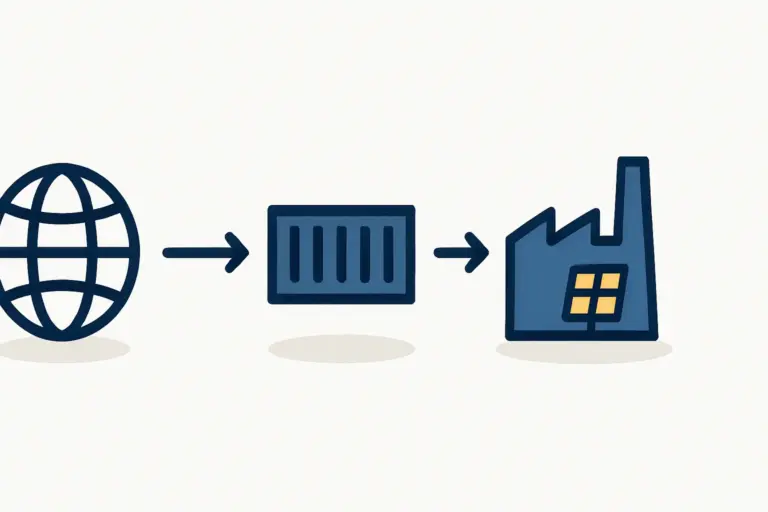
San Marino: While landlocked, San Marino is only a short drive (approximately 25 kilometers) from the Italian coast and the port of Rimini. It is fully integrated into the EU customs union, meaning goods can move freely into Italy and across the EU without customs barriers. The logistical question is therefore not one of access, but of a minor additional step in transportation. For many businesses, this slight logistical trade-off is more than compensated for by the significant tax and administrative advantages.
The Intangible Factors: Business Culture and Support
Beyond quantifiable metrics, the general business climate and level of government support play a crucial role. San Marino actively cultivates a pro-business environment, where government bodies are accessible and oriented towards facilitating new investment. This can be invaluable for an entrepreneur from outside Europe who needs clear guidance and quick problem resolution. Italy’s industrial culture is more established and mature, but can also be less nimble and more challenging for a newcomer to navigate.
Making the Right Decision for Your Solar Venture
The choice between San Marino and Northern Italy is not a matter of one being universally ‘better’ than the other; it is a strategic decision based on the investor’s specific priorities.
-
Consider San Marino if: Your primary goals are tax efficiency, administrative simplicity, and speed to market. It offers an ideal environment for an agile, lean manufacturing operation where financial optimization and reduced bureaucratic friction are paramount. A well-designed solar panel production process can be implemented here with remarkable speed.
-
Consider Northern Italy if: Your top priority is immediate access to a vast, established industrial supply chain and a deep pool of experienced labor. This location is a suitable choice for a larger-scale operation that is prepared to manage a more complex regulatory and tax environment. The total investment needed to start a solar panel factory may be similar, but the ongoing operational costs and administrative overhead will likely differ.
Ultimately, a successful factory depends on more than location—it requires the right equipment and planning. The core of any facility is its solar panel manufacturing line, and the selection of this technology should align with the strategic goals set during the location-scouting phase.

Frequently Asked Questions (FAQ)
Is San Marino a member of the European Union?
No, San Marino is not an EU member state. However, it has specific agreements with the EU, including a customs union, which allows for the free movement of goods. It also uses the Euro as its currency. This unique status provides many of the economic benefits of EU access without the full regulatory burden.
How difficult is it to hire skilled workers from Italy to work in San Marino?
It is very common. A significant portion of San Marino’s workforce commutes daily from the surrounding Italian regions. Cross-border labor agreements are well-established, making it a straightforward process for a Sammarinese company to hire Italian citizens.
Does the ‘Made in Europe’ label apply to products from San Marino?
Yes. Due to the customs union and its geographical location, products manufactured in San Marino generally qualify for a ‘Made in Europe’ origin label, which is essential for accessing the European market and benefiting from certain trade advantages.
What are the key logistical challenges of operating from a landlocked microstate?
The primary challenge is the short overland transport required to reach a major seaport or airport in Italy. However, this is a routine and well-managed process. The cost and time associated with this step should be factored into any business plan, but it is typically not a significant barrier compared to the benefits gained in other areas.