For many entrepreneurs, the idea of establishing a manufacturing facility in a new country can seem daunting—especially in a location as unique as the Kingdom of Tonga. Yet, the nation’s legal framework is designed to attract and support such ventures.
For those exploring opportunities in renewable energy, Tonga’s legislation makes a compelling case, transforming potential obstacles into structured opportunities. This article provides a detailed analysis of Tonga’s Foreign Investment Act, focusing on the provisions most relevant to an entrepreneur planning to establish a solar module manufacturing plant. It examines the incentives, regulatory requirements, and strategic advantages that this Pacific island nation offers foreign investors, translating legal principles into practical business considerations.
Understanding the Foreign Investment Landscape in Tonga
The Foreign Investment Act of 2019 is the foundation for foreign investment in Tonga. This legislation replaced an older framework with the clear objective of creating a more transparent, predictable, and efficient environment for international businesses.
The Act is administered by the Ministry of Trade and Economic Development (MTED), the central point of contact for investors navigating the registration and compliance process.
A key aspect of this legislation is its recognition of Tonga’s position as a Small Island Developing State (SIDS). The government’s policies are geared toward fostering sustainable economic growth, increasing resilience, and achieving greater energy independence. For a solar manufacturing investor, this means your business objectives can align directly with national strategic goals, creating a symbiotic relationship from the outset.
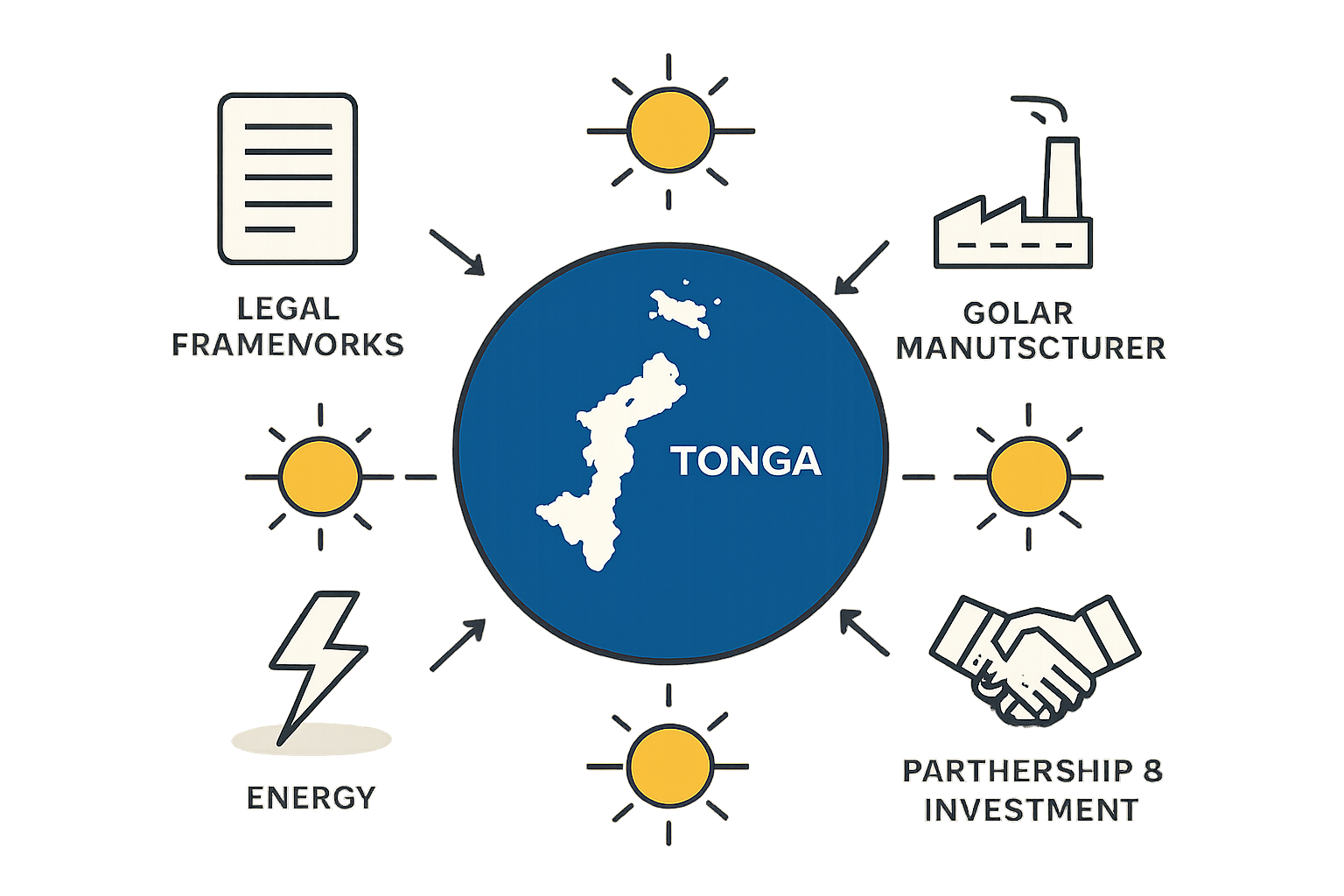
Key Incentives for Solar Manufacturing Investors
The Foreign Investment Act is the gateway for investment, while specific financial benefits are often detailed in associated legislation, such as the Income Tax Act and the Customs and Excise Management Act. Together, they create a package of incentives designed to reduce initial capital outlay and improve the financial viability of new enterprises.
Tax Concessions and Holidays
One of the most significant incentives for new businesses in priority sectors is the potential for a corporate income tax holiday. While subject to specific approval, a new manufacturing operation could be granted an exemption from corporate income tax for several years. This directly accelerates the timeline to profitability and enables the reinvestment of early earnings into growth and operational improvements.
Duty-Free Import of Capital Goods
For a solar module factory, the initial capital expenditure on machinery is substantial. Tongan law often provides customs duty exemptions for importing the capital goods, plant, and equipment required to set up a new factory. This provision can significantly lower the initial investment requirements for a solar factory, making the project more financially accessible. This applies to core equipment within a turnkey solar manufacturing line as well as ancillary machinery.
Repatriation of Profits and Capital
A primary concern for any foreign investor is the ability to transfer returns back to their home country. The Tongan legal framework includes clear provisions for the repatriation of profits, dividends, and capital upon disinvestment. While these transactions are subject to standard financial regulations, the legislation ensures a transparent and predictable process, providing critical peace of mind for investors.
Ready to make big Profits?
The solar Industry is Booming
WE HELP NEWCOMERS to the solar industry start their own solar module production line. Customers can make BIG PROFITS by selling modules and finding investors, without wasting money and time on things they don't need!
Streamlined Business Registration
The Act introduces the Foreign Investment Registration Certificate (FIRC) as the principal requirement for a foreign investor to establish a business. The process is a clear, centralized procedure handled through the MTED. By consolidating many of the initial approvals into a single certificate, the government aims to reduce the bureaucratic hurdles that can often delay projects in new markets.
The Regulatory Framework: Navigating the Requirements
Alongside incentives, the Act establishes a clear set of rules to ensure that foreign investments benefit the Tongan economy and operate in accordance with local laws.
The Foreign Investment Registration Certificate (FIRC)
Obtaining an FIRC is the mandatory first step. The application typically requires:
- A detailed business plan outlining the proposed activities, expected investment, and employment projections.
- Proof of financial capacity to undertake the project.
- Details of the company and its principals.
- Compliance with sector-specific regulations.
Experience from J.v.G. turnkey projects shows that a well-documented technical plan and equipment list is crucial for a successful application, as it demonstrates both the viability and seriousness of the proposed manufacturing operation.

Reserved and Controlled Activities
To protect small local enterprises, the Act reserves certain business activities exclusively for Tongan nationals. However, specialized industrial sectors like solar module manufacturing are not on this list and are actively encouraged. This clarity allows investors to proceed with confidence, knowing their chosen industry is a national priority.
Compliance and Reporting
Once operational, a foreign-owned company is expected to operate as a good corporate citizen, adhering to Tongan labor laws, environmental standards, and tax obligations. This includes periodic reporting to the MTED to ensure the business is operating in line with the terms of its FIRC. These requirements are standard practice and ensure a stable and fair business environment for all participants.
A Practical Perspective: Why Tonga for Solar Manufacturing?
The legal framework, however, is only part of the equation. Its true value becomes clear when considered alongside Tonga’s unique strategic position.
-
Regional Hub Potential: A manufacturing facility in Tonga is well-positioned to supply solar panels to neighboring Pacific island nations, which share similar energy goals and logistical challenges. This creates an opportunity for a small-scale solar module production facility to become a key regional supplier.
-
Alignment with National Energy Strategy: The Tongan government has ambitious renewable energy targets. By producing modules locally, an investor directly contributes to this goal, fostering goodwill and a strong partnership with public-sector entities.
-
Growing Local Demand: As Tonga and other Pacific nations move to decarbonize, the demand for reliable, locally available solar technology is set to increase, driven by utility-scale projects, commercial installations, and off-grid applications.

Frequently Asked Questions (FAQ)
What is the typical minimum investment required under the Act?
The Foreign Investment Act focuses more on the viability and strategic benefit of the business rather than prescribing a rigid minimum capital figure for all sectors. The key requirement is that the investor demonstrates sufficient financial resources to successfully execute the business plan submitted with the FIRC application.
How long does the Foreign Investment Registration Certificate (FIRC) application process take?
While timelines can vary depending on the complexity of the project and the completeness of the application, the 2019 Act was implemented to streamline this process. A well-prepared application with all necessary supporting documents, including a robust business and technical plan, can expect a decision within a few months.
Can a foreign investor own 100% of a manufacturing company in Tonga?
Yes, for industries that are not on the reserved list, such as solar module manufacturing, 100% foreign ownership is generally permitted. The framework also allows for joint ventures with local partners, who can offer valuable local knowledge and networks.
Are there specific incentives for hiring and training local employees?
While not always codified as a direct financial incentive, business plans that include a strong commitment to local employment and skills development are viewed favorably by the MTED. This can be a significant factor in securing project approval and building a sustainable, long-term operation.
Conclusion: Your Next Steps in Exploring the Tongan Market
Tonga’s Foreign Investment Act offers a clear, modern, and encouraging framework for entrepreneurs considering a solar manufacturing venture in the Pacific region. The combination of targeted financial incentives, a streamlined registration process, and alignment with national development goals makes it a market worthy of serious consideration.
Understanding these regulations is the critical first step. The next is to develop a comprehensive business plan that integrates these legal and financial benefits into a viable operational strategy. A thorough grasp of both the investment landscape and the technical details of how to start a solar factory is essential for success. Detailed planning ensures that the opportunities offered by Tonga’s progressive legislation can be fully and profitably realized.