An entrepreneur envisions a new manufacturing facility—a center for production, employment, and economic growth. In most places, the primary concerns would be logistics, labor, and market access. But in a nation like Tuvalu, the fundamental challenge is the land itself.
With a highest point just 4.6 meters above sea level, building for the future requires a profound understanding of the environmental forces that could render a multi-million-dollar investment worthless in a matter of years. This article examines the critical considerations for designing and constructing a factory in one of the world’s most climate-vulnerable locations. We outline the engineering principles needed to ensure a facility not only survives but thrives amidst rising sea levels, seasonal king tides, and pervasive saltwater corrosion. The solutions discussed here, born from an edge case, offer valuable lessons for any industrial project in a coastal region.
Understanding the Unique Environmental Pressures in Tuvalu
A successful factory plan must be grounded in a sober assessment of Tuvalu’s on-the-ground realities. That means accounting for three interconnected environmental factors that directly threaten a building’s integrity and operational lifespan.
The Unavoidable Reality of Sea-Level Rise
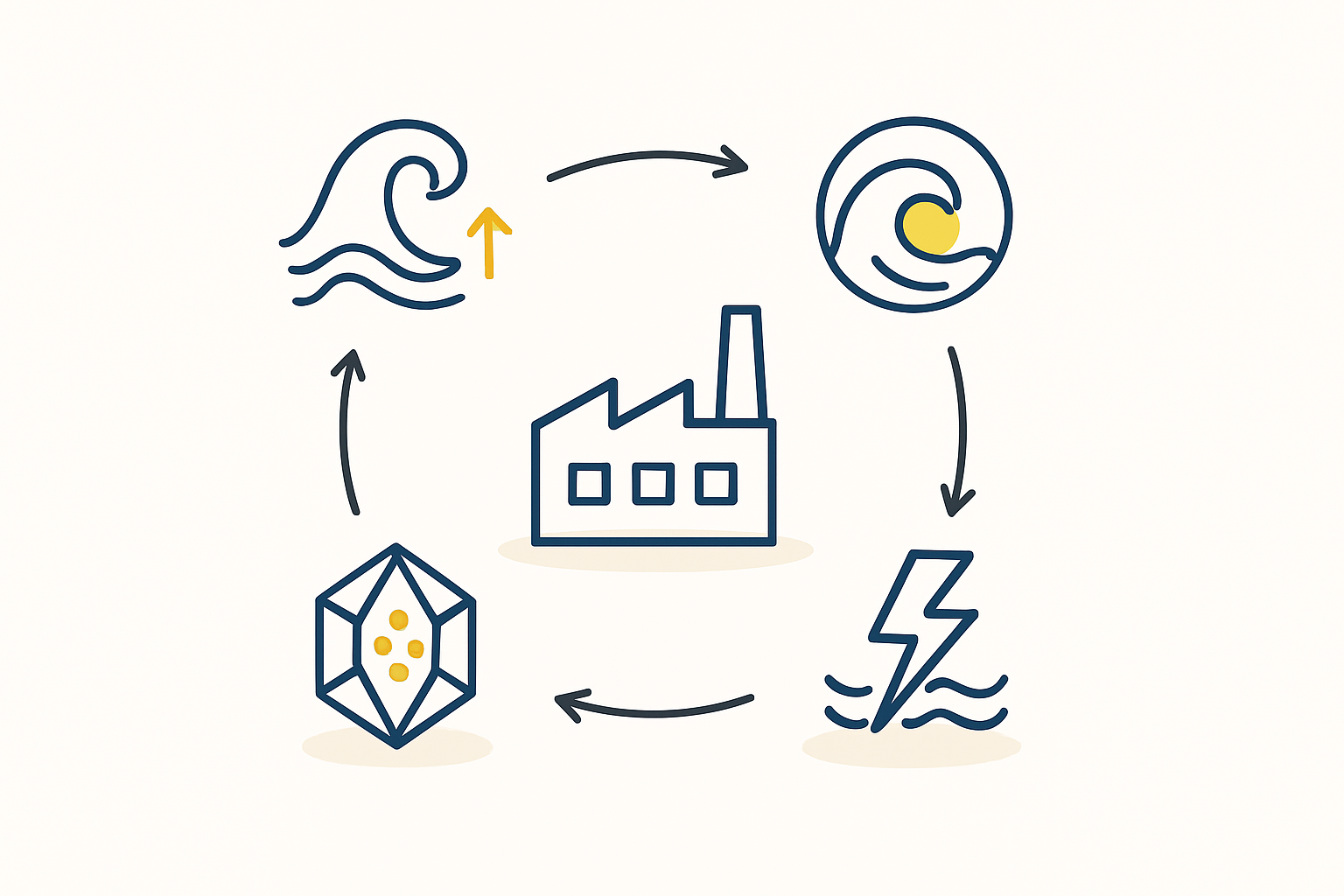
Global sea levels are rising, but the effect is not uniform. Around Tuvalu, the rate has averaged about 3.9 mm per year since 1993—significantly faster than the global average.
While that figure may seem small, its cumulative impact over the typical 25-year lifespan of an industrial facility is profound. A factory built at today’s high-water mark could find its foundations regularly inundated within a decade, leading to structural damage and operational disruption.
The Immediate Threat of King Tides and Storm Surges
Long before permanent inundation becomes a daily problem, seasonal ‘king tides’ pose a recurring and powerful threat. These exceptionally high tides regularly flood low-lying areas, a phenomenon well-known to locals, whose ‘pulaka’ (taro) pits are often contaminated with saltwater.
For a factory, such an event means flooded loading bays, damaged ground-floor equipment, and inaccessible premises. The increasing intensity of regional cyclones adds another layer of urgency, heightening the risk of destructive storm surges.
The Corrosive Impact of a Saline Environment
Constant sea spray and saltwater intrusion create a relentlessly corrosive atmosphere. Standard construction materials—particularly steel reinforcements in concrete and metal cladding—are highly susceptible to rapid degradation.
Saltwater seeping into the ground compromises foundations from below, while salt-laden air attacks the building’s exterior. This constant chemical assault dramatically shortens the lifespan of building components and sensitive machinery, driving up maintenance costs and causing premature failures.
Foundational Principles for a Climate-Adapted Facility
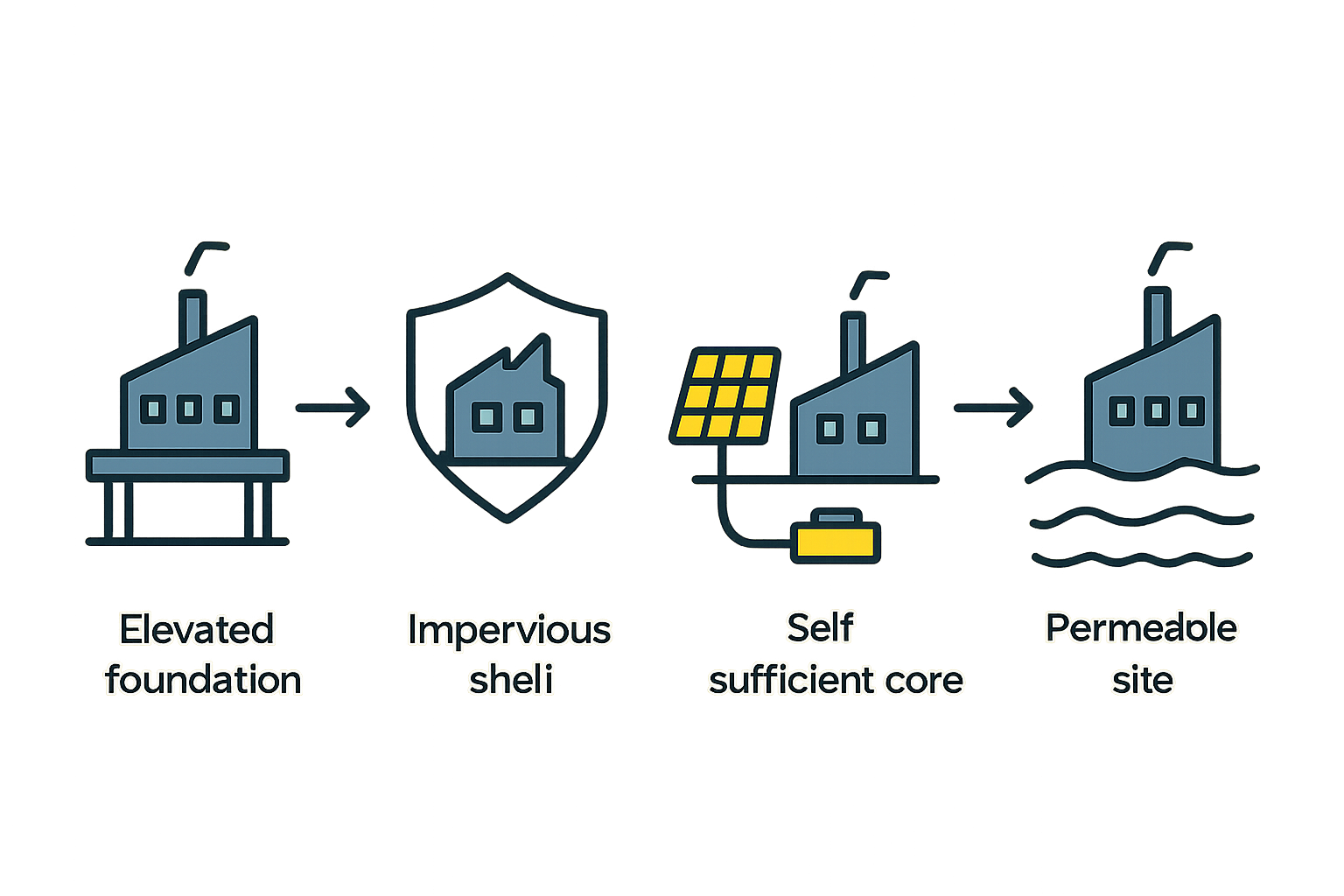
Addressing these challenges requires moving beyond standard construction practices. A climate-resilient factory is more than a building; it is an engineered system designed for longevity in a dynamic environment.
Ready to make big Profits?
The solar Industry is Booming
WE HELP NEWCOMERS to the solar industry start their own solar module production line. Customers can make BIG PROFITS by selling modules and finding investors, without wasting money and time on things they don't need!
Elevated Construction: Building Above the Waterline
The most direct strategy for countering sea-level rise and flooding is to elevate the entire facility. This involves constructing the factory floor on reinforced concrete piles or a raised earthen platform, placing all critical infrastructure and operations safely above projected flood levels for the next 30-50 years. This approach ensures that king tides and most storm surges pass harmlessly underneath or around the structure, preserving operational continuity.
Material Selection for a High-Salinity Environment
Choosing the right materials is crucial for long-term durability. This includes:
Specialized Concrete Mixes: Using concrete with a higher density, corrosion-inhibiting admixtures, and sufficient coverage over steel reinforcement bars (rebar) is essential to prevent ‘concrete cancer,’ where rebar rusts and expands, cracking the concrete from within.
Corrosion-Resistant Metals: Employing hot-dip galvanized steel, stainless steel, or aluminum for structural components, roofing, and cladding provides a robust defense against atmospheric salinity.
Protective Coatings: Applying industrial-grade epoxy or polyurethane coatings to steel and concrete surfaces adds another layer of protection, sealing them from moisture and salt.
These material considerations apply the principles outlined in our guide to solar factory building requirements to an extreme maritime environment.
Beyond the Building: Operational and Logistical Resilience
A resilient factory is more than just its physical walls. Its operational and logistical framework must also be designed to withstand environmental pressures.
Aligning with National Adaptation Strategies
An investor does not build in a vacuum. The government of Tuvalu is actively pursuing large-scale adaptation projects, including land reclamation and coastal defense initiatives. A successful project must align with these plans. Engaging with local authorities offers insight into future infrastructure, such as raised roads or new port facilities, that can influence site selection and logistics.
Understanding and integrating with the local business environment is not just a matter of compliance but of strategic foresight. Based on experience from J.v.G. turnkey projects in diverse regions, this alignment is a key predictor of long-term success.
Frequently Asked Questions (FAQ)
What is the primary business risk of not using climate-resilient design in a place like Tuvalu?
The primary risk is catastrophic asset loss. A standard factory could face crippling damage from a single storm surge or become operationally unviable within 10-15 years due to foundation decay and recurring flooding. This leads to massive repair costs, production downtime, and ultimately, a failed investment.
Does this type of construction significantly increase initial investment costs?
Yes, climate-resilient design requires a higher upfront investment than standard construction—potentially 15-25% more, depending on the specific solutions. However, this should be viewed through the lens of total cost of ownership. The higher initial cost prevents far greater expenses in future repairs, retrofitting, and lost revenue, making it a more financially sound long-term decision.
Can these design principles be applied in other coastal regions?
Absolutely. While Tuvalu represents an extreme case, the principles of elevation, material science, and strategic site planning are directly applicable to any industrial project in a coastal or low-lying area, from Southeast Asia to the Caribbean. The Tuvalu model serves as a valuable blueprint for future-proofing industrial assets worldwide.
How might a resilient design affect project financing and insurance?
Lenders and insurers are increasingly aware of climate-related risks. A project plan that explicitly addresses these risks through resilient design is often viewed more favorably. It demonstrates lower long-term risk, which can lead to better financing terms and more readily available insurance coverage.
Conclusion: A Blueprint for Long-Term Viability
Building a factory in Tuvalu presents a formidable engineering challenge, but it is far from impossible. It requires a shift in perspective: climate resilience cannot be an afterthought but must be a central principle of the design and business plan.
By elevating structures, selecting appropriate materials, and aligning with national adaptation efforts, an entrepreneur can establish a durable, productive, and profitable facility. This process demands meticulous planning and specialized expertise. But for those willing to invest in a forward-thinking design, the result is an asset built not just for today’s market, but for tomorrow’s world.