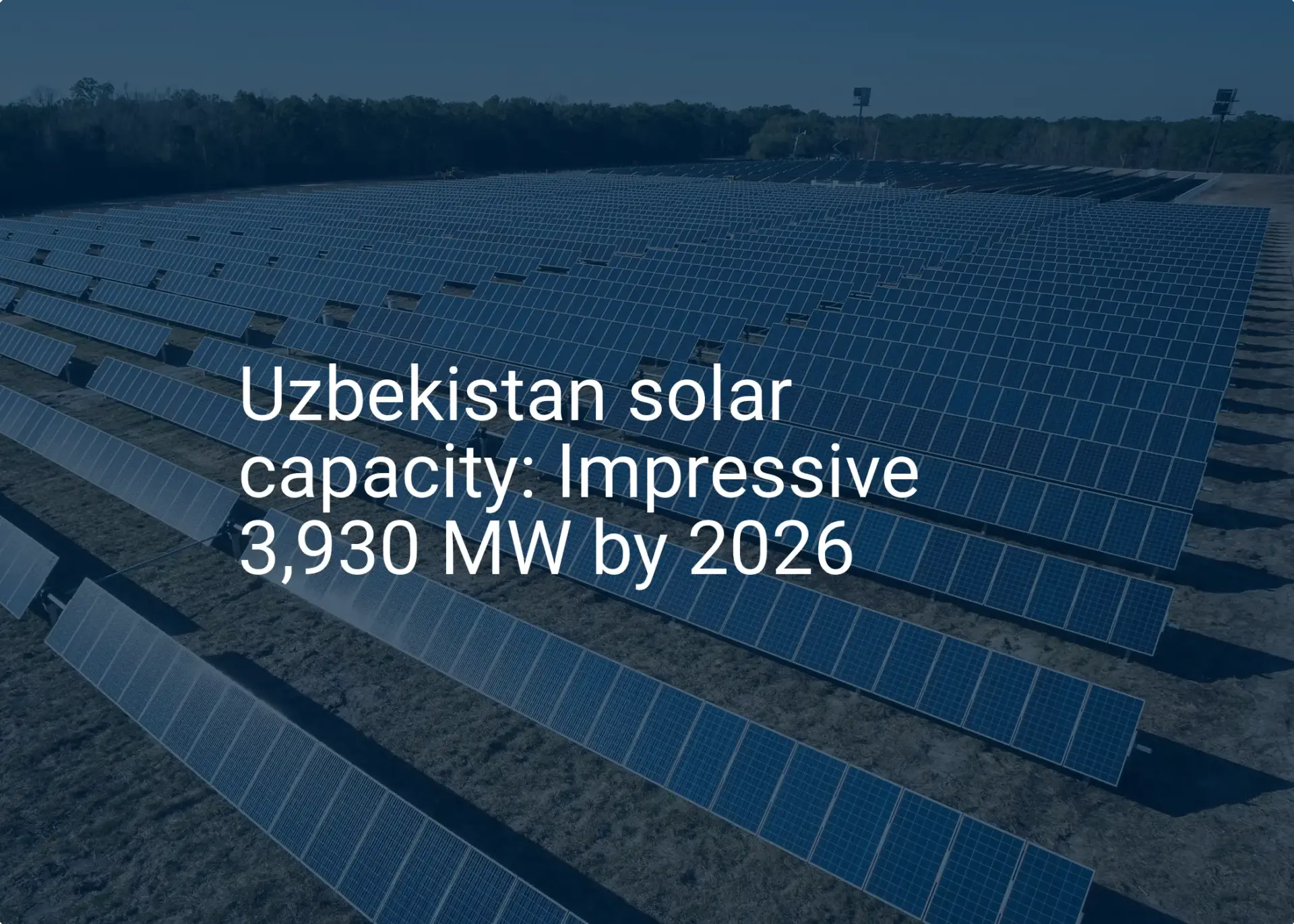
Uzbekistan’s government has set an ambitious goal of achieving 12 GW of solar power capacity by 2030, a significant leap from previous targets. This national strategy, supported by Presidential Decree No. PP-57, isn’t just about installing panels; it’s a direct invitation for local industrial development.
For entrepreneurs and established business leaders, this raises a critical question: what is the most strategic entry point into solar module manufacturing? The decision often comes down to the initial production scale. Is it wiser to start with a focused 50 MW facility or aim for a more substantial 100 MW operation from the outset? This analysis weighs the practical implications of each path, comparing the required investment, resources, and market positioning for both factory sizes within the Uzbek context.
The Strategic Context for Solar Manufacturing in Uzbekistan
Before comparing factory specifications, it’s essential to understand the landscape. Uzbekistan boasts exceptional solar resources, with many regions receiving 4,200–5,000 kWh/m² of solar energy annually. The government is aggressively leveraging this advantage.
Recent developments underscore the scale of this ambition:
-
Government Targets: The goal has been revised upward to 12 GW by 2030, with a more formidable target of 25 GW by 2035.
-
Large-Scale Projects: In 2023 alone, international developers like Masdar commissioned 1 GW of solar capacity and were awarded tenders for an additional 2 GW. Further tenders for projects of 200, 300, and 400 MW are underway.
-
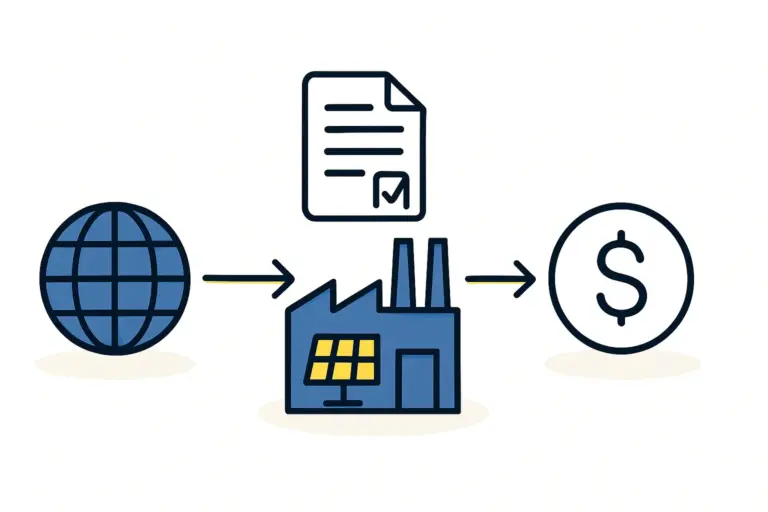
Incentives for Local Production: Decree PP-57 provides tangible benefits, including an exemption from customs duties on imported equipment and raw materials until 2025 and a guaranteed offtake mechanism for locally produced panels.
This environment creates a dual market: large, utility-scale projects driven by state tenders and a growing private market for residential and commercial installations. A new manufacturer must therefore strategically size their facility to serve one or both of these segments effectively.
The 50 MW Factory: A Strategic Entry Point
A 50 MW facility represents a calculated, strategic entry into the market. This scale is substantial enough to be commercially viable while managing initial capital risk. It can produce approximately 100,000 to 120,000 solar panels per year, depending on the module wattage.

Key Characteristics:
-
Investment: The initial capital expenditure is considerably lower than for a larger facility, making it an accessible option for entrepreneurs or companies diversifying their portfolios. A comprehensive overview of cost factors can be found when exploring the investment required to start a solar panel factory.
-
Land and Building: A 50 MW line typically requires a 3,000 to 5,000 square meter building, a modest footprint that can ease land acquisition challenges in some industrial zones.
-
Labor: The operation can run efficiently with a workforce of 50 to 70 employees, including operators, technicians, and administrative staff. This allows for a focused and manageable team during the critical startup phase.
-
Market Focus: This scale is ideally suited to serve the burgeoning residential, commercial, and small industrial markets within Uzbekistan. It allows the business to be agile, responsive to local demand, and build a strong brand presence without the immediate pressure of securing utility-scale contracts.
A 50 MW facility provides a solid foundation for growth. Experience from turnkey projects in similar emerging markets confirms this approach. This scale allows a business to establish its operational processes, build a skilled team, and secure a market foothold before committing to larger-scale expansion.
The 100 MW Factory: Capturing Larger Opportunities
A 100 MW facility signals a more aggressive market strategy, positioning the company to compete for larger contracts and achieve significant economies of scale. With an annual output of roughly 200,000 to 240,000 panels, this operation is designed for high-volume production.

Key Characteristics:
-
Investment: The required capital is substantially higher, not just for the primary production equipment but also for ancillary systems, larger warehousing, and more robust infrastructure.
-
Land and Building: The required facility size increases to 6,000 to 8,000 square meters, a larger footprint that demands more extensive site planning and development.
-
Labor: A larger, more specialized workforce of 100 to 140 employees is needed to manage dual production lines or higher-speed automated equipment.
-
Market Focus: A 100 MW factory is well-positioned to supply modules for utility-scale solar farms and large government-backed projects. Its higher output and lower per-unit production cost make it a credible competitor in public tenders.
-
Technology: To achieve this capacity, a 100 MW setup often involves a greater degree of automation within its solar module manufacturing equipment. While this increases throughput, it also requires more specialized technical expertise for maintenance and operation.
Choosing this scale from the outset is a commitment to pursuing high-volume contracts. It requires a business plan squarely focused on competing for the large-scale projects shaping Uzbekistan’s national energy strategy.
Head-to-Head Comparison: Key Metrics for Decision-Making
The choice between a 50 MW and a 100 MW facility is not merely about size; it is a fundamental strategic decision that will define the entire business model. The right path depends on an investor’s capital availability, risk appetite, and long-term vision.
A turnkey solar module manufacturing line offers a structured, predictable path for either scale. By integrating all necessary machinery, processes, and training, it allows the business to focus on market strategy rather than complex engineering challenges. The key is to select the scale that aligns with the intended market segment and financial framework.
Frequently Asked Questions (FAQ)
What does ‘MW’ (megawatt) capacity mean for a factory?
Megawatt capacity refers to the total power output of all solar modules the factory can produce in one year under standard test conditions. A 50 MW factory produces enough panels to generate 50 MW of power annually.
Can a 50 MW factory be upgraded to 100 MW later?
Yes, this is a common and prudent growth strategy. A well-designed 50 MW facility can be planned with future expansion in mind. This involves allocating sufficient land and designing the building layout to accommodate a second production line, allowing for a phased investment as the business grows.
Are the government incentives in Uzbekistan reliable for a new manufacturer?
The current framework, particularly Decree PP-57, provides a strong, government-backed foundation for local manufacturing. The long-term targets (2030 and 2035) suggest a sustained commitment. However, as with any market, investors should conduct thorough due diligence and maintain awareness of regulatory developments.
Aside from equipment, what are the most significant operational costs?
The primary operational costs include raw materials (solar cells, glass, aluminum frames, etc.), labor, and electricity. Securing a stable and cost-effective supply chain for raw materials is one of the most critical factors for long-term profitability.
Charting Your Path Forward
Uzbekistan’s solar ambitions have created a clear and compelling opportunity for industrial investment. The decision between a 50 MW and a 100 MW production facility is the first major strategic step.
The 50 MW option offers a lower-risk entry point focused on the dynamic private sector, while the 100 MW scale is tailored for ambitious players targeting large-scale utility projects. Each path comes with its own requirements for capital, expertise, and market strategy, and understanding these differences is essential for building a resilient and successful enterprise in this promising market.
For those ready to move forward, understanding the complete process is the next essential step. A comprehensive guide on how to start a solar panel manufacturing business can provide a structured roadmap from initial planning to full-scale operation.