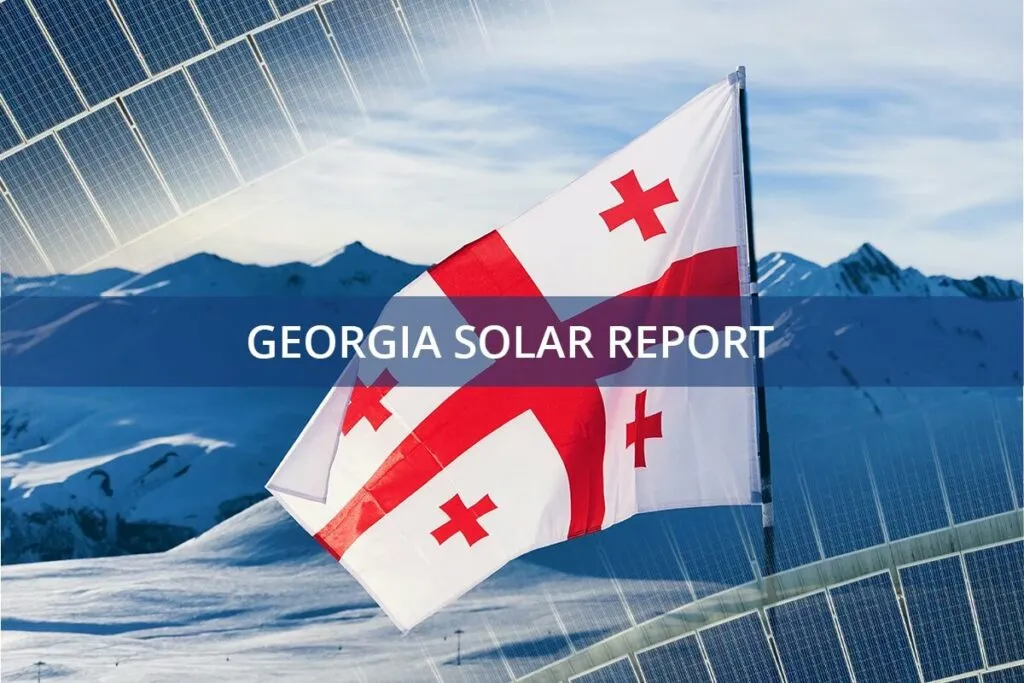
Georgia has achieved a remarkable feat in decoupling economic growth from environmental impact, cutting its greenhouse gas emissions by half over the past 20 years. This success story offers valuable insights into how strategic policy and a shift in energy sources can pave the way for a sustainable future.
Decreasing Emissions: Georgia greenhouse gas emissions and GDP
Georgia’s greenhouse gas emissions have been impressively cut in half over the past two decades, according to the latest World Bank report. In 2022, the country was responsible for just 0.003% of the global total, a significant drop from 0.006% in 2002. What makes this achievement particularly noteworthy is that it occurred while Georgia’s GDP surged from $3.8 billion to $22.3 billion, driven primarily by its growing service sector. This demonstrates that economic prosperity and climate action can go hand-in-hand.
A key factor behind this success has been a deliberate transition in the energy sector, moving away from coal towards cleaner alternatives like natural gas and solar power. The increasing adoption of renewable energy is a trend seen worldwide, as detailed in the comprehensive Global Solar Report.
According to the World Bank’s Greenhouse Gas Emissions Inventory, which covers 2000 to 2022, Georgia emitted 11.2 million metric tons of equivalent carbon dioxide in 2022. This figure is a stark reduction from 2002 when emissions peaked at 23.2 million metric tons. Based on these figures, Georgia is ranked 141st globally in terms of total emissions, showcasing its relatively small carbon footprint.
Sectoral and Per Capita Georgia greenhouse gas emissions
The report provides a clear breakdown of emissions by source. In 2022, Georgia’s energy sector was the largest contributor, responsible for 6.6 million metric tons of carbon dioxide emissions. This was followed by agriculture with 2.7 million metric tons, industrial processes with 1.4 million, and waste with 0.5 million metric tons. The significant progress in the energy sector highlights the impact of investing in cleaner power generation, a process which relies on understanding the basics of manufacturing for renewable technologies.
On an individual level, Georgia’s progress is just as compelling. With a population of 3.2 million in 2022, the country’s greenhouse gas emissions stood at 3.5 metric tons per person. This is comfortably below the global average of 4 metric tons per capita and substantially lower than the averages in high-income countries, which typically range between 7 and 10 metric tons.
Commitments to Climate Goals for Georgia greenhouse gas emissions
Georgia has formalized its climate ambitions by committing to reduce its greenhouse gas emissions by 35% by 2030 compared to 1990 levels. This pledge is outlined in its updated Nationally Determined Contribution (NDC) submitted to the United Nations in 2021. The NDC details the country’s strategies for low-carbon development and adaptation to the impacts of climate change, aligning its progress with global efforts like the Paris Agreement.
Driving this commitment is the “Drawdown Georgia Initiative,” a collaborative effort launched in 2020. This initiative identifies and promotes high-impact solutions across key sectors, including electricity, transportation, buildings, food, and agriculture. By fostering a coalition of universities, businesses, and community organizations, it ensures that climate action is both widespread and sustainable. This approach mirrors the ambitious goals of other climate-conscious nations, such as those seen in the Denmark Solar Panel Manufacturing Report.
This reduction is a core part of Georgia’s strategy to build a more sustainable and resilient economy. For homeowners and tenants in Germany and elsewhere, Georgia’s journey serves as an inspiring example of how national strategies can translate into tangible environmental progress. To learn more about how you can contribute to the clean energy transition, consider exploring our free e-course on solar energy.