Kyocera Launches UltraGuard Solar Panels for Enhanced Weather Resistance
In a significant move to address the growing need for climate-resilient energy infrastructure, leading solar manufacturer Kyocera has officially launched its new UltraGuard series of photovoltaic (PV) modules. Engineered specifically for superior durability, these panels set a new standard in performance and reliability, promising to withstand some of the most extreme weather conditions on the planet.
As climate events intensify globally, the solar industry faces increasing pressure to develop products that can endure everything from severe hailstorms and hurricane-force winds to heavy snow loads and drastic temperature fluctuations. Kyocera’s UltraGuard series is a direct response to this challenge, integrating advanced materials and a reinforced design to protect energy investments and ensure consistent power generation.
Key Features and Innovations of Kyocera solar panels
The UltraGuard series isn’t just an incremental upgrade; it represents a fundamental redesign focused on durability. Here are the core innovations that set these panels apart:
-
Advanced Glass Technology: At the forefront of the design is a proprietary 3.2mm tempered glass. This isn’t standard solar glass; it features a specialized anti-reflective coating and has been engineered for increased impact resistance. The panels are tested to withstand hailstones up to 55mm in diameter traveling at 88 km/h, a significant improvement over the industry standard (typically 25mm hail at 23 m/s).
-
Reinforced Frame Design: The anodized aluminum frame incorporates a multi-layer polymer sealing system, creating a robust barrier against the elements. This design is rated for impressive wind loads up to 5,400 Pa on the front and 2,400 Pa on the rear, making UltraGuard panels an ideal choice for hurricane-prone regions and areas with high wind exposure.
-
Exceptional Thermal Resilience: UltraGuard panels are built to perform reliably across a wide operating range, from a frigid -40°C to a scorching +85°C. The design minimizes thermal expansion, which is a critical factor in preventing the formation of microcracks in solar cells over time. Accelerated aging tests simulating 25 years of exposure have proven the panel’s ability to resist thermal stress.
-
High Efficiency and Output: Durability doesn’t come at the cost of performance. The series is available in 400W to 600W configurations using monocrystalline PERC half-cut cells, boasting efficiencies between 21-22%. Furthermore, they are engineered to resist Potential Induced Degradation (PID) and are warrantied to maintain over 90% of their power output after 30 years.
To put these advancements in perspective, here’s a quick comparison:
| Feature | UltraGuard Series | Industry Average |
| :— | :— | :— |
| Hail Resistance | 55mm @ 88 km/h | 25mm @ 23 m/s |
| Wind Load (Front) | 5,400 Pa | 2,400 Pa |
| Snow Load | 6,000 Pa | 5,400 Pa |
| Warranty | 30-year product & linear power | 25-year product & linear power |
| Fire Rating | Class A (UL 1703) | Class C |
Backed by Rigorous Testing and Certification of Kyocera solar panels
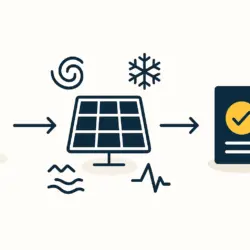
Kyocera substantiates its claims with a suite of independent certifications that verify the UltraGuard’s resilience:
- IEC 61215 & 61730: Full qualification for mechanical load, thermal cycling, and damp heat tests.
- UL 61730: Meets stringent fire and electrical safety standards.
- Salt Mist Corrosion (IEC 61701): Achieves a Grade 6 rating, confirming its suitability for coastal installations where salt-laden air can quickly degrade standard panels.
In addition to certifications, real-world simulations at Kyocera’s R&D facilities and partner labs in the United States have shown that UltraGuard panels demonstrate 15-20% better power retention rates after simulated extreme weather events compared to leading competitors.
Market Impact and Availability of Kyocera solar panels
Priced at a 10-15% premium over standard modules (approximately $0.35-$0.45 per watt), the UltraGuard series targets commercial and utility-scale projects where long-term reliability is paramount. This makes them a strategic choice for installations in harsh climates, such as the blizzard-prone Midwest US, the heavy snow regions of the European Alps, or the sandstorm-swept deserts of the Middle East.
The initial rollout is planned for North America and Europe, with production ramping up at Kyocera’s facilities in China and Mexico. An early adopter, a 50MW solar farm in Texas, has already reported zero weather-related failures in its first quarter of operation, providing a powerful real-world testament to the panels’ durability.
This launch is perfectly timed, aligning with the global push for more resilient renewable energy sources. As noted in the IPCC’s AR6 report, extreme weather events have risen by 50% since 2000, making robust infrastructure more critical than ever. For project developers and asset owners, the slightly higher upfront cost of UltraGuard panels can be easily justified by the significant lifecycle cost savings from reduced maintenance, lower replacement rates, and an extended 30-year warranty.
For detailed specifications and technical data sheets, visit Kyocera’s official website or contact authorized distributors like BayWa r.e.